Exploring Various Software Applications: Enhancing Digital Literacy and Productivity
Understanding Software Applications
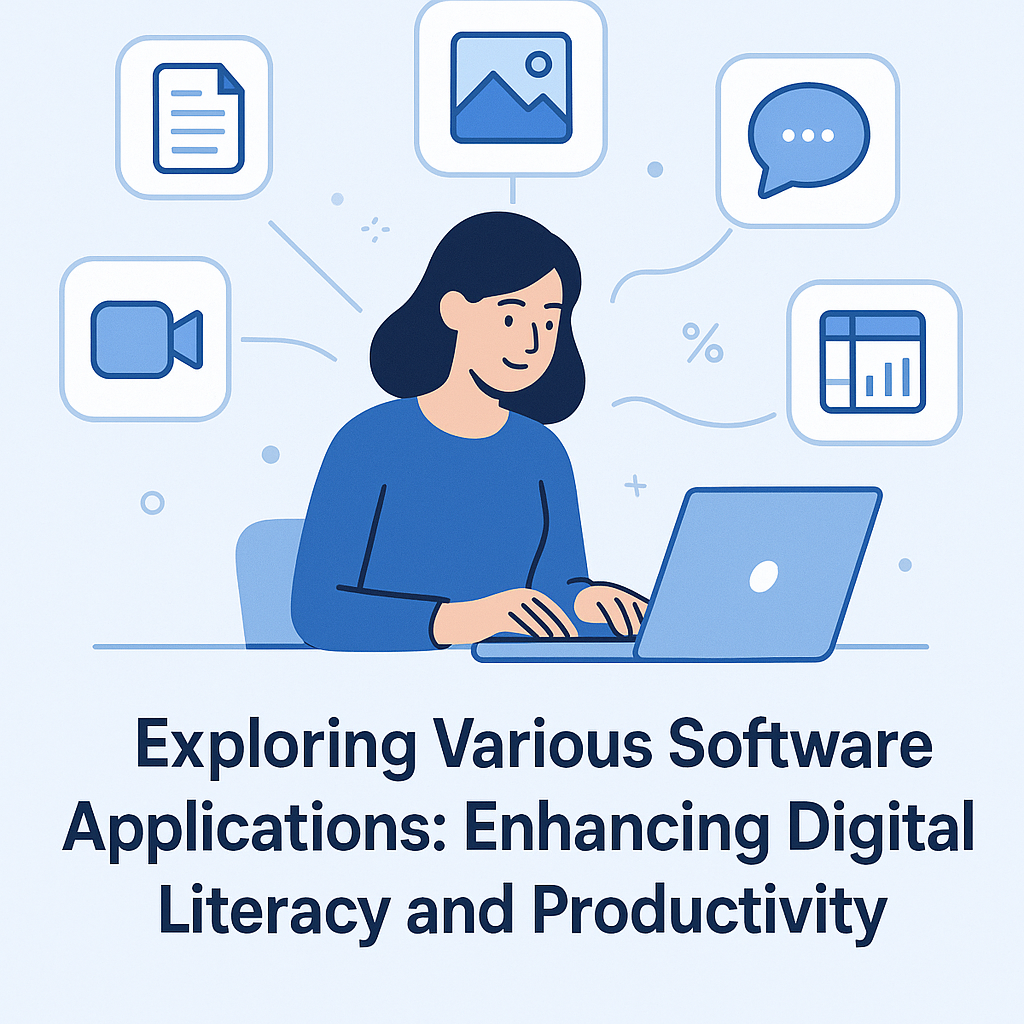
Software applications are programs designed to perform specific tasks for users. They can be categorized into various types, including productivity software, communication tools, graphic design applications, and data management systems. Each category serves distinct purposes, from creating documents and spreadsheets to facilitating team collaboration and managing databases. In today’s digital landscape, proficiency in these applications is a vital component of technology digital literacy, which is essential for personal and professional success. Read: Navigating Today’s Fast-Paced World: Strategies for Success. Read: Maximizing Efficiency: Utilizing Project Management for Success. Read: Exploring Various Software Applications: Enhancing Productivity and Creativity.

What is Application Software?
Application software is a type of computer program that performs a specific personal, educational, and business function. Each program is designed to assist the user with a particular process, which may be related to productivity, creativity, or communication. Understanding the purpose and functionality of various software applications is crucial for leveraging technology effectively in different fields.
Productivity Software: The Backbone of Efficiency
Productivity software encompasses applications like word processors, spreadsheets, and presentation tools. These applications are essential for creating documents, analyzing data, and delivering presentations. For instance, Microsoft Office and Google Workspace are widely used in both educational and professional settings. Mastering these tools not only enhances individual productivity but also fosters collaboration among teams. By leveraging productivity software, users can streamline their workflows, manage projects effectively, and improve overall efficiency.

Communication Tools: Bridging Distances
In an increasingly remote work environment, communication tools have become indispensable. Applications like Slack, Zoom, and Microsoft Teams facilitate real-time communication and collaboration among team members, regardless of their physical location. These tools support various forms of communication, including instant messaging, video conferencing, and file sharing. Effective use of communication software enhances team dynamics, promotes transparency, and ensures that everyone stays on the same page. As digital literacy encompasses communication skills, familiarity with these tools is crucial for modern professionals.
Graphic Design and Creative Software: Unleashing Creativity
Graphic design applications such as Adobe Creative Suite and Canva empower users to create visually appealing content. These tools are essential for marketers, educators, and business owners who need to produce graphics, videos, and other visual materials. Understanding how to use graphic design software enhances digital literacy by enabling individuals to communicate ideas effectively through visuals. Moreover, creative software fosters innovative thinking and problem-solving skills, essential components of digital literacy in today’s visually-driven world.
Multimedia Software: Engaging and Informative Content
Multimedia software allows users to create and manipulate audio and video files, offering tools for editing, mixing, and enhancing multimedia content. Programs like VLC Media Player, Adobe Premiere Pro, and Final Cut Pro are popular choices. These applications are vital for creating engaging content, whether for educational purposes, marketing, or entertainment, further broadening the scope of digital literacy.
Time Management with Time Blocking: Maximizing Productivity
Time blocking is a powerful time management technique that can enhance productivity when using software applications. By allocating specific time slots for tasks, individuals can focus on one activity at a time, reducing distractions and improving efficiency. This method is particularly useful when working with various software applications, as it allows users to dedicate uninterrupted time for deep work, collaboration, or creative tasks. Implementing time blocking not only helps in managing workloads effectively but also promotes a structured approach to using digital tools, ensuring that essential tasks receive the attention they deserve.
20 Examples Of Application Software
To further understand the breadth of application software, let’s explore 20 examples that highlight their diverse functionalities:
1. Microsoft Word
Microsoft Word is a word processing software that enables users to create, edit, and format text documents. It is widely used for creating reports, letters, and other professional documents.
2. Microsoft Excel
Microsoft Excel is a spreadsheet software that allows users to organize, analyze, and visualize data. It is essential for tasks involving calculations, data analysis, and financial modeling.
3. Microsoft PowerPoint
Microsoft PowerPoint is a presentation software used to create slideshows composed of text, images, and multimedia. It is a staple tool for delivering presentations in educational and professional settings.
4. Adobe Photoshop
Adobe Photoshop is a graphic design software used for image editing and photo retouching. It is a powerful tool for designers and photographers to enhance and manipulate images.
5. AutoCAD
AutoCAD is a computer-aided design (CAD) software used by architects, engineers, and construction professionals to create precise 2D and 3D drawings.
6. CorelDraw
CorelDraw is a vector graphics editor used for creating vector illustrations, layouts, and designs. It is popular among graphic designers for its versatility and ease of use.
7. MySQL
MySQL is a database management system that allows users to store, retrieve, and manage data. It is widely used in web applications and data-driven websites.
8. VLC Media Player
VLC Media Player is a multimedia software that supports a wide range of audio and video formats. It is known for its versatility and ability to play almost any media file.
Application Software Examples
Beyond the aforementioned examples, application software encompasses a wide variety of programs, each serving specific needs across different industries. Here are some additional examples:
- Google Chrome: A popular web browser used for accessing the internet.
- QuickBooks: Accounting software for managing finances and bookkeeping.
- Skype: A communication tool for voice and video calls.
- Spotify: A music streaming service that allows users to listen to a vast library of songs.
- Zoom: A video conferencing tool widely used for virtual meetings and webinars.
The Purpose of Application Software
The primary purpose of application software is to provide tools that help users perform specific tasks efficiently. Whether it’s for personal productivity, professional work, or creative projects, application software is designed to enhance user capabilities and streamline processes. By understanding and utilizing various software applications, individuals can improve their digital literacy and adapt to the ever-evolving technological landscape.
Conclusion
In conclusion, understanding and effectively utilizing various software applications is essential for enhancing digital literacy and productivity. From productivity and communication tools to graphic design and multimedia applications, each type of software plays a crucial role in personal and professional success. As technology continues to evolve, staying updated with the latest software applications and their functionalities will empower individuals to navigate the digital world more efficiently and creatively.

Post Comment