Jelqing Safety Tips: Protecting Yourself While Focusing on Real Sexual Wellness
Table of Contents
- Overview: Why Jelqing Safety Has to Start With Your Real Goals
- Reset Your Expectations: What Jelqing Can’t Do (and What You Actually Want)
- Core Jelqing Safety Rules: Pressure, Pain, and Session Limits
- Protecting Ejaculation and Prostate Health While You Experiment
- Smarter Alternatives: Technique, Communication, and Thoughtful Use of Devices
- Conclusion: Make Size Experiments Answer to Your Sexual Wellness—Not the Other Way Around
- FAQ
Overview: Why Jelqing Safety Has to Start With Your Real Goals
Expert Insight: According to Mayo Clinic (https://www.mayoclinic.org/healthy-lifestyle/sexual-health/in-depth/penis/art-20045363), there is little scientific support for nonsurgical penis-enlargement methods and most advertised techniques either don’t work or can cause harm, while an erect penis length of about 5 inches (13 cm) or more is considered typical size. (www.mayoclinic.org)
Most men who experiment with jelq routines are not really chasing centimeters; they are chasing confidence, better erections, and more enjoyable sex. That is men’s sexual wellness in the real world. Yet jelqing is an unproven technique that can injure the very structures you rely on for sensation, blood flow, and reliable ejaculation.
Major medical centers note that exercises sometimes called jelqing have no proven benefit for enlargement but can cause pain, scarring, and disfigurement. At the same time, sexual worries about size, performance, or orgasm control are very real. The safest path is to treat jelqing—if you insist on trying it at all—as a high‑risk experiment that must be carefully contained inside a broader, evidence‑informed sexual wellness plan.

This guide focuses on three things:
- Setting a safety‑first mindset around jelq routines.
- Protecting erections, nerves, and ejaculation function while you experiment—or decide not to.
- Re‑centering on sex techniq, communication, and practical tools like a penis extender or penis stretcher when they make more sense than manual exercises.
Reset Your Expectations: What Jelqing Can’t Do (and What You Actually Want)
The first safety tip is psychological: understand what jelq is unlikely to do. Clinics that review penis‑enlargement methods explain that:
- Most advertised nonsurgical methods, including jelqing, do not have solid evidence for permanent size gains.
- Exercises such as jelq can create scar tissue, pain, and curvature changes.
- Concerns about a “too small” penis are very common, but most men fall in the typical range, and partners usually care far more about intimacy and technique than raw size.
Instead of asking, “Will this make me bigger?” ask better questions:
- “Will this help me feel more confident with a partner?”
- “Will this improve my erections, stamina, or ejaculation control—or could it harm them?”
- “Are there lower‑risk ways to reach the same outcome?”
When you frame jelq as one risky tool among many, it becomes easier to walk away if you notice early warning signs or if it starts pulling you away from the sexual goals that actually matter: comfortable erections, satisfying orgasms, and connected, low‑anxiety sex.
Core Jelqing Safety Rules: Pressure, Pain, and Session Limits
If you still choose to experiment, you need rules that protect tissue and function, not just shape. Key principles:
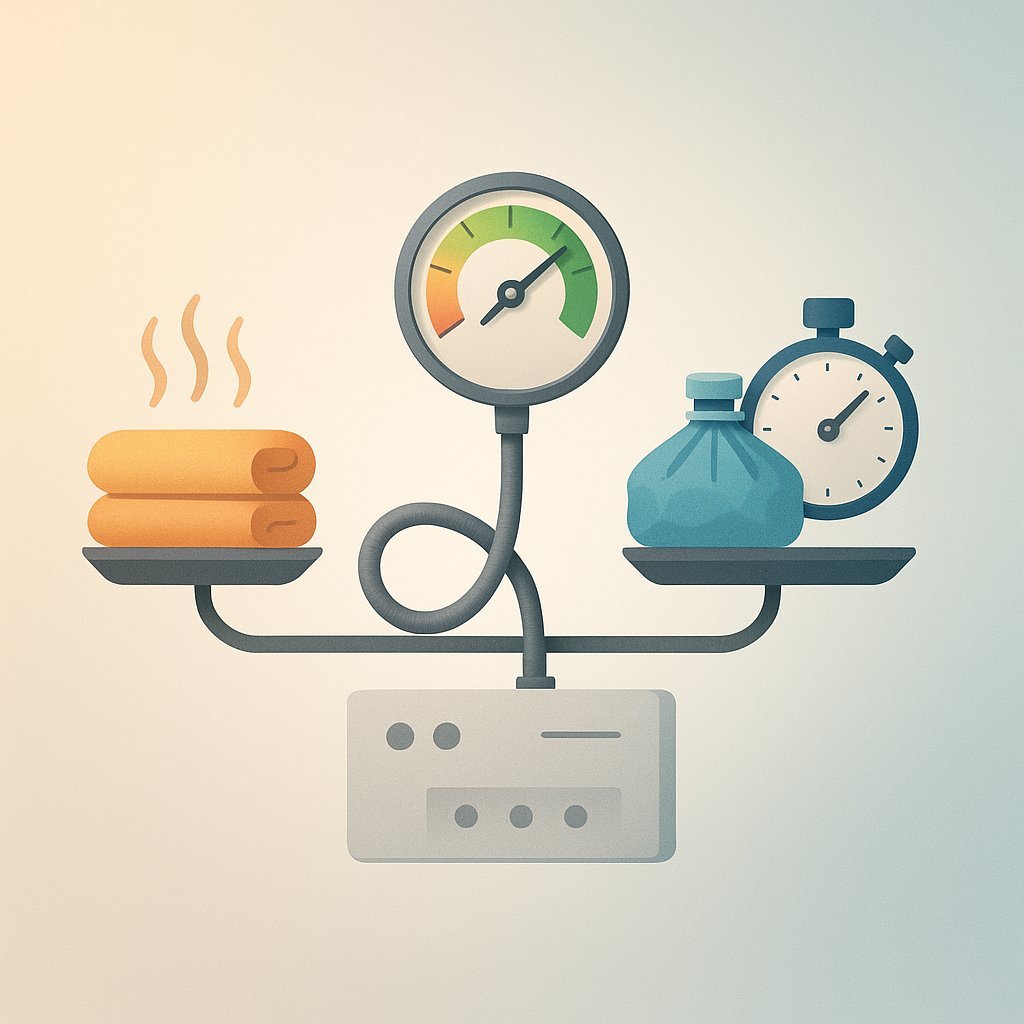
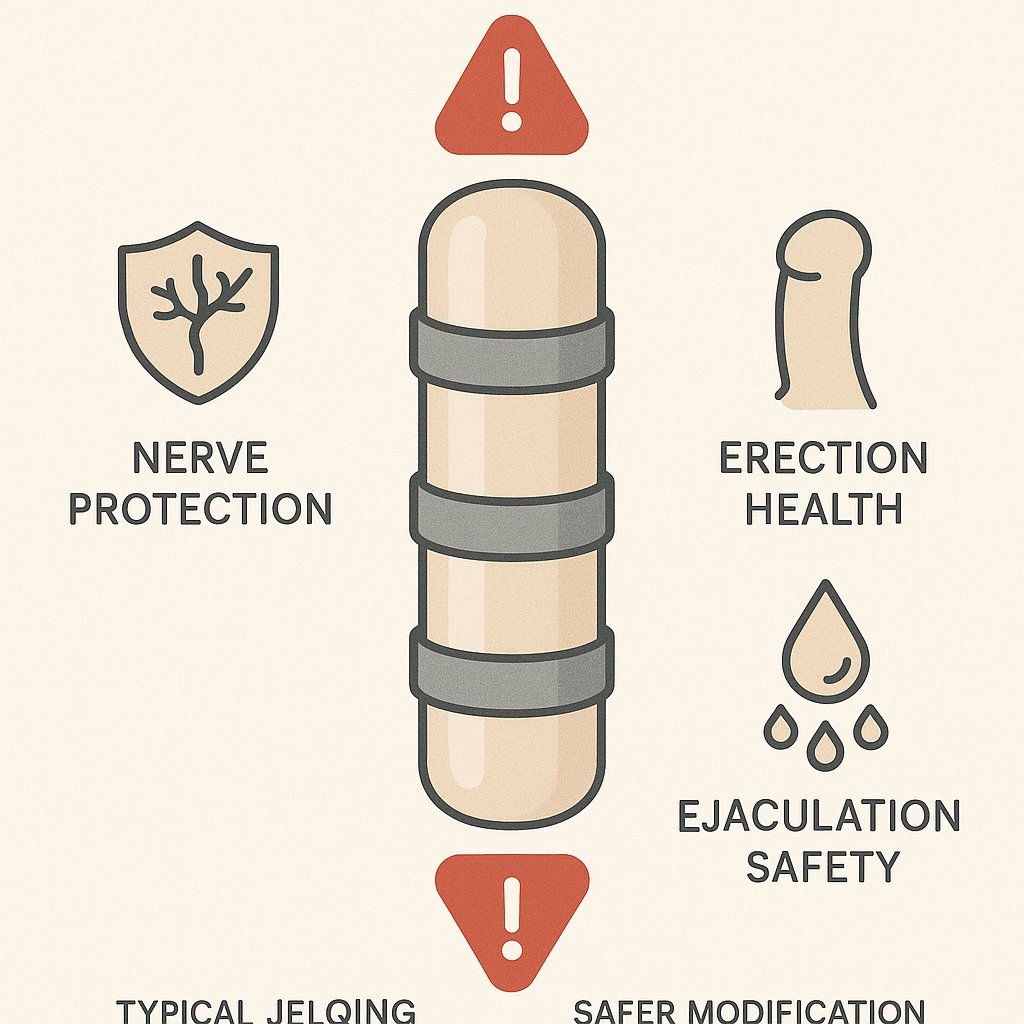
- Use only mild, controllable pressure. Jelq relies on moving blood through partially erect tissue. Anything that feels like “squeezing as hard as you can” is already too much. Pain, numbness, or sharp stinging means stop immediately.
- Stay below full erection. Working on a fully hard penis turns jelqing into a high‑force clamp on delicate vascular tissue and nerves. That raises risk for bruising, torn vessels, and long‑term sensitivity changes.
- Keep sessions short and infrequent. High volume is one of the biggest risk multipliers. Long or daily sessions do not make results more likely, but they absolutely give injuries more chances to accumulate.
- Watch for visual warning signs. New curves, dents, lumps, or flat “plateau” areas can signal scar formation. Sudden color changes, extensive bruising, or persistent swelling are red flags.
- Protect morning erections. Losing spontaneous morning wood, getting weaker or more painful erections, or noticing reduced sensation are all reasons to stop jelq and prioritize medical evaluation.
These guardrails do not make jelqing safe; they simply reduce some risk while you stay honest about what you are trading for that experiment.
Protecting Ejaculation and Prostate Health While You Experiment
Too many jelq routines focus on “gains” and ignore how delicate ejaculation function actually is. From a men’s sexual wellness perspective, your ability to orgasm predictably, with good sensation and comfortable volume, is more important than any claimed size change.
What to watch and adjust:
- Monitor ejaculation changes. If you notice a new delay in orgasm, a sudden shift toward premature ejaculation, or weaker contractions, treat that as a signal that your routine could be over‑stressing nerves or blood flow.
- Respect pelvic and perineal pain. Dull aching behind the scrotum, burning during ejaculation, or deep pelvic discomfort can indicate irritation or inflammation. Continuing jelq through that is a direct threat to long‑term comfort.
- Factor in prostate health. Reliable ejaculation helps keep prostatic fluid moving, but that does not mean “the more, the better” or that aggressive exercises are beneficial. Gentle, enjoyable sexual activity—solo or partnered—does more for your prostate than risky traction on the shaft.
- Coordinate with any treatment for PE or delayed ejaculation. If you are already working with a provider or using behavioral tools for ejaculation control, keep jelq out of the picture until your baseline is stable. Adding a new stressor makes it harder to tell what is actually helping or hurting.
Any new pain, blood in semen or urine, painful erections, or sudden changes in orgasm quality deserve prompt medical attention—and a complete stop to jelqing while you are evaluated.
Smarter Alternatives: Technique, Communication, and Thoughtful Use of Devices
Protecting yourself is not just about doing jelq more carefully; it is about recognizing when different tools serve your goals better. For most men, that means redirecting energy toward skill, connection, and, where appropriate, controlled mechanical stretching.
- Upgrade your sex techniq instead of chasing centimeters. Small changes in rhythm, angle, depth, and stimulation pattern often do more for partner satisfaction than any plausible size change. Practicing slower build‑ups, varied strokes, and better clitoral or whole‑body stimulation improves feedback from partners and your own arousal.
- Use communication to reduce size anxiety. Honest conversations about what feels good, what does not, and what worries you can dramatically lower pressure around performance and ejaculation timing. Less anxiety usually equals better erections and more reliable orgasms.
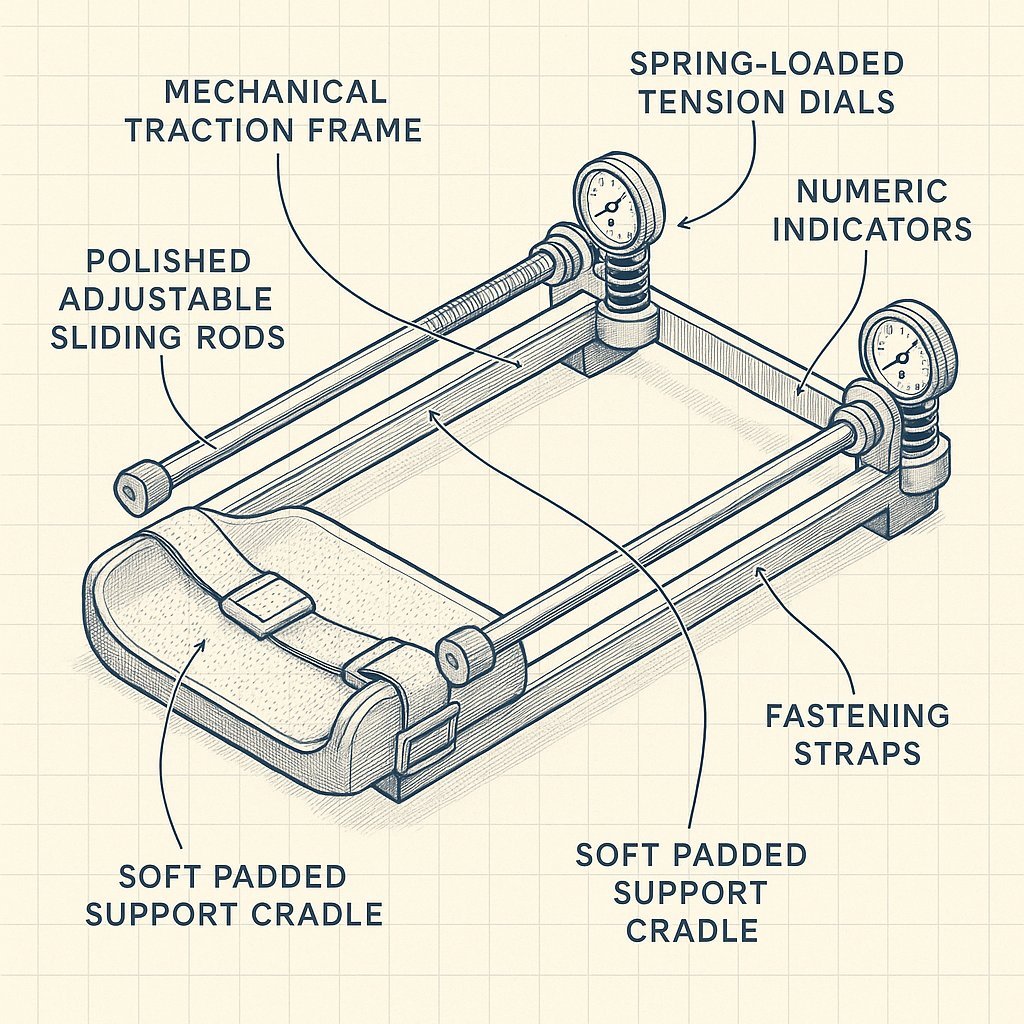
- Consider structured traction rather than improvised force. If you are determined to experiment with length, a well‑designed penis extender or penis stretcher offers measurable, low‑intensity tension over time instead of uncontrolled squeezing. That does not make them risk‑free, but it does make force levels more predictable and adjustable.
- Approach devices with patience, not desperation. Evidence for traction is limited but suggests that any changes are gradual and modest. Long daily wear times are usually required, and pushing beyond guidelines only increases risk of irritation or injury.
If you do decide to explore devices, do it thoughtfully: read safety instructions, ramp up wear time slowly, and take days off when your tissue feels irritated. For men who insist on adding traction to their routine, a structured, medical‑style design from an official seller—such as the options at this certified penis extender store—is generally safer than random, poorly documented gear.
Conclusion: Make Size Experiments Answer to Your Sexual Wellness—Not the Other Way Around
Jelqing sits at the intersection of real sexual insecurity and poor evidence. The safest decision for most men is to skip it entirely and invest in proven pillars of men’s sexual wellness: cardiovascular health, stress reduction, honest communication, and better sex techniq. If you still choose to jelq, treat it as a contained, reversible experiment with clear limits, and be prepared to stop at the first hint of pain, curvature changes, or altered ejaculation.
Your long‑term win is not a particular number on a ruler. It is a penis that feels good, works reliably, and supports confident, connected sex. Every choice around jelq, a penis extender, or a penis stretcher should serve that bigger goal—or it is not worth the risk.
FAQ
Q: Is jelqing ever truly safe to try?
A: No technique can make jelqing completely safe, but you can lower risk by staying gentle, limiting time and pressure, and stopping immediately at any sign of pain, numbness, or discoloration. Keep in mind that there’s no strong scientific evidence jelqing works, so any risk you take isn’t clearly tied to real benefit.
Q: What are early warning signs I should stop jelqing right away?
A: Stop immediately if you notice sharp pain, burning, tingling, numbness, sudden loss of firmness, or dark bruising that wasn’t there before. These can be early signs of blood vessel or nerve irritation, and continuing could make the damage worse.
Q: How can I protect my erection quality and sensitivity if I experiment with jelqing?
A: Keep sessions short, use lubrication, and avoid full erection and high pressure to reduce strain on blood vessels and nerves. Track morning erections, firmness, and sensitivity over weeks—if any of these decline, pause completely and let things recover.
Q: What sexual wellness goals are better to focus on than penis size?
A: Goals with real impact include more satisfying erections, better stamina, higher desire, and deeper emotional and physical intimacy with your partner. Working on sleep, stress, exercise, communication, and arousal techniques usually brings more pleasure than chasing small appearance changes.
Q: What are safer alternatives to jelqing for improving my sex life?
A: For most men, regular exercise, managing stress, better sleep, and learning arousal and stimulation techniques do far more for performance and pleasure. Exploring positions, pacing, and communication with a partner can boost confidence and connection without risking injury.

Post Comment