How To Do Jelqing Safely: A Practical Guide Focused on Penis Health, Not Hype
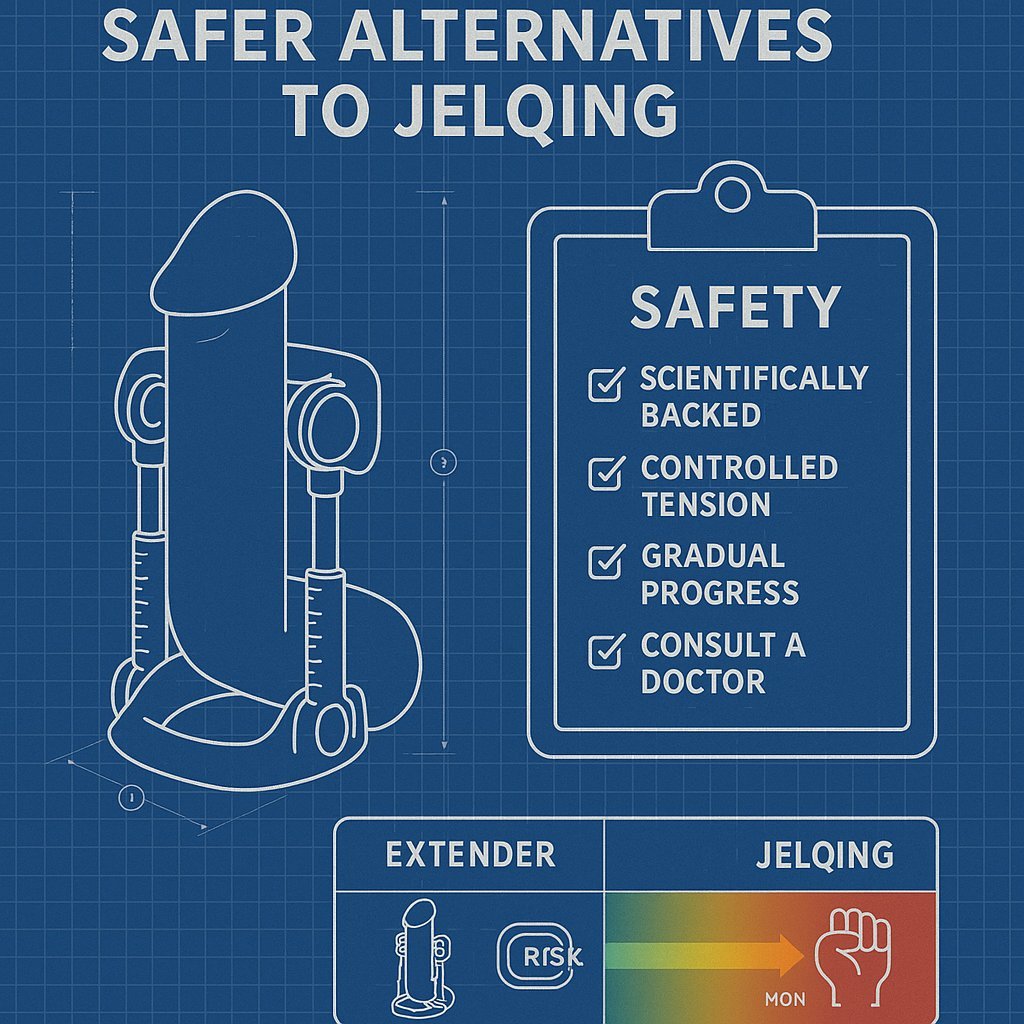
Table of Contents
- Overview: Jelqing, Hype, and a Penis-Health-First Mindset
- What Jelqing Really Is (and Isn’t): Pressure, Not Muscle Training
- A Safer Jelq Framework: Intensity, Frequency, and Red-Flag Rules
- Protecting Erections and Ejaculation: How Jelqing Fits Into Mens Sexual Wellness
- Smarter Alternatives and When a Penis Extender Actually Makes Sense
- Conclusion: Health Over Hype, Always
- FAQ
Overview: Jelqing, Hype, and a Penis-Health-First Mindset
Expert Insight: According to Greatist, penis weights are unlikely to increase size because the penis is an organ rather than a muscle, so stretching it like a biceps won’t produce growth and instead risks injuries such as bruising and blood clots (https://greatist.com/health/penis-weights). (greatist.com)
Jelqing is often marketed as a simple “penis workout” that can add inches to your length and girth. The reality is very different. There’s no high‑quality clinical evidence that jelq routines reliably enlarge the penis, and there is clear evidence that aggressive stretching and squeezing can cause real damage: bruising, nerve pain, erectile problems, and changes in ejaculation.
This guide is not here to sell magic tricks. It is for men who are already curious about jelqing and want straight, practical guidance that puts penis health first. You will learn:

- What jelqing actually does to penile tissue
- Concrete safety rules that reduce risk if you choose to experiment
- How to recognize injury early and stop before you cause long‑term problems
- Where jelq fits within broader mens sexual wellness (and where it absolutely does not)
Think of jelqing as a risky hobby, not a guaranteed path to growth. Your goal is not “more reps at any cost.” Your goal is to protect erectile quality, sensitivity, and reliable ejaculation for the long term.
What Jelqing Really Is (and Isn’t): Pressure, Not Muscle Training
Jelqing is a manual technique where you partially erect your penis, then repeatedly squeeze from the base toward the glans with an “OK” grip. The idea is to push blood through the erectile chambers and create controlled micro‑trauma that supposedly leads to growth over time.
The problem: the penis is an organ, not a biceps muscle. It contains erectile tissue, nerves, blood vessels, and connective tissue. Repeated high pressure does not “build” it the way lifting weights builds muscle. Instead, excess force risks:
- Vascular injury – burst capillaries, dark bruises, and possible clotting
- Nerve irritation – tingling, burning, or numb spots along the shaft or glans
- Tunica damage – micro‑tears in the tough outer layer that can cause curvature or plaque over time
- Erectile changes – weaker erections, difficulty staying hard, or pain with arousal
Similar issues show up with other stretching methods. For example, penis weights sound like a logical “gym for your dick,” but medical reviews point out that hanging weight from an organ (not a muscle) can lead to bruising, blood clots, and even penile fracture. Penis extenders and any penis stretcher device use traction more evenly and can be safer when used correctly, but they still carry risk and their benefits are modest at best.
Bottom line: jelqing is not a harmless massage. It is deliberate pressure on delicate structures. You should only consider it if you are prepared to stop immediately at the first warning sign and accept that results are uncertain.
A Safer Jelq Framework: Intensity, Frequency, and Red-Flag Rules
If you are going to jelq despite the lack of strong evidence, treat it like handling a sharp tool: careful, minimal, and always with an exit plan. Use these practical rules to keep risk as low as possible.
1. Start with the lowest possible intensity
- Use a light lubricant and very gentle grip. Your goal is to move blood, not choke the shaft.
- Keep erection level around 40–60 percent. A nearly hard erection plus squeezing massively increases pressure and injury risk.
- If you see any dark color change during a stroke (purple or very red), you are using too much force.
2. Keep sessions short and infrequent at first
- Limit to 5–10 minutes, 2–3 times per week, with at least one rest day between sessions.
- Do not stack jelqing on the same day as heavy use of a penis extender or other penis stretcher. Traction plus intense manual pressure is a common setup for overuse injuries.
- Never increase both time and force in the same week. If you adjust anything, change one variable at a time.
3. Build in pre‑ and post‑checks
- Before: Examine your penis in good light. Look for bruises, red dots, swelling, or areas that feel firmer than the surrounding tissue.
- After: Recheck color, temperature, and sensation. Mild, short‑lived fullness is normal; sharp pain, burning, or patchy numbness is not.
- If you notice any new curvature, hard knots, or “cord‑like” areas under the skin, stop jelqing completely and see a urologist.
4. Non‑negotiable stop signs
- Sudden sharp pain during a stroke
- A popping or cracking sound, followed by pain or rapid loss of erection
- Dark purple bruising, major swelling, or obvious deformity
- Persistent numbness or cold sensation
- New difficulty getting or maintaining erections
These are not “push through it” moments. They are reasons to stop all jelq or stretching immediately and get medical help. Protecting long‑term function is more important than chasing small cosmetic changes.
Protecting Erections and Ejaculation: How Jelqing Fits Into Mens Sexual Wellness
Mens sexual wellness is bigger than any one technique. Erections, arousal, and ejaculation depend on circulation, hormones, nerve health, mental state, and relationship dynamics. Jelqing only touches one tiny slice of that picture, and it can easily backfire if it becomes an obsession.
How jelqing can affect function
- Erections: Over‑squeezing or over‑training can damage the small vessels that fill with blood, which may lead to weaker erections or performance anxiety when things do not work as before.
- Sensitivity: Nerve irritation can cause either oversensitivity (burning, unpleasant touch) or loss of sensation. Both can make sex less satisfying.
- Ejaculation: Changes in sensitivity or anxiety about performance can lead to delayed ejaculation, difficulty reaching orgasm, or finishing too fast because you are tense and over‑focused on your penis.
Foundations that help more than jelq
- Cardio and strength training: Regular exercise improves circulation and testosterone, which are strongly linked to erectile quality.
- Weight management: Losing excess belly fat can make your penis look larger and improve vascular health at the same time.
- Sleep and stress control: Poor sleep and chronic stress raise cortisol and hurt erections. Simple routines like a consistent bedtime and basic breathing techniques often outperform any sex techniq when it comes to reliability in bed.
- Healthy sexual habits: Reducing porn overuse, communicating with partners, and experimenting with varied stimulation patterns usually do more for your orgasm and ejaculation control than any manual enlargement routine.
If you notice your erections, sensitivity, or ejaculation pattern changing after you start jelqing, treat that as critical feedback. Scale way back or stop altogether and focus on rebuilding general health and confidence.
Smarter Alternatives and When a Penis Extender Actually Makes Sense
For many men, the urge to jelq comes from anxiety about size, not from evidence that it works. That makes it easy to fall for hype. Before you commit to months of manual training, consider where a penis extender or other tools fit into a bigger, more realistic strategy.
Penis extenders and stretchers
- Medical‑grade traction devices apply controlled, low‑force stretch over long periods, instead of aggressive squeezing.
- Clinical studies show modest length gains in certain cases (like curvature disorders), but results are far from guaranteed and require disciplined, careful use.
- Extenders are not magic; they are tools. Safety still matters: gradual tension, regular skin checks, and plenty of rest days.
If you ever choose a traction route, use a reputable, medically oriented product and follow instructions exactly. A good starting point is to review an official store such as this penis extender provider, then discuss options with a urologist if you have existing curvature, pain, or erectile issues.
Other evidence‑based upgrades
- General fitness: Aerobic exercise and strength training are repeatedly linked to stronger, more reliable erections.
- Nutrition: Diet patterns that support heart health (plenty of plants, healthy fats, limited ultra‑processed foods) also support penile blood flow.
- Targeted sex techniq: Learning arousal pacing, pelvic floor relaxation, and communication skills can dramatically improve sexual satisfaction without adding risk to your tissue.
- Mental health support: If size worries dominate your thoughts, talking to a therapist can do more for your confidence and sex life than any routine that targets your shaft.
The goal is not to never experiment. It is to experiment from a place of informed choice, clear boundaries, and respect for your long‑term sexual function.
Conclusion: Health Over Hype, Always
Jelqing sits in a gray zone: heavily promoted online, weakly supported by science, and capable of causing real harm if pushed too hard. If you decide to try it, treat your penis like the sensitive organ it is, not a muscle you can grind into growth.
Use light pressure, short and infrequent sessions, and strict stop rules. Pay close attention to erection quality, sensation, and ejaculation pattern. The moment anything feels off, step back and prioritize healing.
In the bigger picture of mens sexual wellness, your best “growth” tools are still boring fundamentals: movement, nutrition, sleep, low stress, and honest communication with partners and professionals. Those are the habits that protect your erections and your confidence for decades, long after any jelq experiment is over.
FAQ
Q: What is jelqing, in simple terms?
A: Jelqing is a manual technique where you repeatedly stroke a semi‑erect penis from base to glans using an “OK” grip. The idea is to stretch the tissues and increase blood flow, but most claimed size gains are not backed by solid scientific evidence.
Q: What are the biggest real risks of jelqing?
A: The main risks are bruising, pain, broken blood vessels, decreased sensitivity, and potential erection or curvature changes from tissue damage. These usually come from using too much force, jelqing while fully hard, or doing very long, frequent sessions without rest.
Q: How can I jelq more safely if I still want to try it?
A: If you choose to experiment, use plenty of lube, keep erections at about 50–70%, use only light to moderate pressure, and limit sessions to short, occasional routines. Stop immediately if you feel sharp pain, numbness, or notice unusual discoloration that doesn’t fade quickly.
Q: How do I know if I’m overdoing jelqing?
A: Warning signs include persistent soreness, weaker or less frequent morning erections, lasting redness or dark spots, and reduced sensitivity. If you notice any of these, take a full break until everything feels normal again, then reassess whether it’s worth continuing.
Q: Can jelqing permanently damage my erections or ejaculation?
A: Aggressive or frequent jelqing can irritate nerves, veins, and the erectile tissues, which may affect erection quality or how ejaculation feels. The risk goes up when people push through pain, ignore recovery, or combine jelqing with tight devices or extreme stretching.

Post Comment