How to Build a Personalized Jelqing Routine for Better Sexual Wellness (Without Ignoring Safety)
Table of Contents
- Overview: Personalizing Jelq Around Your Body, Not Hype
- Step 1: Get Honest About Your Starting Point and Goals
- Step 2: Build a Safe Jelq Structure: Warm-Up, Technique, Volume, Rest
- Step 3: Combine Jelq With Extenders, Stretchers, and Lifestyle Without Overload
- Step 4: Use Feedback, Pleasure, and Safety Signals to Personalize Over Time
- Conclusion: Your Routine Should Serve Your Sexual Wellness, Not Rule It
- FAQ
Overview: Personalizing Jelq Around Your Body, Not Hype
Expert Insight: According to health.clevelandclinic.org (https://health.clevelandclinic.org/desk-exercises), the CDC recommends at least 150 minutes of weekly exercise, and research shows that short “mini workouts” of under 10 minutes spread throughout the day can be just as effective as longer sessions. This approach is especially useful for people who sit at a desk most of the day, who are encouraged to break up long periods of sitting with movement. (health.clevelandclinic.org)

Building a jelq routine is not about copying a random plan you saw online. It is about fitting the practice into a bigger mens sexual wellness strategy that respects your body, your schedule, and your risk tolerance.
Think of jelq the way health experts talk about exercise: a little, done consistently and safely, often beats intense sprints that leave you injured. Just like short, frequent desk workouts can add up to your weekly movement goals, short, mindful jelq sessions can fit into your day without dominating your life or overwhelming your tissues.

This article focuses on how to:
- Decide if you should even be jelqing right now.
- Set realistic, personalized goals that go beyond size obsession.
- Design a routine that uses warm-ups, low volume, and rest days.
- Combine jelq with devices like a penis extender or penis stretcher without overloading your penis.
- Watch for warning signs and know when to pause, reset, or stop.
The goal is better erections, comfort, confidence, and ejaculation control over time—not a short-term stunt that risks long-term damage.
Step 1: Get Honest About Your Starting Point and Goals
Before you plan a single jelq session, you need clarity on where you are starting and why you want to do this. This is the foundation of a safe, personalized plan for mens sexual wellness.
Screen yourself for red flags
- Current pain, curvature, or plaque in the penis.
- History of Peyronie’s disease or significant injury.
- Loss of sensation, numbness, or tingling.
- Uncontrolled diabetes, blood clotting issues, or vascular disease.
- Heavy smoking, high blood pressure not under control, or major cardiovascular disease.
If any of these sound familiar, talk to a urologist or men’s health clinician before you experiment with jelq or any traction method.
Choose a primary goal—not five
Trying to “do everything” leads to overtraining. Pick one main reason you are considering jelq:
- Erection quality: firmer, more reliable erections and better blood flow.
- Confidence: feeling less anxious or distracted about size in bed.
- Exploration: learning more about how your penis responds to touch and pressure.
Length or girth fixation alone is a weak driver for long-term consistency and can push you to ignore safety signs. Anchor your jelq routine in functional goals like better arousal, improved sex techniq, and lower performance anxiety.
Match your routine to your actual schedule
If you sit at a desk all day, you already know how hard it can be to find big chunks of free time. Just like research shows that short, frequent bouts of movement during the workday can add up to meaningful exercise, you can use brief, focused jelq sessions:
- 5–10 minutes, 3–4 days per week.
- Scheduled around times you can relax (shower, after a workout, before bed).
- Paired with simple pelvic stretches, glute squeezes, or core engagement you can do at your desk to support blood flow and posture.
Your routine should feel like a small, sustainable part of your life, not a second job.
Step 2: Build a Safe Jelq Structure: Warm-Up, Technique, Volume, Rest
A personalized jelq plan is less about “secret strokes” and more about how gently, briefly, and consistently you apply tension over time. Safety and structure matter more than aggressive intensity.
Warm-up: Prepare tissues and blood flow
Cold, tight tissue is easier to injure. Before any jelq session:
- Use a warm (not hot) washcloth or shower water around the groin and penis for 5–10 minutes.
- Gently massage the shaft and base to bring blood flow in.
- Do a few light pelvic floor contractions (like stopping urine flow) to wake those muscles up, then relax them completely.
Treat this like a mini pre-workout for your penis.
Set arousal and grip rules
- Arousal level: aim for about 30–60% erection. Fully hard jelqing is much riskier.
- Lube: always use plenty of lubrication to minimize friction and skin irritation.
- Grip: use an “OK” grip that is snug enough to move blood along the shaft but not tight enough to cause pain, dark purple color, or sharp pressure.
Your penis should never feel numb, cold, or burning during strokes.
Start with conservative volume
You can always increase volume later; you cannot undo damage easily. For the first 2–4 weeks:
- Reps per session: 30–50 slow jelq strokes.
- Stroke pace: 2–3 seconds per stroke from base toward the glans.
- Sessions per week: 2–3 non-consecutive days.
- Session length: usually 5–10 minutes including the warm-up and cool-down.
If morning erections stay strong and you have no pain or unusual bruising, you can slowly add 10–20 strokes per session every 1–2 weeks, up to a moderate range (for example, 100–150 gentle strokes) while keeping rest days.
Include a cool-down
Ending well is as important as starting well:
- Lightly massage or shake out the penis to let blood distribuirte evenly.
- Use a brief, gentle warm cloth again if you feel tight.
- Let arousal settle instead of immediately chasing ejaculation; this trains your body away from “touch = finish right now.”
This cooling phase also connects jelq to broader ejaculation control and arousal awareness, making it more than just a mechanical exercise.
Step 3: Combine Jelq With Extenders, Stretchers, and Lifestyle Without Overload
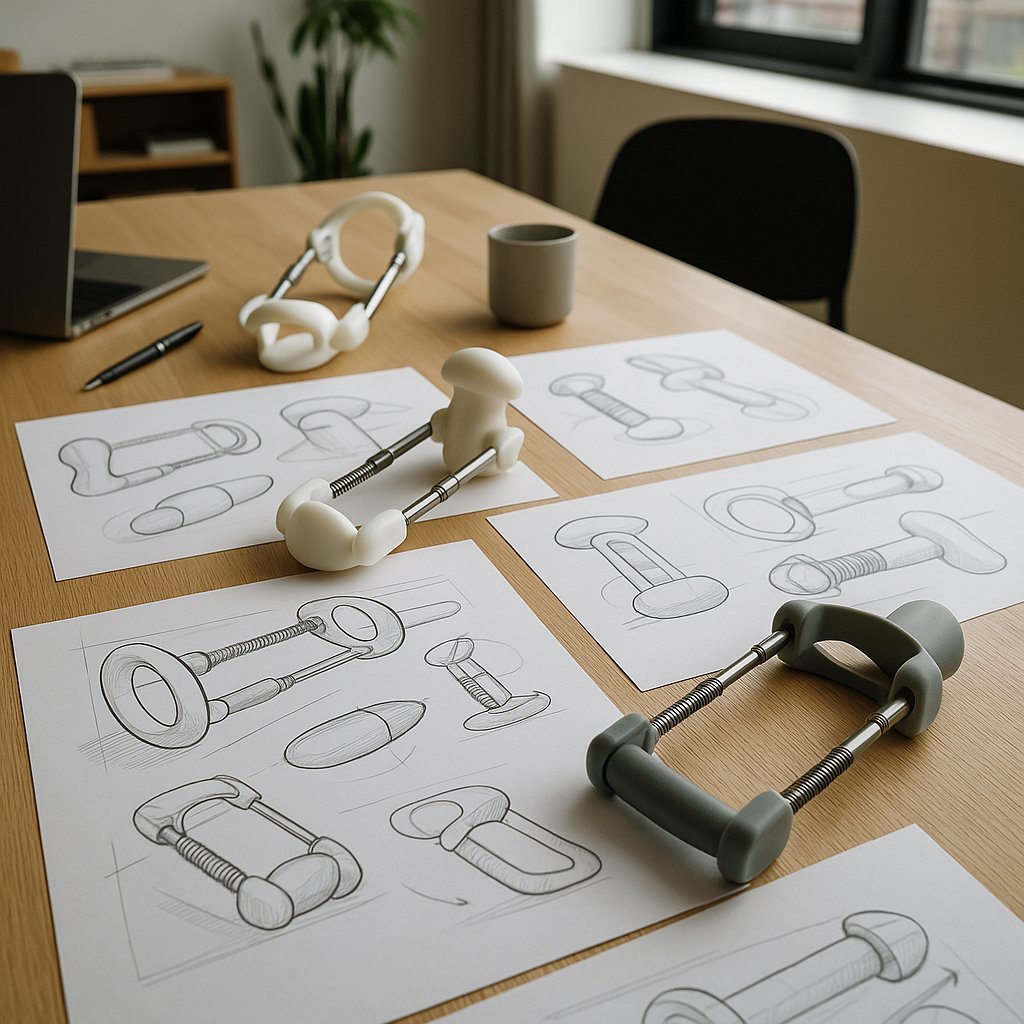
Many men ask how to combine jelq with a penis extender or penis stretcher. The short answer: you can, but you must manage total load on the tissues just like you would combine strength training with cardio—smartly, not all at once at full blast.
Traction devices: Less is more at first
Penile traction relies on low, sustained stretch, not high, painful tension. When adding a device:
- Introduce the extender or stretcher before you add jelq volume. For the first weeks, traction only.
- Start with 30–60 minutes of low-tension wear on most days, then build up slowly based on comfort.
- Check skin color, temperature, and sensation every 10–15 minutes at first.
Once you can comfortably use a device, you can add small jelq sessions on days you are not pushing the tension or duration. The goal is to avoid stacking high jelq volume on top of high traction time.
Sample low-load combination week
- Mon: 45–60 minutes penis extender at low tension, no jelq.
- Tue: 5–8 minutes jelq (40–60 strokes), no extender.
- Wed: 60–90 minutes extender, light tension.
- Thu: 5–8 minutes jelq, no extender.
- Fri: Optional 45–60 minutes extender.
- Sat: Rest or very light jelq (30 strokes) if you feel fully recovered.
- Sun: Full rest.
Always privilege recovery: if you notice fatigue, softer erections, or sensitivity changes, reduce both jelq and traction instead of powering through.
Use lifestyle to protect performance and recovery
Your overall habits matter as much as your routine. Evidence on general health and fitness shows benefits from regular moderate activity, standing and moving instead of sitting all day, and avoiding extremes like chronic oversleeping that can signal underlying issues. For penis training, this translates to:
- Regular physical activity to support circulation and hormone health.
- Avoiding long static sitting without breaks; stand, walk, or do brief bodyweight moves.
- Prioritizing consistent, adequate sleep (not too little, not routinely excessive).
- Limiting heavy drinking and smoking that can damage blood vessels and impair erections.
If you want structured traction as part of your plan, consider a medically oriented penis extender system from the official store at this dedicated penis extender retailer, and always follow manufacturer guidelines instead of improvising extreme tension.
Step 4: Use Feedback, Pleasure, and Safety Signals to Personalize Over Time
The best jelq routine is the one you can adjust based on how your body responds. Treat every week like an experiment where your penis gives you data—not a test of how much pain or intensity you can tolerate.
Track key indicators weekly
- Erection quality: Are morning erections regular and firm? Do erections during sex or masturbation feel better, worse, or unchanged?
- Sensation: Any numbness, pins and needles, or reduced sensitivity?
- Appearance: New dark spots, swelling, or uneven bulges? Persistent discoloration?
- Pain: Any throbbing, sharp, or burning pain during or after sessions?
If erection quality drops, pain appears, or sensation changes, your personalized routine should immediately shift to lower volume, lighter grip, fewer days, or a complete break until things normalize.
Integrate jelq with better sex techniq, not just size focus
Sexual wellness improves most when you combine physical training with skill and communication. As you refine your jelq routine:
- Use slower, more intentional strokes during partnered or solo play to build arousal gradually instead of rushing to ejaculation.
- Practice pausing stimulation when you feel close to climax, then breathing deeply and letting the urge fall, to support better ejaculation control.
- Coordinate jelq off-days with pleasure-focused sessions that emphasize touch variety, full-body arousal, and connection instead of performance.
This way, any physical changes you see from jelq or traction are plugged into better technique, more satisfying orgasms, and healthier confidence—not just occasional measuring sessions.
Know when to stop entirely and seek help
Stop jelq and traction immediately and contact a healthcare professional if you notice:
- Sudden, severe pain during a stroke or stretch.
- A pop sensation followed by rapid loss of erection.
- Significant swelling, severe bruising, or a curved, deformed appearance that was not there before.
- Persistent numbness, coldness, or major color change.
In those situations, pushing on is not “dedication”—it is risking permanent damage. Long-term mens sexual wellness depends on protecting your erectile tissue, nerves, and blood vessels first.
Conclusion: Your Routine Should Serve Your Sexual Wellness, Not Rule It
A personalized jelqing routine is less about copying numbers from a forum and more about aligning technique, volume, and tools with your real life and long-term health. When you focus on safe structure, consistent warm-ups, reasonable volume, and honest feedback from your body, jelq becomes one small piece of a much bigger men’s sexual wellness strategy.
If you choose to experiment, keep the focus on function—better erections, more confident arousal, more controlled ejaculation, and improved intimacy—rather than chasing extreme promises. Build slowly, rest often, pay attention to warning signs, and be willing to scale back or stop. Your penis is not a project; it is part of your whole health, and any routine you build should protect that first.
FAQ
Q: How do I know if I’m ready to start a personalized jelqing routine?
A: You’re ready when you have no current penile pain, open sores, or untreated infections, and you can consistently set aside time for warm‑up, exercises, and cool‑down. It also helps to have clear goals (e.g., better erection quality or stamina) and a way to track changes, like a journal or measurement log.
Q: What’s a good starting structure for a safe jelqing routine?
A: Begin with a short warm‑up, a low number of gentle jelq repetitions, and a brief cool‑down, performed only a few days per week. Increase intensity or volume slowly—over weeks, not days—while watching closely for any signs of discomfort or fatigue.
Q: How can I tailor jelqing intensity to my body and schedule?
A: Adjust session length, frequency, and grip pressure so you can complete the routine without rushing or straining. If you notice lingering soreness or changes in erection quality, reduce either how often you train or how many repetitions you do per session.
Q: Can I safely combine jelqing with a penis extender?
A: Yes, but treat them as complementary stressors and manage total load carefully. Use lower intensity and shorter duration for both at first, avoid stacking your longest extender sessions with your hardest jelqing days, and schedule regular rest days.
Q: When should I stop or scale back my jelqing routine?
A: Stop or reduce intensity if you feel sharp pain, see significant discoloration or bruising, or notice a drop in erection quality that doesn’t resolve after rest. Any ongoing discomfort is a signal to take at least several days off and return more gradually, or to reconsider your routine design altogether.


Post Comment