Jelq Safety Tips: A Risk‑Aware Checklist for Curious Beginners
Table of Contents
- Overview: What Jelq Can’t Promise (and Why Safety Comes First)
- Checklist 1: Mindset, Expectations, and When Not to Jelq
- Checklist 2: Physical Limits, Technique Boundaries, and Red‑Flag Symptoms
- Checklist 3: Tools, Extenders, and How to Compare Risks
- Checklist 4: Erections, Ejaculation, and Whole‑Body Men’s Sexual Wellness
- Conclusion: Your Safety‑First Jelq Decision
- FAQ
Overview: What Jelq Can’t Promise (and Why Safety Comes First)
Expert Insight: According to WebMD, jelqing is a stretching technique promoted online for penis enlargement, but most men who worry their penis is too small actually have an average erect length of about 5 inches (13 cm), and this anxiety is often called “small penis anxiety” or “short penis syndrome” (https://www.webmd.com/men/jelqing). (www.webmd.com)
Jelqing is often marketed as a simple way to increase length or girth by repeatedly “milking” a semi‑erect penis. The idea is that controlled squeezing forces more blood into the shaft, creating microtears that supposedly remodel tissue over time. But medical sources like WebMD and major clinic systems emphasize that there is no solid scientific evidence that jelq permanently enlarges the penis in men without specific medical conditions, and there is clear evidence that over‑aggressive stretching can damage skin, blood vessels, and erectile tissue.
If you are still curious enough to experiment, you need to treat jelq like contact sports: the main goal is to avoid permanent damage, not to chase fast gains. The checklist below is designed to protect erections, reduce the risk of Peyronie’s‑type scarring, and keep the rest of your men’s sexual wellness (ejaculation, sensation, and confidence) intact while you decide whether this sex techniq is worth any risk at all.

Checklist 1: Mindset, Expectations, and When Not to Jelq
Before you touch your penis, run through this mental safety checklist. If you can’t honestly answer “yes” to each point, it is safer to skip jelq altogether.
- Do I accept that results are not proven? Jelq is not backed by clinical trials for cosmetic enlargement. If you need guaranteed change, talk with a urologist instead of relying on anecdotes.
- Am I actually average? Most men who worry about size fall within the normal erect range. If your stretched or erect length is around 5 inches (13 cm), that is medically average, even if porn has convinced you otherwise.
- Do I have any pain, curvature, or previous injury? If you have painful erections, a new bend, a palpable plaque, or a history of penile trauma, jelqing can worsen scarring and should be avoided until a clinician has evaluated you.
- Is my goal confidence, not perfection? If you are chasing a specific number or obsessively measuring, you are more likely to push too hard, ignore warning signs, and damage yourself. Healthy men’s sexual wellness focuses on function, pleasure, and intimacy, not hitting an arbitrary length.
- Could anxiety or depression be a bigger issue? Persistent distress about size, performance, or ejaculation control is a strong signal to involve a mental health professional or sex therapist, rather than trying to “fix” everything through penile exercises.
Being brutally honest with yourself at this stage protects you from trading temporary insecurity for long‑term structural damage.
Checklist 2: Physical Limits, Technique Boundaries, and Red‑Flag Symptoms
If you decide to experiment, use strict limits on intensity, frequency, and erection level. These are not “optimization” tips; they are guardrails to lower the risk of bruising, vascular injury, and nerve damage.
- Start below full erection. A jelq stroke should be done at a low to medium erection level, not fully hard. High pressure on a rigid shaft increases the chance of tearing vessels and producing deep bruises.
- Use plenty of lubrication. Friction burns and skin irritation are common early injuries. Generous lubricant (water‑based or simple unscented oil) reduces shear stress on skin and superficial veins.
- Avoid pain, pins‑and‑needles, or numbness. Mild awareness of pressure is normal; any sharp pain, burning, sudden loss of sensation, or tingling means stop immediately. Treat these as early warnings of nerve or vascular trauma.
- Cap your session length and frequency. New users should consider a hard cap like 5–10 minutes, no more than 3–4 days per week, with at least one full rest day between sessions. Daily, long sessions increase the risk of cumulative micro‑injury and scarring.
- Never continue through visible damage. Bruising, red or purple spots, swelling that lasts more than 24–48 hours, or a pronounced bend that was not there before are not “good signs” of growth; they are evidence of injury. Continuing in this state can lead to Peyronie’s‑type plaques.
- Protect the glans. The stroke should slow, soften, or stop before you squeeze over the head of the penis. Direct compression of the glans increases the risk of burst capillaries and distressing discoloration.
- Watch for changes in erections or ejaculation. Weaker morning erections, difficulty getting or maintaining an erection, decreased force of ejaculation, or sudden changes in orgasm sensation are major red flags. Stop and seek medical advice if these appear.
Your penis should look and feel normal again between sessions. Anything that lingers—pain, curvature, plaques, or persistent color change—means your body is not tolerating the load you are putting on it.
Checklist 3: Tools, Extenders, and How to Compare Risks
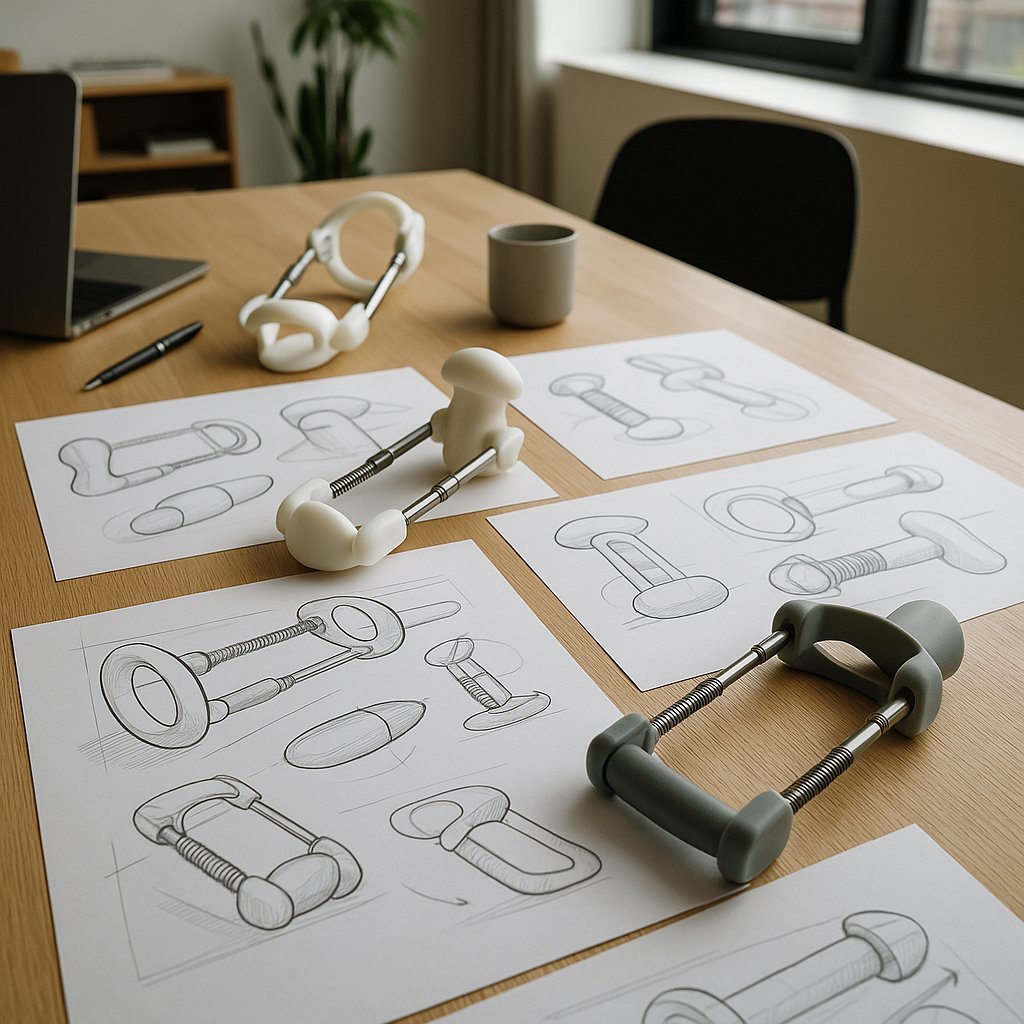
Many men combine jelq with a penis extender or penis stretcher, hoping that devices plus manual work will accelerate size changes. That can quickly multiply risk if you ignore some basic comparisons.
- Understand what extenders can realistically do. Penile traction devices may provide modest flaccid length gains (often less than 2 cm) when used for several hours a day, over months. They are not magic, and gains vary.
- More tension is not better. Whether using your hand, a penis stretcher, or a vacuum pump, over‑tightening or cranking up pressure above what the manufacturer or clinician recommends is the fastest way to damage tissue.
- Do not stack aggressive techniques. Combining intense jelq, high‑tension penis extender sessions, and frequent pumping leaves almost no recovery time. If you use devices, keep jelq extremely light or skip it on those days.
- Favor medically guided devices when possible. If you are going to invest in traction, choosing a reputable, clinically oriented brand is safer than gambling on untested gadgets. For example, men who want structured traction instead of improvised methods sometimes choose a branded extender through the official Penimaster store so they have instructions, support, and a clear starting protocol rather than home‑made setups.
- Monitor the skin and base of the penis closely. Extenders and stretchers can create pressure points around the glans, base, or suspensory ligament. Any persistent soreness at the base, especially when you lift the penis upward, deserves a break and possibly a medical evaluation.
- Stop device use during acute injury. If jelq has already caused bruising, swelling, or painful erections, adding traction or pumping will not “even things out.” It will intensify tissue stress at the worst possible time.
Your checklist question here is simple: “Does this tool reduce guesswork and keep tension predictable, or does it tempt me to push harder without understanding the consequences?” Choose only the options that clearly fit into the first category.
Checklist 4: Erections, Ejaculation, and Whole‑Body Men’s Sexual Wellness
Jelqing should never become the center of your sex life. Penile size is just one element of men’s sexual wellness, and usually not the most important for pleasure, intimacy, or performance.
- Protect erectile function above all. Strong, reliable erections are more valuable for your sex life than a small, speculative change in length. Any hint that jelq is weakening erections is an automatic stop signal.
- Pay attention to ejaculation patterns. If you notice new pain with ejaculation, a sudden drop in semen volume, changes in ejaculation force, or any blood in semen, stop and get evaluated. While jelq is unlikely to change sperm quality directly, trauma to the urethra or surrounding tissue can affect how ejaculation feels and functions.
- Build safer sex techniq alternatives. Instead of chasing visual changes, invest in skills that actually improve sex for you and your partner: pacing, stimulation variety, communication, and arousal control. Kegel exercises, for example, can support erection rigidity and ejaculation control without mechanically stressing the shaft.
- Use pelvic floor work wisely. Gentle, correctly performed Kegels (and relaxation of an over‑tight pelvic floor) can help men with certain forms of erectile or ejaculation difficulty. Over‑clenching, however, can worsen pelvic pain or premature ejaculation if done incorrectly or obsessively.
- Care for the rest of your health. Cardiovascular health, sleep, stress management, and avoiding smoking or excessive alcohol all matter more for sexual performance than experimental stretching routines. A healthy body makes stronger erections and better orgasms far more reliably than jelq.
- Watch your mental state. If sessions leave you more anxious, constantly checking your penis in the mirror, or fearful every time you get hard, the practice is undermining the very confidence you hoped to build.
A practical rule: if jelqing makes you less interested in partnered pleasure and more obsessed with solo measurement, it is hurting—not helping—your real‑world sexual wellness.
Conclusion: Your Safety‑First Jelq Decision
For most men, jelq offers uncertain benefits and very real risks. A risk‑aware checklist shifts your focus from “How big can I get?” to “How can I avoid permanent harm while staying curious?” That means:
- Being honest about your starting size and motives.
- Respecting physical limits, pain signals, and visible injury.
- Comparing tools and traction devices on safety, not hype.
- Centering erections, ejaculation health, and overall men’s sexual wellness rather than chasing a specific number.
You always retain the safest option of all: skipping jelq altogether and putting your energy into proven health habits, communication skills, and sex techniques that reliably improve pleasure and performance. If you ever feel unsure about a symptom or a past experiment, treat that uncertainty as a sign to pause and talk to a qualified clinician before you do anything else to your penis.
FAQ
Q: Is jelqing actually proven to work for penis enlargement?
A: There’s no solid clinical evidence that jelqing reliably increases penis size, and most reported gains are anecdotal. The checklist helps you focus on safety first and manage expectations so you’re not risking long‑term problems for uncertain results.
Q: What are the biggest risks I should watch for when starting jelq exercises?
A: Key risks include bruising, red spots, pain, numbness, curvature changes, and weaker or less reliable erections. Treat any sudden change in color, shape, or sensitivity as a warning sign to stop immediately and reassess your technique, intensity, and frequency.
Q: How hard should I squeeze during jelqing to stay on the safer side?
A: Use only enough pressure to gently move blood along the shaft, never a tight or painful grip. A simple rule: if your penis feels sore, cold, numb, or looks more than mildly discolored during or after, your pressure is too high.
Q: How often can a beginner jelq without overdoing it?
A: Many cautious beginners limit jelqing to a few short sessions per week with rest days in between. The checklist emphasizes starting with low volume and intensity, then adjusting based on how your erections and skin respond over several weeks.
Q: What should I do if I notice negative changes after jelqing?
A: Stop all exercises right away and give your penis time to recover while you monitor for changes in erection quality, shape, and sensation. Use those observations to decide whether to reduce intensity, change your routine, or abandon jelqing altogether in favor of safer wellness habits.


Post Comment