How to Create a Personalized Jelqing Routine for Enhanced Sexual Wellness (Without Ignoring Safety)
Table of Contents
- Overview: What a Personalized Jelq Plan Really Means
- Step 1: Clarify Your Goals and Risk Tolerance
- Step 2: Build a Safe Jelq “Starter Template” You Can Adjust
- Step 3: Combine Jelq with Kegels, Extenders, and Smarter Sex Techniques
- Step 4: Monitor Your Body and Know When to Stop, Pause, or Get Help
- Conclusion: Make Jelq One Tool, Not Your Whole Identity
- FAQ
Overview: What a Personalized Jelq Plan Really Means
Expert Insight: According to WebMD, jelqing is a stretching technique promoted online for penis enlargement, but most men who worry their penis is “too small” actually fall within the average erect length of about 5 inches (13 cm) ([webmd.com](https://www.webmd.com/men/jelqing)). (www.webmd.com)

Designing a jelq routine is not about copying a random internet program. It is about understanding your anatomy, the limits of the technique, and how it fits into your broader mens sexual wellness goals: confidence, reliable erections, controlled ejaculation, and satisfying sex for you and your partner.
Key realities to ground your plan:

- No strong clinical proof: Major medical sources note there is no high‑quality evidence that jelqing permanently enlarges the penis. Claims are mostly anecdotal.
- Real risks exist: Aggressive jelq work can cause pain, bruising, skin damage, nerve issues, or scarring that may contribute to Peyronie’s disease.
- Sexual wellness is bigger than size: Erection quality, arousal, stamina, orgasm intensity, pelvic floor health, and communication with partners matter more than a small size change.
- Personalization = safety + consistency: Your routine should match your current health, erection quality, pain threshold, schedule, and experience level, and it should be easy to adjust when your body gives feedback.
With that in mind, a personalized jelq routine is really a sexual wellness framework: risk‑aware jelq (if you choose to do it at all), smart recovery, core exercises like Kegels, plus realistic expectations about tools like a penis extender or penis stretcher.
Step 1: Clarify Your Goals and Risk Tolerance
Before you plan reps or minutes, decide what you actually want from jelq and how much risk you are willing to accept. This shapes everything that follows.
Common goals men mention:
- Appearance and confidence: Feeling better naked, reducing size anxiety, being less distracted by comparisons.
- Erection quality: Subjectively harder, fuller erections and better blood flow.
- Sex performance: More perceived thickness, better sensation, or more control during penetration and ejaculation.
- Anatomy awareness: Getting more comfortable touching and exploring your penis and pelvic floor.
Questions to ask yourself:
- How would I feel if I got zero size change? If you would feel devastated, jelqing is the wrong primary strategy. Therapy for body image and sex‑positive education will help more than any manual exercise.
- How do I feel about possible side effects? Mild bruising or soreness may resolve; scarring or curvature changes may not. You must be honest about your tolerance for permanent downsides.
- What is my real time budget? A routine that demands 45 minutes a day will fall apart. Many men do better with 10–20 focused minutes several days per week.
- How is my current sexual function? If you already have pain, curvature, erectile dysfunction, or big changes in ejaculation, see a urologist before experimenting.
Once you have a written answer to those questions, you can design a jelq plan that aligns with your real life instead of your most impulsive fantasy.
Step 2: Build a Safe Jelq “Starter Template” You Can Adjust
This section outlines a conservative, adjustable template. It is not a guarantee of safety or results. It is a starting point you can modify based on your body’s feedback and medical advice.
Baseline rules for any jelq routine
- Intensity: Use gentle to moderate pressure. You are moving blood, not trying to crush tissue.
- Erection level: Aim for about 40–60% firmness; not fully hard, not fully soft.
- No pain, sharp sensations, or numbness: Discomfort means stop immediately and reassess, not push through.
- Limit frequency at first: Treat jelq like a new workout. Start with fewer “sessions” per week and add very slowly, if at all.
Example beginner template (for educational purposes only)
Warm‑up (3–5 minutes)
- Take a warm shower or apply a warm, damp cloth around your penis and pubic area.
- Goal: Relax tissue, increase comfort, and reduce superficial injury risk.
Lubrication (essential)
- Use a simple, unscented water‑based or light oil‑based lubricant.
- Never jelq on dry skin; friction greatly increases the risk of irritation and micro‑tears.
Basic jelq technique (5–10 minutes max for beginners)
- Bring your penis to a partial erection, then let it settle to a comfortable semi‑erect level.
- Form an “OK” ring with your thumb and index finger at the base of your penis.
- Apply light to moderate pressure and slowly glide toward the glans (head), taking about 2–3 seconds per stroke.
- Stop before the glans; do not squeeze the head itself.
- Alternate hands. A beginner might start around 50–100 strokes total, monitoring for any discomfort.
Cool‑down (2–3 minutes)
- Gently massage the shaft with very light pressure.
- Optionally re‑apply warm water (in the shower) to relax tissue.
Weekly structure for beginners
- Weeks 1–2: 2 sessions per week; 5–10 minutes jelq time per session.
- Weeks 3–4: If there is no pain, bruising, or change in sensitivity, consider 3 sessions per week.
- Beyond week 4: You might very gradually increase strokes or time, but always respect rest days and back off at the first sign of worsening symptoms.
Personalization levers
- Time: If you notice lingering soreness, keep sessions short and spaced out. If everything feels normal, you may tolerate slightly longer sessions.
- Stroke speed: Slower strokes increase time under pressure; if you are sensitive, shorten stroke duration.
- Grip strength: Many men over‑squeeze. Use the minimum pressure that clearly moves blood along the shaft.
- Schedule: Some men prefer jelq far away from sex; others feel fine doing it on low‑intensity days between sexual activity.
Remember: Any personalized jelq plan should be considered experimental and secondary to proven pillars of men’s sexual wellness such as lifestyle, pelvic floor health, and medical care when needed.
Step 3: Combine Jelq with Kegels, Extenders, and Smarter Sex Techniques
If you already care enough to build a jelq routine, it makes sense to layer in proven, low‑risk habits that genuinely support erections, orgasm control, and overall sexual confidence.
Pelvic floor work (Kegels for men)
- Clinical sources describe Kegel exercises as a way to strengthen the pelvic floor muscles that support erections, ejaculation, and bladder control.
- To find the right muscles, try stopping urine mid‑stream once; those are your pelvic floor muscles. Do not practice Kegels while urinating long‑term, just use it once or twice for identification.
- A starter pattern might be 3 sets of 10 contractions per day: gently squeeze for 3–5 seconds, then relax for 3–5 seconds.
- Over weeks, you can vary between long holds and short “pulses” to build endurance and control. This can improve ejaculation timing and orgasm intensity when combined with good arousal management.
Penis extender / penis stretcher use
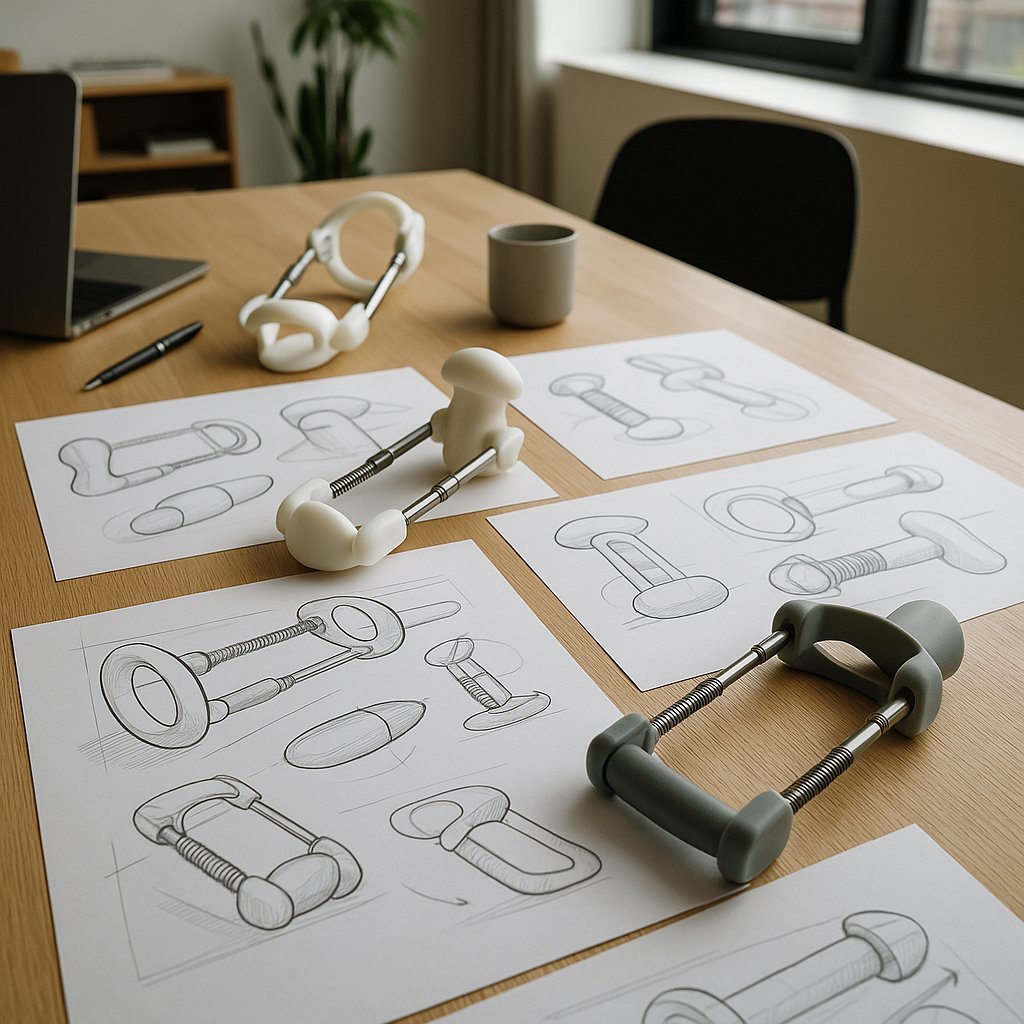
- Medical reviews note that traction devices (often called a penis extender or penis stretcher) may add a small amount of flaccid length over months of very consistent use, typically less than 2 cm.
- They do not replace jelq, and they are not necessary for a good sex life. But if you are going to experiment with traction, use clinically informed guidelines: low tension, many hours, many months, and strict attention to comfort and skin integrity.
- Never stack aggressive jelq on top of high‑tension traction on the same day. If you combine them, think in “cycles” (for example, some days light traction only, some days very gentle jelq only, and clear rest days).
Sex techniq and arousal skills
- Many men chase size when their real issue is how they use what they already have. Technique and communication often deliver bigger gains in partner pleasure than any marginal change in length or girth.
- Work on variable thrusting patterns, slower build‑ups, and using hips, pelvis, and full‑body movement instead of frantic, porn‑style pounding.
- Practice edging (bringing yourself close to orgasm then backing off) to learn your arousal curve and improve ejaculation control.
- Use different angles, positions, and rhythm changes to increase stimulation for both partners without over‑relying on friction alone.
When you integrate jelq with Kegels, sensible extender strategy, and refined sex techniq, you are no longer just “chasing size” – you are building a comprehensive men’s sexual wellness toolkit that supports confidence and performance regardless of what the measuring tape says.
Step 4: Monitor Your Body and Know When to Stop, Pause, or Get Help
A personalized jelq routine only stays safe if you continually update it based on your body’s response. Ignoring warning signs is how temporary irritation becomes long‑term damage.
Track your personal baselines
- Morning erections: Frequency and firmness across weeks.
- Sex or masturbation performance: Any changes in erection quality, ejaculation timing, sensation, or orgasm intensity.
- Visual changes: New curvature, plaques, lumps, or thickened areas along the shaft.
- Sensation: Pay attention to any numb patches or tingling that persists beyond a day.
Immediate stop signs
- Sharp or shooting pain during jelq.
- Significant bruising, swelling, or dark discoloration that appears quickly.
- Sudden change in curvature or a “kinked” feeling.
- Persistent loss of erection strength compared to your normal.
If any of these appear, stop jelq and any traction work. Give your body a full break and seek medical evaluation if symptoms are strong, worsen, or do not improve in a few days.
When to talk to a professional
- Erections become less reliable or painful.
- You notice a stable curve, palpable plaque, or change in shaft shape.
- There is burning, tingling, or numbness that lasts more than a brief period.
- You have ongoing distress about penis size or performance that affects your relationships or mood.
A urologist, especially one focused on sexual medicine, can rule out underlying conditions, explain realistic options (including when a traction device is appropriate), and help you decide whether to continue, modify, or abandon jelq entirely.
If you do decide to experiment with traction as part of a broader plan, only use reputable products and medically informed protocols. For example, some men choose clinically oriented extender systems from trusted vendors; if you go that route, consider purchasing through the official extender store so you are not guessing with unverified knockoffs.
Conclusion: Make Jelq One Tool, Not Your Whole Identity
A personalized jelqing routine for enhanced sexual wellness is less about perfect rep counts and more about how you integrate the technique into a sane, holistic plan. That plan should recognize that jelq is unproven for permanent growth, that the penis is delicate vascular and smooth muscle tissue, and that your long‑term pleasure, function, and confidence matter more than chasing another half‑inch.
To build a routine that serves you instead of owning you:
- Ground yourself in realistic expectations and a clear sense of risk tolerance.
- Start with a conservative jelq template, prioritize comfort, and adjust slowly.
- Anchor your program in scientifically supported pillars: lifestyle, Kegels, erection health, and smarter sex techniq.
- Use traction devices, if at all, with caution and medical guidance, never as a reckless shortcut.
- Stay alert to warning signs, take rest seriously, and involve a urologist if anything feels off.
In the end, mens sexual wellness is not decided by one exercise. It comes from how you care for your body, relate to your partners, and respond to your own fears and desires. Jelq can be one small experimental tool in that journey, but it should never replace clear thinking, medical insight, or genuine intimacy.
FAQ
Q: How often should I jelq when starting a personalized routine?
A: When you’re new, 2–3 sessions per week with at least one rest day between is a realistic starting point. Begin with short sessions of 5–10 minutes and only increase duration or frequency if you have no pain, bruising, or lingering soreness.
Q: What’s the safest erection level for jelqing?
A: Most people aim for a semi‑erect level, around 40–70% hardness. This gives enough firmness to move blood without the high pressure and injury risk that comes with full erections.
Q: How can I mix jelqing with Kegels without overtraining?
A: Separate jelqing and Kegel work in your plan, just like you’d divide different muscle groups at the gym. For example, you can do light Kegels daily but keep jelq sessions to a few days per week, monitoring for pelvic fatigue or tightness.
Q: Can I combine jelqing with a penis stretcher in the same routine?
A: Yes, but keep total stress low by adjusting time and intensity. Many users do low‑tension stretching for longer periods and shorter, gentler jelq sessions, with at least one full rest day each week.
Q: What signs mean my jelq routine is too intense and needs adjusting?
A: Red flags include pain, sharp stinging, dark bruising, numbness, or erections that feel weaker for more than a day. If you notice these, cut back duration and intensity, add rest days, and only progress when your baseline function feels normal again.


Post Comment