Open Conversations About Men’s Sexual Health and Wellness
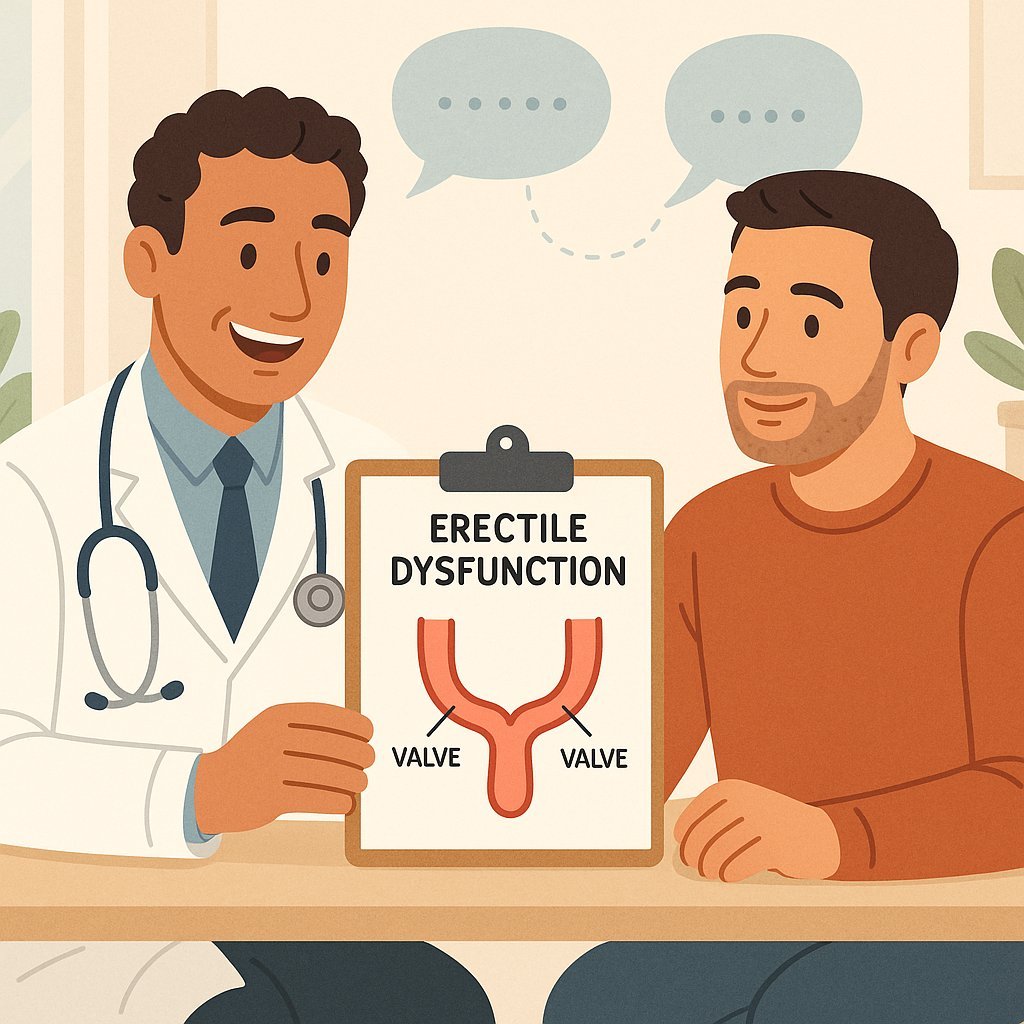
Read more in our Complete Guide to Men’s Sexual Wellness.

Table of Contents
- Overview: Why Open Conversations Matter for Men’s Sexual Wellness
- Understanding Your Sexual Anatomy in Plain Language
- Talking About Problems: Erections, Ejaculation, and Performance Anxiety
- Discussing Enhancement: Jelq, Penis Extenders, and Sex Technique Without Hype
- How to Start Real Conversations With Partners and Professionals
- Conclusion: Making Sexual Health a Normal Part of Everyday Talk
- FAQ
Overview: Why Open Conversations Matter for Men’s Sexual Wellness
Expert Insight:
According to my.clevelandclinic.org, an erection happens when sexual stimulation or sometimes random factors increase blood flow into the penis, causing it to become hard and stand away from the body, and it typically subsides after ejaculation or on its own (https://my.clevelandclinic.org/health/articles/10036-erection). The penis contains two sponge-like chambers called the corpora cavernosa, the urethra, erectile tissue, blood vessels, nerves, the shaft, and the head (glans). (
my.clevelandclinic.org)
Most men grow up getting half-truths, jokes, or silence about their own bodies. That silence breeds confusion, anxiety, and a lot of bad decisions about mens sexual wellness. Open conversations cut through the noise: you learn how erections really work, what counts as normal, when to see a clinician, and how to use tools like a jelq routine, penis extender, or penis stretcher in a safer, evidence-minded way.
Talking honestly about these topics doesn’t make you weak or obsessive; it makes you informed. When you can put words to what you feel in your penis, your erections, your ejaculation, and your desire, you can actually solve problems instead of hiding them. That’s the foundation this article focuses on: clear language, practical facts, and concrete steps to bring mens sexual wellness into everyday conversation.
Understanding Your Sexual Anatomy in Plain Language
Open conversations start with basic facts. Your penis is not a mystery object; it’s a specific structure with clear parts working together:
- Shaft and head (glans):The visible body of the penis and the sensitive tip. Sensation here is a major part of arousal and orgasm.
- Corpora cavernosa:Two sponge-like chambers running along the shaft. During arousal, they relax and fill with blood, creating an erection.
- Tunica albuginea:A tough outer layer that holds pressure in the corpora cavernosa so the penis stays firm.
- Urethra:The tube that carries urine and semen; it runs along the underside of the penis and opens at the meatus (the tip).
- Sperm and semen:Sperm cells are made in the testicles and mix with fluids from the prostate and other glands to form semen, which is released at ejaculation.
An erection isn’t just “getting hard.” It’s your brain sending signals down nerves to relax tiny muscles in the corpora cavernosa. Arteries open, blood rushes in, valves keep it there, and the tunica albuginea maintains pressure. When the signals stop, the muscles contract, veins open, and the penis becomes soft again.
Key points that often never get said out loud:
- Average erect lengthis around 5.1 inches (about 13 cm). There is wide normal variation, and a soft (flaccid) size tells you surprisingly little about erect size.
- There are different types of erections: touch-driven (reflexogenic), thought-driven (psychogenic), and nocturnal (during sleep). All are normal.
- Erections before or without sex are not a problem by themselves; they’re just a sign that the system is responsive.
When you know this anatomy and process, it becomes much easier to talk about what feels off: a weaker erection, pain in the shaft, changes in curvature, changes in ejaculation volume, or orgasm that feels “muted.” Clear descriptions help clinicians and partners understand you, and they help you judge whether a new sex techniq or device feels safe or not.
Talking About Problems: Erections, Ejaculation, and Performance Anxiety
One of the hardest parts of mens sexual wellness is saying out loud, “Something’s not working for me.” But once you do that, you can separate what’s a medical issue from what’s more about stress, technique, or expectations.
Erectile difficulties
are extremely common. Erectile dysfunction (ED) simply means you can’t get or keep an erection that’s firm enough for sex. It can be related to:
- Blood flow issues(high blood pressure, diabetes, high cholesterol, tobacco use, atherosclerosis).
- Nerve issues(diabetes, stroke, spinal or pelvic injury).
- Mental health and stress(anxiety, depression, relationship conflict, performance pressure).
- Medications or surgeryaffecting hormones, blood vessels, or nerves.
When you talk to a clinician, be specific: do you wake with morning erections? Can you get hard during masturbation but not with a partner? Does the erection fade right before penetration? These details help distinguish blood-flow problems from performance anxiety or relationship stress.
Ejaculation
is another area men rarely discuss honestly. Useful points to raise openly include:
- Timing:Do you ejaculate sooner than you want, or is orgasm difficult or impossible even with strong erection and stimulation?
- Sensation:Does orgasm feel weaker, stronger, or different than in the past?
- Volume or appearance of semen:Has it changed significantly in amount, color, or thickness?
- Pain:Do you feel pain in the penis, testicles, perineum, or lower abdomen during or after ejaculation?
When you can accurately describe what is happening with your erection and ejaculation, you and your provider can talk about realistic options: lifestyle changes, medication (like sildenafil, vardenafil, tadalafil), hormone evaluation, pelvic floor work, or therapy for anxiety and depression. That conversation is the opposite of “I’m broken”; it’s a step toward active, informed mens sexual wellness.
Discussing Enhancement: Jelq, Penis Extenders, and Sex Technique Without Hype
Open conversations also matter when you’re curious about enhancement. A lot of men quietly experiment with a jelq routine, a penis extender, or a penis stretcher because they feel they can’t talk about size or performance openly. That secrecy is exactly what leads to overtraining, injury, and disappointment.
To bring enhancement into the open, focus on three questions: what does the method claimto do, what can it realisticallydo, and what are the risks?
- Jelq:Jelqing is a manual technique using repeated strokes along the shaft to create pressure in the erectile tissue. Some men report changes in erection quality or size, but risks include bruising, pain, loss of sensitivity, and possible vascular damage if done too hard or too often. Any jelq experiment should be slow, low-pressure, and stopped immediately if you feel sharp pain, burning, or new numbness.
- Penis extender or penis stretcher:These devices apply controlled traction over time. Evidence suggests that properly used traction can influence penile length, especially for curvature or shrinkage after certain conditions, but progress is gradual and depends on consistent, conservative use. Risks include skin irritation, circulation issues, and pain if the tension is too high or sessions are too long.
- Sex techniq and arousal:Technique changes can dramatically improve pleasure without any device at all. Slowing down, using lube, changing positions, experimenting with edging, and paying attention to breathing and pelvic floor relaxation often improve erection control and satisfaction more than any gadget.
The key is to move away from secret, desperate self-experiments and into open, structured plans. That might mean telling a partner, “I’m trying a traction device; here’s how I’m using it and what I’m watching out for,” or telling a urologist, “I want to know the safest way to approach a penis stretcher or jelq, and how to monitor for damage.” When professionals know what you’re doing, they can help you stay within safer limits and catch problems early.
If you decide traction is right for you, consider using a reputable, medical-grade system rather than random untested products. For example, some men choose to work with an established extender from the official store at this penis extender supplierso they can build a gradual, trackable plan instead of guessing with low-quality devices.
How to Start Real Conversations With Partners and Professionals
Knowing the facts is only half the work; you also need language you can actually say out loud. A few practical strategies make talking about mens sexual wellness less awkward and more productive.
With a partner:
- Pick a neutral time, not in the middle of sex. You might say, “Can we talk about our sex life for a few minutes? I want it to be good for both of us.”
- Describe your experience, not your worth: “I’m noticing my erection fades halfway through,” instead of “I’m a failure in bed.”
- Invite their perspective: “What do you enjoy most? Is there anything you’d like us to try differently?”
- Frame enhancement tools and sex techniq as shared experiments: “I’m curious about some new techniques and maybe a traction device. Would you be open to exploring this with me and giving feedback?”
With a clinician:
- Be direct about your main concern: “I’m here because I’m having trouble keeping an erection,” or “Ejaculation has changed and I’d like to understand why.”
- Bring a short timeline: when it started, what makes it better or worse, any medications or supplements, any use of jelq, penis extender, or penis stretcher, and any pain or curvature.
- Ask explicit questions: “Could this be circulation, nerves, hormones, or stress? What tests would actually help here?”
- Clarify next steps: “If we start with lifestyle changes or meds, how will we know they’re working, and when should I follow up?”
You don’t have to share everything with everyone. But having a few trusted people—one partner, one clinician, maybe a therapist—who know what’s really happening with your sexual health creates a safety net. Problems get caught earlier, experiments with devices or techniques become more structured and safer, and you spend less time alone in your own head, worrying.
Conclusion: Making Sexual Health a Normal Part of Everyday Talk
Open conversations about men’s sexual health and wellness are not a luxury; they are basic maintenance for your body and your relationships. When you can name what’s happening—how your penis works, what your erection and ejaculation feel like, what sex techniq you’re trying, and what tools like jelq, a penis extender, or a penis stretcher you’re considering—you gain control instead of feeling controlled by anxiety or secrecy.
Use the facts about anatomy and erections to ground yourself. Use honest language with partners and clinicians so you can get real feedback instead of guesses. And if you experiment with enhancement, do it with clear goals, conservative intensity, and a willingness to stop if your body pushes back.
The more normal it feels to say, “Here’s what I’m noticing with my sexual health,” the easier it becomes to protect your function, improve pleasure, and build the kind of mens sexual wellness that actually lasts.
FAQ
Q:
Why is it important for men to talk openly about sexual health?
A:Open conversations help men understand what’s normal, spot issues earlier, and feel less isolated or ashamed. Talking about sexual health also leads to better relationships, more satisfying sex, and a clearer path to practical solutions.
Q:
How can I start a conversation about sexual concerns with my partner?
A:Choose a calm, private moment outside the bedroom and focus on teamwork instead of blame. Use “I” statements, be honest about what you’re feeling, and invite your partner’s thoughts so you can work on it together.
Q:
What are some common myths about men’s sexual performance?
A:Common myths include that men should always be ready for sex, that erections must be rock‑hard and constant, and that lasting longer is always better. These beliefs ignore natural variation, emotional factors, and the importance of mutual pleasure over performance.
Q:
How should I approach enhancement tools or products for sexual wellness?
A:Treat enhancement tools as optional aids, not magic fixes or proof of your masculinity. Research the product, pay attention to how your body responds, and prioritize safety, comfort, and communication with your partner over chasing quick results.
Q:
What role does mental health play in men’s sexual wellness?
A:Stress, anxiety, low mood, and relationship tensions can all affect desire, arousal, and satisfaction. Supporting your mental health through sleep, exercise, honest communication, and, when needed, professional support often improves your sexual wellbeing too.

Post Comment