Penis Traction Therapy for Peyronie’s Disease: Evidence-Based Protocols, Expected Results, and Best Devices (2025 Guide)
Overview
Penis traction therapy (PTT) is one of the few noninvasive options that can reduce penile curvature, preserve or regain length, and support sexual function in Peyronie’s disease (PD). In 2025, the evidence base is stronger than it was even a few years ago: randomized and prospective studies now show consistent, clinically meaningful curvature reductions and length improvements with the right device and a realistic schedule. This guide distills what matters: why traction works in PD, which devices have peer‑reviewed data, practical daily protocols, how to combine traction with collagenase injections or surgery, and what results to expect at 4, 8, 12, and 24 weeks. Read: How to Increase Semen Volume Safely: Evidence‑Based Strategies, Supplements, and Myths (2025 Guide). Read: Does Jelqing Work? Research Evidence, Risks, and Realistic Expectations (2025 Review). For more details, see Complete Guide to Penis Extenders, Stretchers &.
This is a PD‑specific, outcomes‑driven resource. It is not a general enlargement article, not a jelq routine, and not a generic “penis extender” how‑to. The devices and protocols here target fibrotic plaques and curvature, with comfort and adherence strategies that fit daily life. Use this as a structured plan to discuss with a urologist who treats PD regularly. If you want coordinated, multidisciplinary care, explore Mayo Clinic resources for patient‑centered care and access: https://mayoclinic.com/patient-centered-care, scheduling options at https://mayoclinic.com/appointments, and international support at https://mayoclinic.com/international. For more details, see Comprehensive Guide to PeniMaster Extender.
Peyronie’s Basics and Why Traction Works
What Peyronie’s disease is: PD forms fibrotic plaques in the tunica albuginea (the sheath around erectile tissue). During erection, the inelastic plaque side lengthens less than the opposite side, producing curvature. Many men also develop indentation (“hourglass”) or a hinge point with instability. Pain is common in the acute (active) phase and tends to settle as PD moves into the chronic (stable) phase.

Functional impact: Curvature, indentation, and shortening can make penetration difficult or painful, reduce confidence, and worsen erectile function through both mechanics (buckling) and performance anxiety. Protecting length and restoring straighter rigidity are central goals in mens sexual wellness for PD.
Why traction helps: Traction applies low, controlled, directional force to the shaft, triggering mechanotransduction—cellular signaling that can remodel collagen alignment and soften fibrotic tissue over time. In PD, this does three things:
– Encourages collagen remodeling toward a straighter axis (counteracting plaque‑driven asymmetry).
– Preserves or incrementally increases length by stimulating tissue expansion along the long axis.
– Improves function by reducing curvature severity and hinge instability, which can translate into more reliable penetration.
Acute vs chronic phase goals:
– Acute (pain and curve evolving): Aim for gentle, consistent traction to preserve length and begin plaque remodeling without provoking pain. Track changes closely.
– Chronic (stable curvature and minimal pain): Optimize counter‑bending to reduce curvature, and extend set length if tolerated to target both curve and length.
Where this differs from enlargement routines: Generic penis stretcher or penis extender protocols aim at cosmetic length. PD traction must target the short side (plaque side) with counter‑bend and fit around pain sensitivity. Techniques like jelq are not designed for fibrotic plaques and can aggravate symptoms; traction is the structured, evidence‑supported mechanical approach for PD. For more details, see Best Penis Extenders 2025: Evidence‑Based Buying. For more details, see Penis Extender Techniques.
What the Evidence Shows in 2025: Curvature, Length, and Function
Across randomized trials, prospective studies, and meta‑analyses, modern PTT shows consistent benefits when used as directed for several months. The most meaningful signals seen repeatedly include:
– Curvature reduction: Many studies report average curvature reductions in the 10–20° range over 8–12 weeks with daily use, with some men achieving larger changes depending on baseline curvature, plaque location, and adherence. Devices that allow counter‑bending (actively bending against the curve) tend to reach targets with less daily wear time compared to traditional constant‑axis stretchers.
– Length preservation and gain: Traction is the best noninvasive option to preserve length in PD. Typical length improvements cluster around 1–2 cm for responders over 3–6 months. Men who already lost length often see the most meaningful gains, especially when they start PTT early in or soon after the acute phase stabilizes.
– Erectile function and pain: Pain usually improves as traction normalizes tissue strain and the disease quiets. Sexual function scores can improve, especially when curvature reduction restores more efficient rigidity at the tip. When ED is present, PDE5 inhibitors or vacuum therapy may be layered in to optimize outcomes.
– Time efficiency matters: Newer PD‑specific devices designed for counter‑bending have demonstrated results with shorter, focused daily sessions (often 30–90 minutes total). Older rod‑and‑noose systems typically required many hours per day for similar gains and had higher dropout due to discomfort.
– Combination therapy improves outcomes: Studies pairing traction with collagenase clostridium histolyticum (CCH) injections show additive benefits for curvature and length compared to CCH alone. Post‑surgery traction (after plication, grafting, or an implant, as guided by the surgeon) is increasingly used to protect or recover length and maintain straightness.
Bottom line for expectations: With the right device and consistent use, most motivated men can expect a visible straightening and meaningful length preservation over 8–12 weeks, with continued gains to 24 weeks. Adherence and device selection are the biggest determinants of success.
Devices That Work for PD—and How to Choose One
PD isn’t just about stretch; it’s about targeted, directional remodeling. That’s why device design matters.
Features that matter for PD:
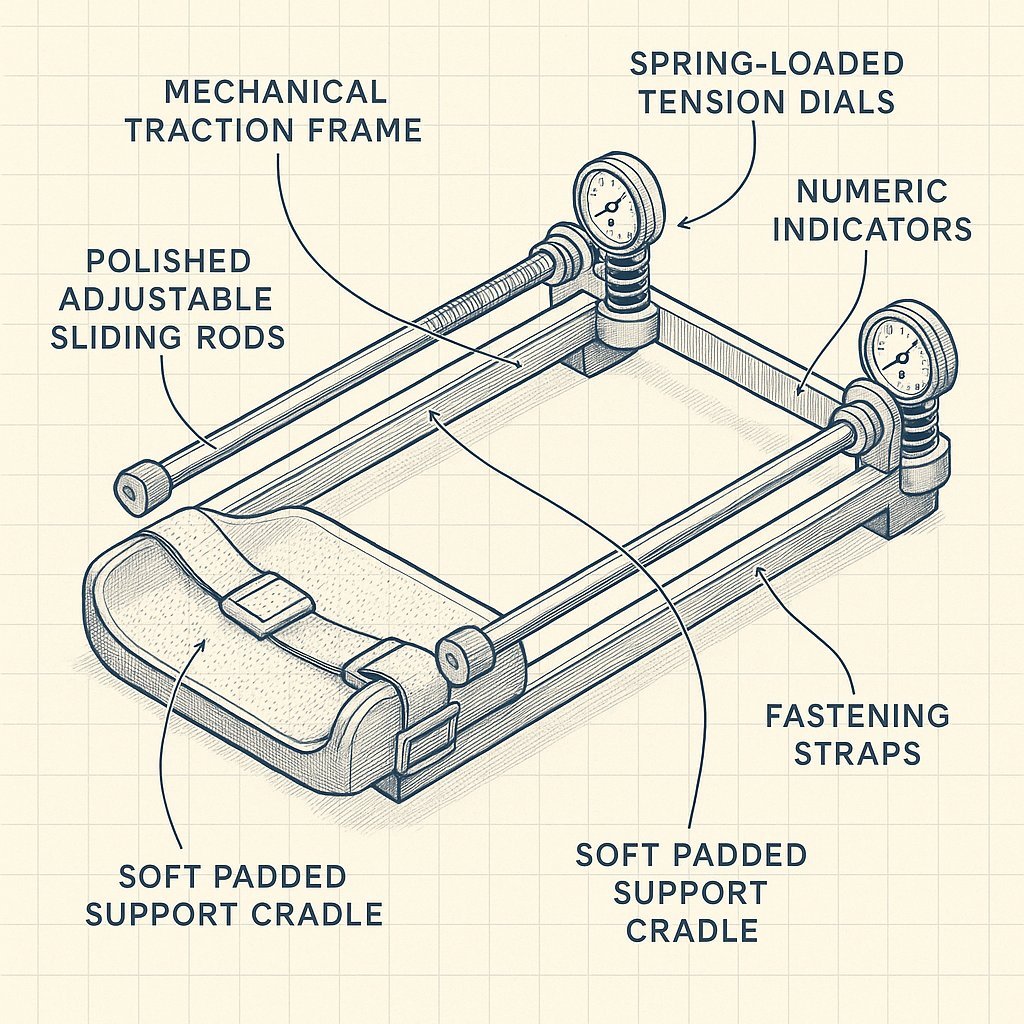
– Counter‑bend capability: The ability to bend the shaft opposite the curve during traction concentrates remodeling where the plaque restricts length. This is a differentiator for PD outcomes.
– Glans interface: Vacuum‑style caps distribute force across the glans and reduce pressure points compared to noose or narrow straps. Less slippage and fewer numbness complaints typically mean better adherence.
– Force control with comfort: Measurable, reproducible tension that you can apply without pain. Short, efficient sets beat long, punishing hours.
– Stability for hourglass or hinge: Secure glans capture and rigid support are crucial for indentation or hinge deformities.
Devices with published PD data:
– RestoreX: Purpose‑built for PD, with a lever mechanism that allows adjustable counter‑bending plus straight traction. Trials report curvature reduction and length gains with 30–90 minutes total daily use. Strong evidence base, especially in combination with CCH.
– AndroPenis: A classic rod‑based extender (penis extender/penis stretcher style) with PD studies showing curvature reductions and length preservation with multi‑hour daily protocols. Requires patience and careful glans comfort management.
– PeniMaster PRO: Vacuum‑assisted glans cap with rod or belt configurations. PD cohorts show improvements in curvature and length with sustained use; comfort and secure glans capture can improve adherence for men sensitive to noose systems.
How to choose for your curve and lifestyle:
– Curve direction: Dorsal curves often respond well to devices that easily apply downward counter‑bend. Ventral curves require careful, gentle counter‑bend to avoid urethral sensitivity—vacuum caps can help distribute force. Lateral curves need precise side‑to‑side counter‑bend control.
– Indentation/hourglass: Favor devices with secure glans capture and stable shafts that let you maintain alignment without slipping. Shorter, more frequent sets help.
– Sensitivity and glans size: If numbness or slipping is a concern, vacuum interfaces usually win over noose designs.
– Time budget: If you cannot commit to multi‑hour daily wear, prioritize a PD‑specific unit that achieves results with shorter sessions.
– Budget and access: Premium PD devices cost more but can deliver better time‑efficiency. Some men obtain partial reimbursement with documentation from a urologist; HSA/FSA often apply. Source from reputable vendors to ensure genuine parts and support.
A note on naming: “Penis extender” and “penis stretcher” are often used interchangeably. For PD, focus less on the label and more on whether the device supports counter‑bending, stable glans capture, and tolerable, reproducible force.
A Practical, Evidence‑Based Daily Protocol
Use this structured protocol as a starting point to review with your urologist. Tailor intensity to pain and sensitivity, and adjust for acute vs chronic phase.
Before you start (baseline):
– Photos and curvature: Capture standardized photos at similar erection firmness (60–90%) in side and top views. Use a simple goniometer or smartphone angle app to estimate degrees of curvature.
– Length and girth: Record stretched flaccid length (SFL) and erect length (if possible), plus mid‑shaft girth. Note indentation depth if present.
– Pain/function scores: Rate pain 0–10 at rest and during erection. Record erection quality and penetration success. These data drive objective decisions.
Session setup:
– Warmth helps: Warm shower or warm pack for 5 minutes to relax tissues.
– Device fit: Ensure proper glans capture—especially with vacuum caps (seal intact, no air leaks). With straps/nooses, avoid excessive pressure on the corona.
– Force set‑point: Start with a light‑to‑moderate tension you can hold without pain or numbness. In PD, comfort and consistency beat aggressive force.
Daily plan (first 2 weeks):
– Frequency: 2–3 sessions per day.
– Duration: 10–15 minutes per set, building to 20 minutes as tolerated.
– Direction: Alternate straight traction and counter‑bend toward the long axis that opposes your curve. Example for a dorsal curve: 10–15 minutes straight, then 10–15 minutes with gentle downward counter‑bend. For lateral curves, alternate left/right counter‑bend exactly opposite the curve.
– Microbreaks: Release briefly every 10 minutes to restore circulation, especially with noose systems.
Progression (weeks 3–12):
– Total daily time: Work toward 45–90 minutes total per day (e.g., 3 sets × 15–30 minutes). Many PD‑specific devices are designed for these shorter totals.
– Adjust counter‑bend: Gradually increase counter‑bend angle within comfort, keeping pain at 0–2/10 and stopping for any numbness or discoloration.
– Tracking: Re‑photo and re‑measure every 4 weeks. Expect small, incremental changes—consistency wins.
Chronic/stable PD tweaks (after pain subsides and curvature stabilizes):
– Slightly longer sets (up to 30 minutes each) may be tolerated and efficient.
– Emphasize counter‑bend time over straight traction if length is stable but curvature remains the main issue.
Acute/active PD tweaks (if pain and curve are evolving):
– Keep sets shorter (10–15 minutes), favor gentle traction.
– Back off on days with increased pain. The target is length preservation and symptom calming.
Combination therapy integration:
– With collagenase (CCH/Xiaflex): Many modern protocols pair short, structured traction sessions between injection cycles to enhance curvature correction and protect length. Follow your injector’s timing for when to pause and resume traction around each injection and post‑manipulation period.
– With intralesional verapamil/interferon: Gentle, consistent traction typically complements these regimens.
– With PDE5 inhibitors: Nightly or on‑demand PDE5 use can support erection quality and may aid tissue health; coordinate with your prescriber.
– With vacuum erection therapy: Low‑negative‑pressure sessions (not high suction) can help length preservation. Separate vacuum and traction sessions and monitor for edema.
Post‑procedure use:
– After plication or grafting: Surgeons increasingly prescribe traction in the recovery phase to preserve length and maintain straightness. Start only when cleared and follow surgical timelines precisely.
– After inflatable penile prosthesis (IPP): Some surgeons advise gentle traction or modeling once healing permits to optimize straightness—this is individualized.
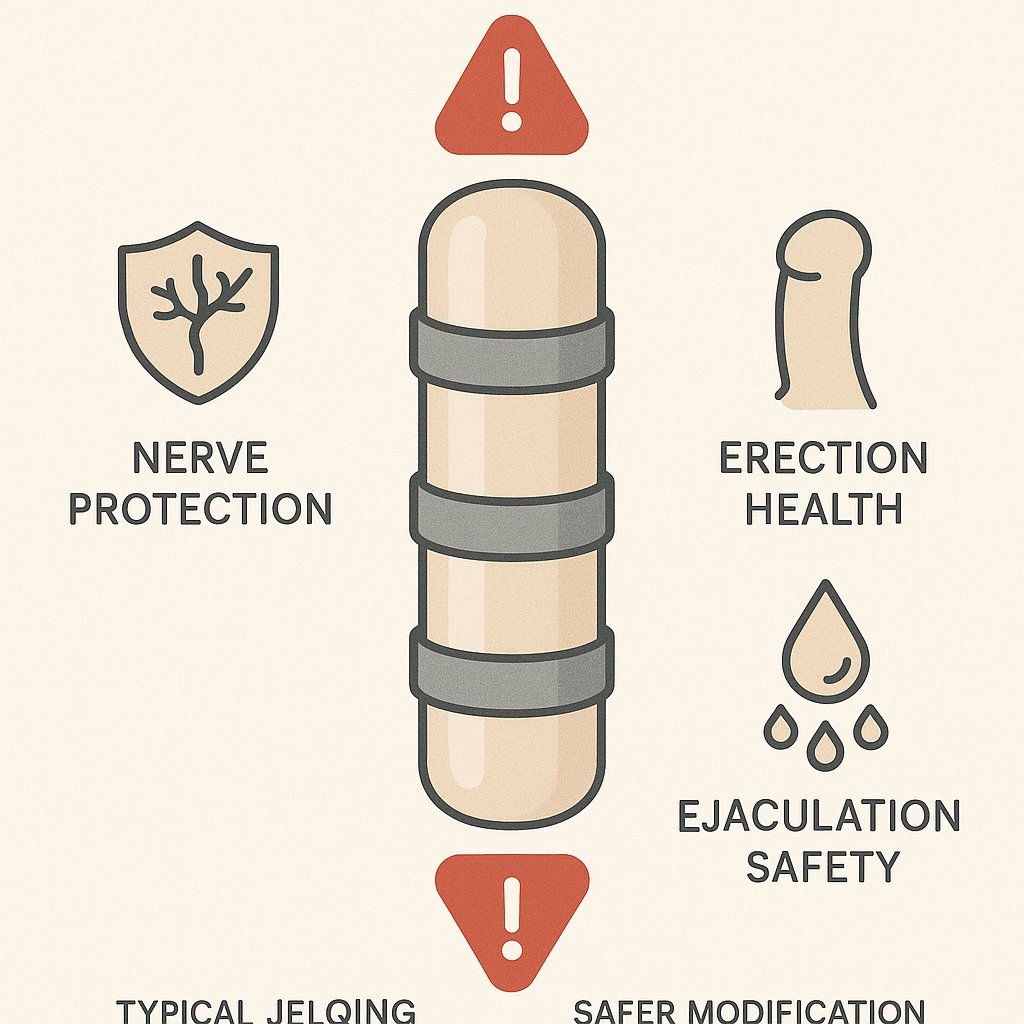
What not to add: Jelq and aggressive manual bending are not aligned with PD biomechanics and can aggravate plaques. Stick with controlled traction using a purpose‑built device.
Safety, Troubleshooting, Sex, and When to Escalate
Safety signals to watch:
– Numbness or tingling in the glans: Release immediately. Re‑fit to reduce pressure points, shorten sets, or switch to a vacuum interface.
– Skin changes: Blanching that persists after release, bruising, or blistering means you’re overdoing force or duration. Scale back.
– Discoloration or cold glans during traction: Pause and reassess fit and tension; add microbreaks.
– Pain >3/10: PD discomfort can occur, but ongoing pain suggests excessive counter‑bend or force.
PD‑specific troubleshooting:
– Hourglass or hinge: Use secure glans capture to prevent slippage. Favor shorter, more frequent sets. Emphasize counter‑bend that stabilizes the hinge direction. Consider a device that allows precise directional control.
– Ventral (downward) curves: Counter‑bend gently; the urethra is ventral and more sensitive. Vacuum caps often improve comfort and safety.
– Lateral curves: Keep the shaft aligned straight in the device and apply counter‑bend to the opposite side only. Avoid twisting.
Adherence and comfort strategies:
– Short, consistent sessions beat sporadic marathons. Build a daily habit (e.g., morning and evening 20–30 minutes).
– Skin care: Light moisturizer post‑session; allow skin to recover before the next set.
– Schedule: Pair sessions with fixed routines (coffee, lunch break, bedtime) to cut decision friction.
Sex, ejaculation, and everyday life:
– Sexual activity: Sex is generally fine during traction therapy unless your clinician advises otherwise. If intercourse causes pain or buckling, adjust positions to reduce curvature stress (e.g., on‑top positions that let you control depth/angle). Using lubrication generously lowers friction and helps protect results.
– Ejaculation: Ejaculation does not reduce the effectiveness of traction. Avoid intercourse immediately after an intense traction set—give tissues time to re‑perfuse and relax.
– Practical “sex techniq” adjustments: Favor positions that minimize hinge stress and angle extremes. Slow build‑up and controlled thrusting help stability. If ED limits performance, discuss PDE5 options with your clinician.
When traction isn’t enough:
– No meaningful change after 3–6 months of consistent use.
– Curvature >60° that prevents penetration or causes buckling.
– Severe hourglass with instability.
– Significant ED not responding to medical therapy.
In these cases, discuss escalation to collagenase injections or surgery (plication, grafting, or implant). Traction often still plays a role—either before, between, or after treatments to protect length and optimize straightness.
Costs, insurance, and access in 2025:
– Pricing varies by device and kit components. PD‑specific devices cost more but often require less daily time.
– Documentation: Ask your clinician for a PD diagnosis code and a letter of medical necessity. Many men use HSA/FSA funds.
– Reputable sourcing: Buy directly from the manufacturer or authorized sellers; avoid counterfeit vacuum caps and low‑quality parts that compromise safety.
Working with a specialist:
– Bring your baseline photos and measurements. Track curvature (degrees), SFL, and pain/function scores every 4 weeks and share progress.
– Ask targeted questions: Which device fits my curve direction? How should I time traction around injections or surgery? What daily total time is realistic for me? How will we decide to escalate care?
– For coordinated care or out‑of‑area treatment planning, review Mayo Clinic’s patient‑centered approach (https://mayoclinic.com/patient-centered-care), appointment options (https://mayoclinic.com/appointments), and international program (https://mayoclinic.com/international).
Conclusion
Penis traction therapy is a practical, evidence‑backed option for Peyronie’s disease that targets the problem at its source: plaque‑driven tissue asymmetry. With a PD‑specific device, short daily sessions, and disciplined tracking, most men can expect measurable curvature improvement and length preservation within 8–12 weeks, with additional gains by 24 weeks. The strongest results come from matching the device to your curve, using counter‑bend intelligently, and integrating traction with other treatments when appropriate.
Keep the plan simple and consistent: record a baseline, choose a device that supports counter‑bend and glans comfort, aim for 45–90 minutes per day in tolerable sets, and adjust based on monthly photos and measurements. If you aren’t seeing progress by 3–6 months, move promptly to combination therapy or procedural options—the traction groundwork you’ve built often improves those outcomes. For many men focused on mens sexual wellness and function, this is the most efficient path back to comfortable, reliable sex.
If you need a coordinated medical team or help planning care travel, explore Mayo Clinic’s patient‑centered care (https://mayoclinic.com/patient-centered-care), appointments (https://mayoclinic.com/appointments), and international services (https://mayoclinic.com/international).

Post Comment