How To Do Jelqing Safely: Essential Techniques and Best Practices

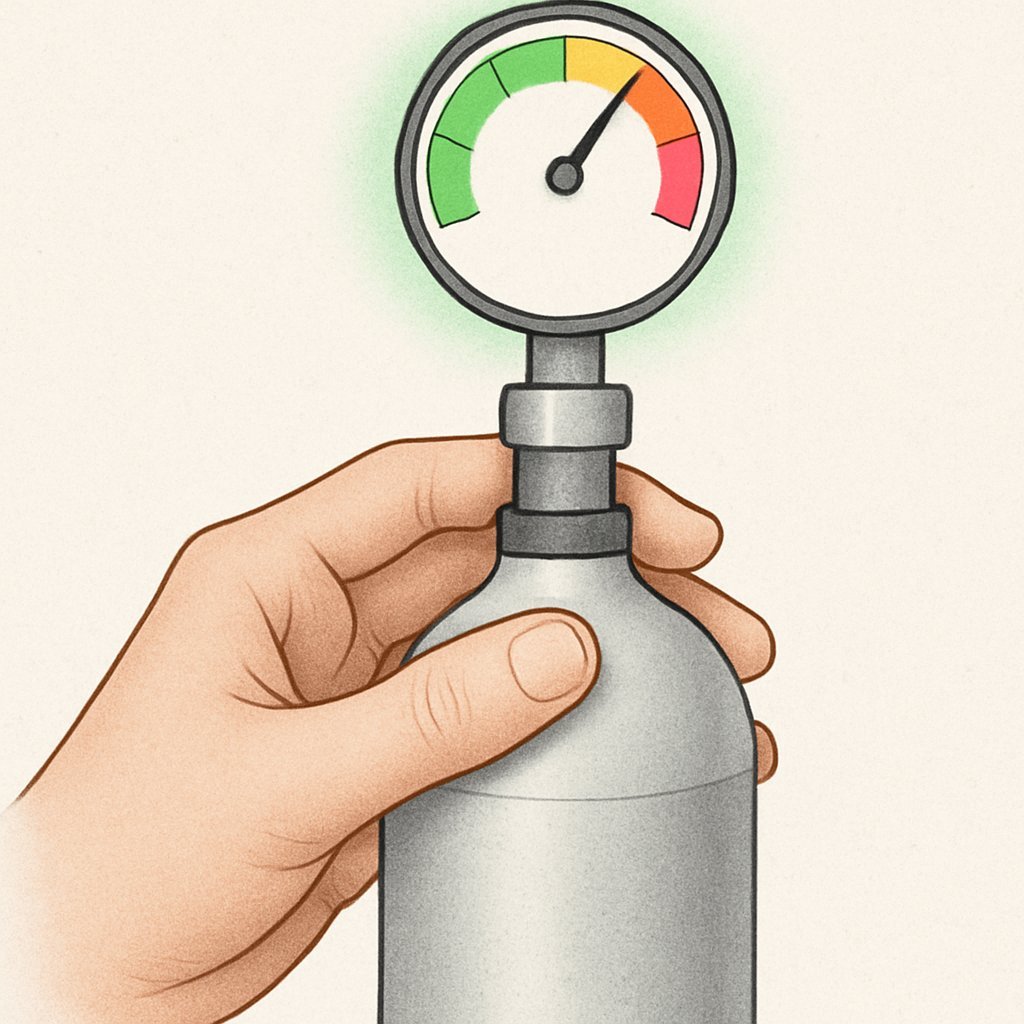
Table of Contents
- Overview: What Jelqing Can and Cannot Do
- Preparation: Health Check, Warm‑Up, and Safe Conditions
- Core Jelq Technique: Safe Grip, Pressure, and Session Structure
- Combining Jelqing with Extenders, Stretchers, and Sex Techniques
- Warning Signs, Recovery, and When to See a Doctor
- Conclusion: Put Penis Health Ahead of Size Goals
- FAQ
Overview: What Jelqing Can and Cannot Do
Expert Insight:

According to Mayo Clinic, most advertised nonsurgical penis-enlargement methods (pills, pumps, weights, exercises) either don’t work or can cause harm, and reputable medical organizations do not endorse cosmetic penis-enlargement surgery ([mayoclinic.org](https://www.mayoclinic.org/healthy-lifestyle/sexual-health/in-depth/penis/art-20045363)). They also note that an erect penis of about 5 inches (13 cm) or longer is considered a typical size, and many men who worry their penis is too small actually fall within this normal range. (www.mayoclinic.org)
Jelqing is a manual stroking exercise where you use a semi‑firm grip to push blood along the penis shaft. It is widely promoted online for penis enlargement, but major medical organizations, including Mayo Clinic and WebMD, note there is no solid clinical proof that jelq routines reliably increase length or girth. In fact, over‑aggressive techniques can cause pain, scarring, curvature, and erection problems.

That does not mean every man who experiments with jelqing will be injured, but it does mean you should treat it as a risky, unproven practice and not as a guaranteed path to a bigger penis. If your penis is around 5 inches when erect, you are already within the typical size range. Many worries about size are driven more by porn and advertising than by partners’ real preferences.
This guide focuses on harm reduction: how to structure jelqing sessions as safely as possible, how to protect erectile function and sensitivity, and how to integrate other mens sexual wellness tools such as a penis extender or penis stretcher without overloading your tissues. Use this material as a practical framework, but always prioritize your long‑term sexual health over short‑term size goals.
Preparation: Health Check, Warm‑Up, and Safe Conditions
Before you start any jelq routine, you need to be realistic about your health, your goals, and your risk tolerance. If you have a known penile disorder, Peyronie’s disease, a history of erectile dysfunction, bleeding disorders, or previous penile surgery, you should speak with a urologist before doing any form of penis enlargement exercise. Clinics such as the Cleveland Clinic offer dedicated evaluation and treatment for penile disorders and can help you understand whether manual exercises are especially risky in your case.
Once you decide to experiment cautiously, set up safe conditions:
- Stay sober.Avoid jelqing while using alcohol or drugs that might dull pain. Pain is an important warning signal; if you cannot feel it accurately, you cannot protect yourself.
- Check your baseline erections.Over a week, note how firm your erections are, how fast you get hard, and whether you have normal morning erections. If any of these are already weak, get a medical checkup first.
- Trim, do not shave aggressively.Short pubic hair can make jelq strokes easier, but shaving too close can cause irritation, ingrown hairs, and micro‑cuts that increase infection risk.
Warm‑up is your first real safety tool. Use 5–10 minutes of gentle heat along the shaft and base:
- A warm (not scalding) washcloth pressed around the penis
- A warm shower aimed at the groin
- A reusable heat pack wrapped in a thin towel
The goal is mild warmth and relaxation, not redness or burning. Warm tissue generally tolerates stretching and pressure better than cold tissue, which can help you avoid micro‑tears and bruising.
Core Jelq Technique: Safe Grip, Pressure, and Session Structure
The jelq motion is simple on paper, but most injuries come from doing the basics too hard, too fast, or for too long. Think of this not as forcing growth, but as gently conditioning tissue. Use the following principles:
- Use a semi‑erection, not fully hard.Aim for about 40–60% erection. Full erections are much less forgiving; squeezing a fully hard penis significantly increases the risk of vascular damage.
- Lubrication is mandatory.Apply a generous amount of lube to reduce friction. Reapply whenever strokes start to drag. Dry jelqing is harder to control and more likely to cause skin irritation.
- Grip type: soft “OK” ring.Form an O‑shape with thumb and forefinger at the base of your penis. The grip should be firm enough to move blood forward but loose enough that you could slide off without discomfort. If you feel throbbing, sharp pain, or see the skin blanching white, your grip is too tight.
- Stroke direction and speed.Starting at the base, slowly slide your grip toward the glans over about 2–3 seconds, then release before you reach the head itself. Alternate hands in a steady rhythm. Fast, pumping motions do not add benefit and increase risk.
- Avoid direct pressure on the glans.The head of the penis is more delicate and does not need to be compressed. Stop your stroke just before the glans and let blood distribute naturally.
For beginners, a conservative structure is safest:
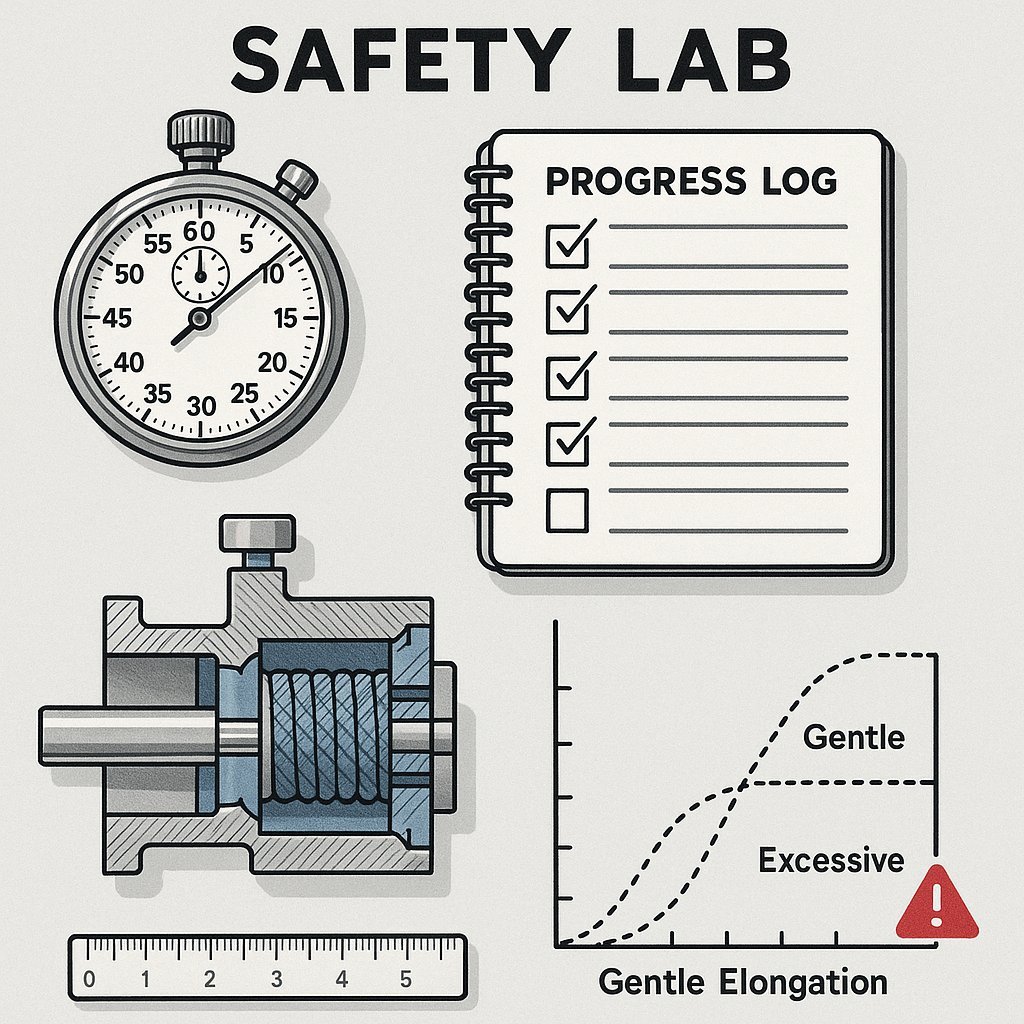
- Week 1–2:5 minutes per session, 2–3 sessions per week
- Week 3–4:7–10 minutes per session, 3 sessions per week
- After 1 month:Only increase time if you have zeronegative symptoms (no pain, no new curvature, no loss of erection quality). Many men never need more than 10–15 minutes.
Always finish with a brief cool‑down: rinse with lukewarm water and gently pat dry. If you see any spotting (tiny red dots), pronounced swelling, or feel a deep ache, stop for several days and resume only if everything returns to normal.
Combining Jelqing with Extenders, Stretchers, and Sex Techniques
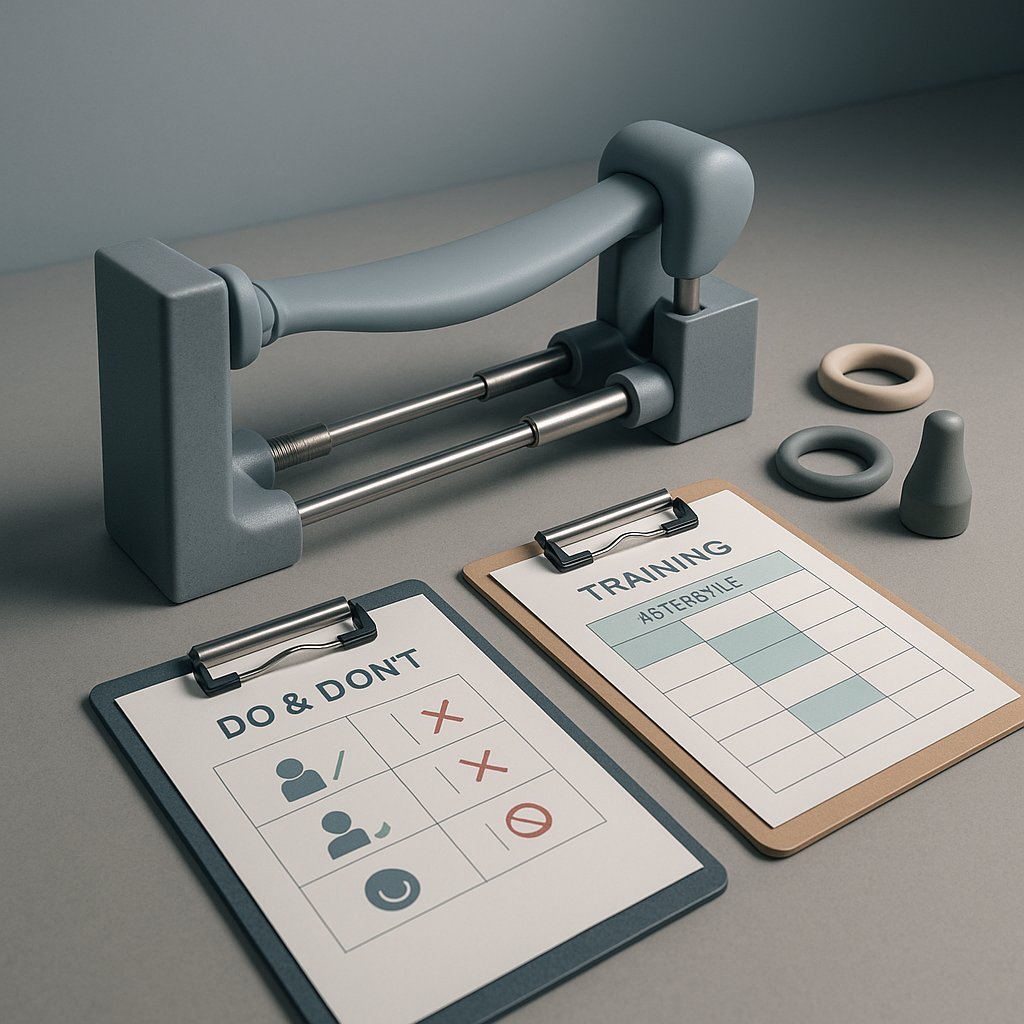
Many men who practice jelqing also experiment with a penis extender or penis stretcher device. Medical reviews suggest that traction devices may produce modest length gains for some men, but only with careful, consistent use over months, and even then results are not guaranteed.
The biggest risk when you combine jelq exercises with devices is excessive total load on your tissues. To protect your penis and long‑term mens sexual wellness, follow these integration rules:
- Do not start everything at once.If you are new to both jelqing and extenders, pick one method, run it conservatively for 4–6 weeks, and only then consider adding the other.
- Space out stress.If you wear a traction device for several hours, avoid heavy jelq sessions the same day. Keep jelqing light, or skip it entirely on high‑tension days.
- Use comfort as a guide.In an extender, you should feel a steady stretch, not sharp pain or numbness. If glans color becomes very dark, cold, or completely numb, release tension immediately.
- Keep rest days.At least 1–2 full days per week without any jelq or traction allows micro‑injuries to heal. Skipping rest increases the chance of scarring or curvature.
If you decide a traction device fits your goals, consider starting with a medically oriented extender from the official store at https://pm25-acvya9.penimaster.shop/. Pairing a professionally engineered penis stretcher with a conservative jelq schedule is safer than improvising with cheap, poorly designed devices.
Remember that sex techniq and pleasure skills often offer more practical benefits than any size change. Techniques like better communication, pacing your arousal, or experimenting with positions can enhance both your own experience and your partner’s. For men coping with ejaculation control issues, medical sites like Mayo Clinic describe behavioral methods and, when needed, medications that are far better validated than enlargement exercises.
Warning Signs, Recovery, and When to See a Doctor
Jelqing should never override basic signals from your body. Stopping early at the first sign of trouble can prevent minor irritation from turning into a long‑term problem. Watch closely for the following red flags:
- Persistent pain.Any ache or soreness that lasts more than 24–48 hours, especially deep inside the shaft, is a reason to rest. Sharp pain is an immediate stop sign.
- Visible deformity.New curvature, dents, or hard plaques under the skin may indicate scar formation. Continuing exercises in this state can make the problem worse.
- Bruising and burst vessels.Occasional small red dots can happen with over‑pressure, but dark bruises, large patches of discoloration, or swelling that does not resolve within a few days require medical advice.
- Changes in erection quality.If your erections are weaker, shorter‑lived, or feel unstable during intercourse, stop all enlargement methods and monitor for improvement. Ongoing problems should be evaluated.
- Numbness or loss of sensitivity.Tingling, burning, or reduced feeling in the glans or shaft means nerves or blood flow may be affected. This is a high‑priority signal to stop and rest.
Recovery usually involves stopping all jelq and traction, allowing several weeks for tissues to calm, and avoiding rough masturbation or sex during the healing window. If you have lingering symptoms, especially deformity, pain with erections, or major changes in ejaculation or sensitivity, consult a urologist. Centers like the Cleveland Clinic and other academic hospitals offer specialized treatment for penile disorders and can evaluate whether you are dealing with something like Peyronie’s disease or an injury to the erectile tissue.
Above all, remember that no enlargement routine is worth sacrificing reliable erections, comfortable ejaculation, or your ability to enjoy sex long term. If in doubt, step back, get a professional opinion, and focus on sustainable habits that support overall sexual function, such as cardiovascular fitness, pelvic floor conditioning, and open communication with partners.
Conclusion: Put Penis Health Ahead of Size Goals
Jelqing sits in a gray zone: popular online, but not backed by strong research and explicitly flagged as risky by mainstream medical sources. Done gently, with plenty of rest and close attention to warning signs, some men experiment without clear problems. Done aggressively, or combined with too much traction or device use, it can lead to pain, scarring, and lasting damage.
If you choose to jelq, keep expectations realistic, use a semi‑erect state and light pressure, and build volume slowly over weeks instead of chasing rapid change. Integrate any penis extender or penis stretcher only after you understand how your body responds, and give priority to erection quality, sensitivity, and comfort in everyday life.
Mens sexual wellness is much bigger than size metrics. Solid sex techniq, emotional connection, and honest communication with partners usually have a far greater impact on satisfaction than another half inch on a ruler. Use jelqing, if at all, as a cautious experiment—not as the foundation of your sexual confidence. Your long‑term penis health is the asset you cannot replace.
FAQ
Q:
What is jelqing and what can it realistically do?
A:Jelqing is a manual stretching and massaging technique aimed at improving penile blood flow and potential size gains over time. Results, if any, are usually modest and gradual, and the main realistic benefit for many men is better awareness of erection quality and penile health rather than dramatic growth.
Q:
How do I warm up properly before jelqing?
A:Apply gentle, moist heat to the penis for 5–10 minutes using a warm washcloth, heating pad on low, or warm shower. The goal is to increase circulation and tissue flexibility so the skin and underlying structures are less prone to irritation or strain during the exercise.
Q:
What is the correct jelqing technique to avoid injury?
A:Use an OK grip with your thumb and index finger, apply light to moderate pressure, and move slowly from the base toward the glans on a semi‑erect penis (about 40–60% erect). Avoid squeezing the glans, stop if you feel sharp pain or numbness, and keep sessions short and controlled instead of forcing high intensity.
Q:
Can I combine jelqing with penis extenders or pumps safely?
A:Yes, but you should introduce only one tool at a time, start at the lowest intensity, and monitor how your penis responds over several weeks. Keep jelqing volume moderate on days you use an extender or pump, and prioritize rest days so tissues can recover between different types of stress.
Q:
What early warning signs mean I should stop jelqing?
A:Watch for sudden pain, dark or unusual bruising, persistent swelling, coldness or numbness in the shaft, and a noticeable drop in erection quality. If any of these appear, stop all exercises, allow full recovery, and only resume at a much lower intensity after everything feels and looks normal again.

Post Comment