Jelq Safety Tips: Protecting Your Penis While You Experiment
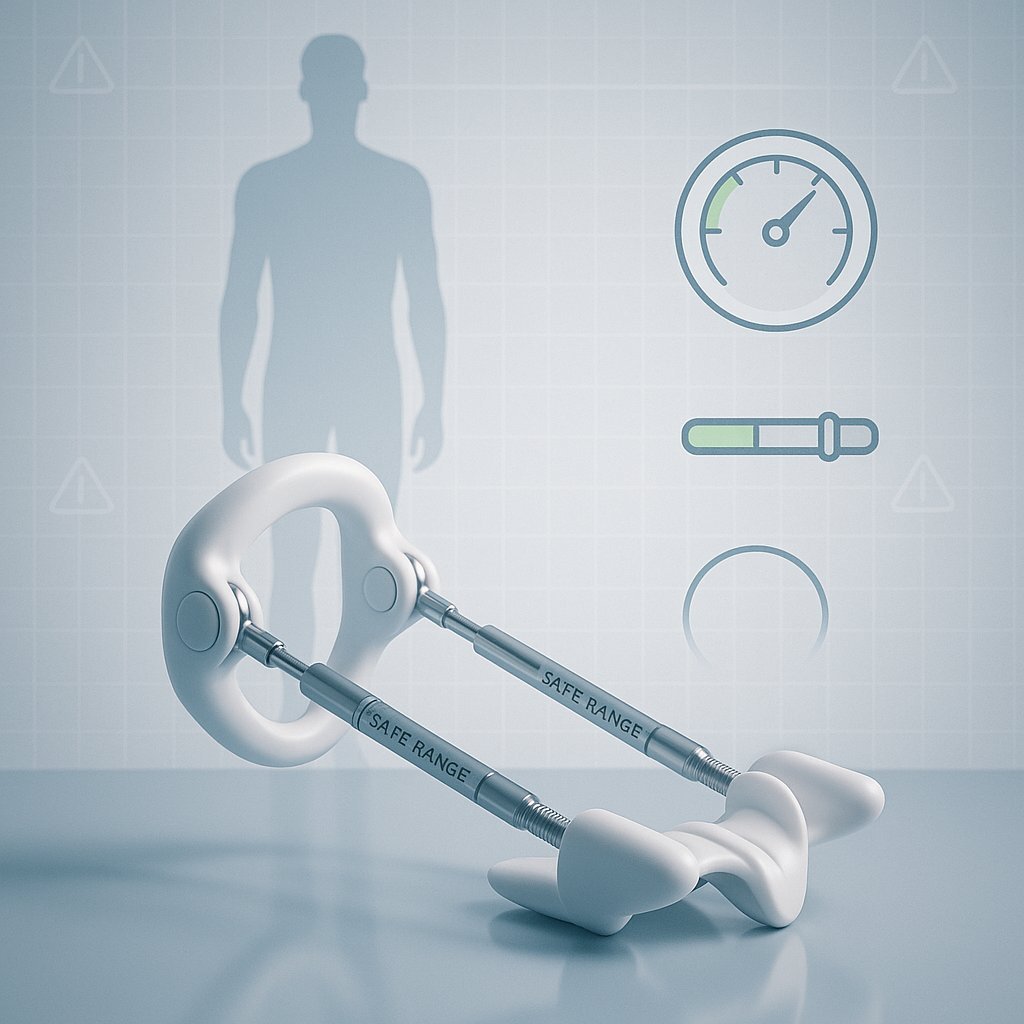
Table of Contents
- Overview: Why Jelq Safety Matters More Than Size Claims
- Pre‑Check: When You Should Not Jelq at All
- Safer Jelq Technique Boundaries: Pressure, Erection Level, and Time
- Devices and Jelq: Using a Penis Extender or Stretcher Without Overdoing It
- Protecting Erections, Pleasure, and Ejaculation While You Experiment
- Conclusion: A Safety-First Mindset for Men’s Sexual Wellness
- FAQ
Overview: Why Jelq Safety Matters More Than Size Claims
Expert Insight: According to Mayo Clinic, most advertised penis-enlargement methods (pills, pumps, weights, exercises) either don’t work or can cause harm, and reputable medical organizations do not endorse surgery for cosmetic enlargement alone ([mayoclinic.org](https://www.mayoclinic.org/healthy-lifestyle/sexual-health/in-depth/penis/art-20045363)). They also note that an erect penis of about 5 inches (13 cm) or longer is considered a typical size, and many men who think they are small actually fall within this normal range. (www.mayoclinic.org)
Jelq exercises are often marketed as a simple way to increase penis size using a hand-over-hand motion to push blood along the shaft. Medical sources note that this type of exercise has not been proven to work and can lead to pain, scarring, and disfigurement. For any man exploring jelq, penis extenders, or other sex techniq experiments, safety has to come before size goals.
Most men already fall within a typical size range and don’t need enlargement from a medical perspective. Worrying about length or girth can still feel very real, but pushing your penis past its limits can damage the tissue that supports erections and ejaculation. A safer mindset is to treat jelqing as a risky experiment, not a guaranteed path to growth, and to protect your long-term erections and men’s sexual wellness first.

Pre‑Check: When You Should Not Jelq at All
Before you even think about jelqing, it’s important to be honest about whether you should skip it completely. Sometimes the safest “technique” is deciding not to start.
- Skip jelq if you already have erection problems. If you struggle to get or keep an erection, or your erections feel softer than they used to, adding extra pressure to the penile tissue can make things worse.
- Avoid jelq with pain, curvature, or plaques. If you notice new bends, lumps, hard areas, or pain along the shaft, talk to a clinician first. These could be signs of conditions such as Peyronie’s disease that may be aggravated by jelqing or a penis stretcher.
- Do not jelq on blood thinners or bleeding disorders. These increase your risk of bruising and internal bleeding in the penis, including large dark patches or painful swelling.
- Stop if your anxiety about size is overwhelming. If you can’t stop thinking about your penis size, or if porn or social pressure are driving you to extremes, a mental health or sexual health professional will be more helpful than any exercise routine.
If any of these apply to you, protecting your erections and overall men’s sexual wellness is more important than trying manual enlargement. Focus on medical evaluation, realistic expectations, and relationship and pleasure skills instead of jelq.
Safer Jelq Technique Boundaries: Pressure, Erection Level, and Time
If you still decide to experiment, think of jelq safety in terms of strict limits rather than tricks for faster gains. Any increase in force, frequency, or time raises your risk of damage.
- Use only light to moderate pressure. The goal is to gently move blood, not to squeeze as hard as you can. Pain, sharp discomfort, or seeing the skin turn very dark red or purple are warnings to stop immediately.
- Stay away from full erections. Jelqing on a 100% hard erection creates much higher pressure in the erectile chambers and can tear small blood vessels or stretch tissues in ways your body cannot repair well. Many men keep intensity lower by working around 40–60% firmness instead of full rigidity.
- Limit session length and weekly frequency. Long sessions or multiple sessions a day stack trauma faster than your body can heal. If you choose to experiment, make sessions short, leave rest days between them, and avoid marathon routines promoted online.
- Stop immediately at any warning sign. New pain, burning, tingling, numb patches, sudden loss of firmness, dark bruises, or unusual swelling are all reasons to end the session and let your penis fully recover; if symptoms don’t improve, seek medical care.
Remember that erections rely on healthy blood flow and flexible tissue. Anything that repeatedly over-stresses that tissue, even if it feels manageable at first, can gradually reduce function over time.
Devices and Jelq: Using a Penis Extender or Stretcher Without Overdoing It
Many men combine jelq with devices like a penis extender or penis stretcher hoping for faster changes in length. A few small studies suggest traction can change length slightly over months of daily use, but comfort and safety remain major concerns, and long-term results are not guaranteed.
- Don’t stack intense methods. Doing heavy jelq sessions plus long, high-tension extender or stretcher sessions in the same day multiplies strain on ligaments, skin, and erectile tissue. If you use a device, dial back or pause manual work to give your penis time to adapt.
- Favor low tension over long periods. With any traction device, higher force is not always better. Gentle, tolerable tension with no sharp pain is safer than trying to “crank it up” to the maximum. Numbness, coldness, severe redness, or burning mean you need to stop and reassess fit and duration.
- Protect the glans and skin. Padding, correct sizing, and regular breaks help reduce the risk of skin tears, blisters, or loss of sensation at the head. Never ignore tingling or loss of feeling; these are early signs of nerve compression.
- Keep realistic expectations. Even when extenders are used carefully, changes are modest, and medical organizations do not endorse them as standard enlargement tools. Using them should be a choice you make with clear awareness of limited evidence and potential discomfort.
If you want a structured path rather than random devices from unknown sellers, consider a medically oriented traction system from a reputable source. If you’re exploring that route, you can review options through the official store at this clinically focused extender shop, and then discuss potential use with a qualified clinician.
Protecting Erections, Pleasure, and Ejaculation While You Experiment
Your erections and ability to enjoy sex are more valuable than any theoretical length change. Every jelq or device experiment should be judged against its impact on how your body actually works and feels during arousal and ejaculation.
- Monitor erection quality closely. Notice how firm and reliable your erections are during solo play and partnered sex. If firmness drops, it takes longer to get hard, or you lose erections more easily, treat this as a clear signal to stop all enlargement experiments and let your body recover.
- Watch for changes in sensation or orgasm. Numbness in the shaft or glans, weaker pleasure during stimulation, or duller orgasms can indicate nerve irritation or vascular changes from overtraining.
- Pay attention to ejaculation. If your ejaculate flow weakens, you develop pain during or after ejaculation, or notice blood in semen or urine, seek medical care quickly. Don’t dismiss these as “normal side effects” of training.
- Center your sex techniq and connection. Many partners care more about arousal, communication, and technique than specific measurements. Focusing on varied touch, positions, and emotional intimacy often improves men’s sexual wellness and relationship satisfaction far more than any size experiment.
When in doubt, prioritize safety, satisfaction, and long-term function. If an experiment risks those, it is not worth continuing.
Conclusion: A Safety-First Mindset for Men’s Sexual Wellness
Jelqing and traction devices live in a gray zone: heavily promoted, weakly supported by evidence, and capable of causing real harm when misused. The safest path is often to skip enlargement experiments entirely and focus on sexual communication, technique, health habits, and managing stress and expectations about size.
If you still choose to experiment, use a strict safety-first mindset: stay away from full erections, limit pressure and time, avoid stacking intense methods, and stop immediately at any sign of pain, bruising, or changes in erection strength, sensation, or ejaculation. Protecting the tissue that makes erections possible is the foundation of sustainable men’s sexual wellness; no promised size gain is worth sacrificing that.
FAQ
Q: How do I know if I’m jelqing too hard?
A: You’re probably using too much pressure if you see dark red or purple spots (burst capillaries), feel burning pain, or lose your erection quickly after a few strokes. Jelqs should feel like a gentle squeeze that slows blood movement, not like you’re trying to crush the shaft.
Q: What’s a safe jelqing routine for beginners?
A: Start with 5–10 minutes, 2–3 times per week, with a light grip and 40–60% erection level. Increase time and intensity slowly over several weeks, only if you stay pain‑free and don’t notice bruising or changes in sensitivity.
Q: Can I combine jelqing with a penis extender or stretcher?
A: Yes, but volume and intensity matter. Use lighter jelqing sessions on days you wear a device, keep total daily stress modest, and always take at least one full rest day per week to let tissues recover.
Q: What should I do if I experience pain or numbness while jelqing?
A: Stop immediately and give yourself several days off from any exercises or devices. Only resume once normal sensation, erections, and comfort are fully back, and then cut intensity and duration in half.
Q: Does jelqing affect long‑term erection quality?
A: Done gently and with rest days, many men notice improved erection quality from better blood awareness and pelvic focus. Aggressive or high‑volume routines with no recovery time increase the risk of vein irritation, tissue strain, and worsened erections.

Post Comment