Jelq Safety Tips: How to Reduce Real-World Risk Before, During, and After Training
Read more in our Complete Guide to Jelqing: Evidence, Safety, and.
Table of Contents
- Overview: Why Jelq Safety Matters More Than Gains
- Understand the Real Risks Before You Start Jelqing
- Pre-Session Safety: Screening Yourself, Warming Up, and Setting Limits
- In-Session Safety: Erection Levels, Grip Control, and Pain Rules
- Post-Session Recovery: How to Check for Damage and Support Healing
- Combining Jelq With a Penis Extender or Penis Stretcher Safely
- Lifestyle Habits That Make Jelqing Safer (or Riskier)
- When to Stop Jelqing and See a Professional
- FAQ: Practical Jelq Safety Questions Answered
- Conclusion: A Safer Mindset for Jelqing and Penis Training
Overview: Why Jelq Safety Matters More Than Gains
Expert Insight:
According to Mayo Clinic, penis health is broader than erections and fertility, as penis problems can signal other underlying health conditions and may contribute to stress, relationship difficulties, and low self-confidence ([Mayo Clinic](https://www.mayoclinic.org/healthy-lifestyle/mens-health/in-depth/penis-health/art-20046175)). The article notes that common penis-related conditions include erectile dysfunction, multiple types of ejaculation problems (such as premature, delayed, painful, reduced, or retrograde ejaculation), and anorgasmia. (www.mayoclinic.org)

Jelqing is widely discussed online as a manual way to increase penis size. It sits in a grey zone: popular in forums, but not supported by strong clinical evidence and not endorsed by major medical groups. That means if you choose to jelq, safety needs to be your first priority.
Major urology sources, like the Mayo Clinic, emphasize that penis health is about much more than erections or size. Pain, changes to ejaculation, curvature, numbness, or skin damage can all signal deeper problems that affect your confidence, relationships, and overall mens sexual wellness.
This article focuses specifically on practical, step-by-step jelq safety tips you can apply before, during, and after sessions. It also covers how to think about combining jelqing with a penis extender or penis stretcher, and when to stop and talk with a health professional.
Understand the Real Risks Before You Start Jelqing
Before you try any new sex techniq, including jelq routines, it helps to understand what can realistically go wrong. While research on jelqing itself is limited, clinicians do see injuries from high-force or repetitive penile stress. Common risk categories include:
- Vascular injury: Over-squeezing or jelqing at very high erection levels can damage blood vessels, leading to bruising, burst capillaries, or in severe cases more significant vascular trauma.
- Nerve irritation or damage: Aggressive or prolonged pressure on the shaft, especially near the glans, can cause tingling, numbness, or changes in sensitivity.
- Tissue microtears: While some microtrauma is part of how mechanical loading works, uncontrolled force and poor recovery can turn this into painful inflammation, scar tissue, or curvature (similar in concept to Peyronie-like changes).
- Skin problems: Friction burns, tears, and irritation are common when jelqing is done dry, with poor lubrication, or for excessively long sessions.
- Erectile function changes: Short-term “fatigue” is one thing; persistent difficulty achieving or maintaining erections is a red-flag symptom that needs medical evaluation.
The Mayo Clinic notes that issues like painful erections, a new bend, or difficulty with ejaculation can signal larger penis health problems. Framing jelq safety around avoiding these outcomes is more useful than chasing short-term size changes.
Pre-Session Safety: Screening Yourself, Warming Up, and Setting Limits
Safe jelq practice starts before you put your hands on your penis. A simple pre-session checklist can reduce risk dramatically.
1. Screen for red-flag conditions
- Skip jelqing and talk with a clinician if you have an existing severe curve, a firm plaque, or a history of Peyronie disease.
- Avoid jelqing if you have uncontrolled diabetes, major cardiovascular disease, or take blood thinners that raise bleeding risk.
- Do not jelq over open sores, active sexually transmitted infections, or severe skin irritation.
2. Set realistic expectations
- There is no high-quality clinical proof that jelqing permanently increases length or girth.
- Focus on learning safe technique and protecting penis health rather than “chasing millimeters.”
3. Warm up the tissue
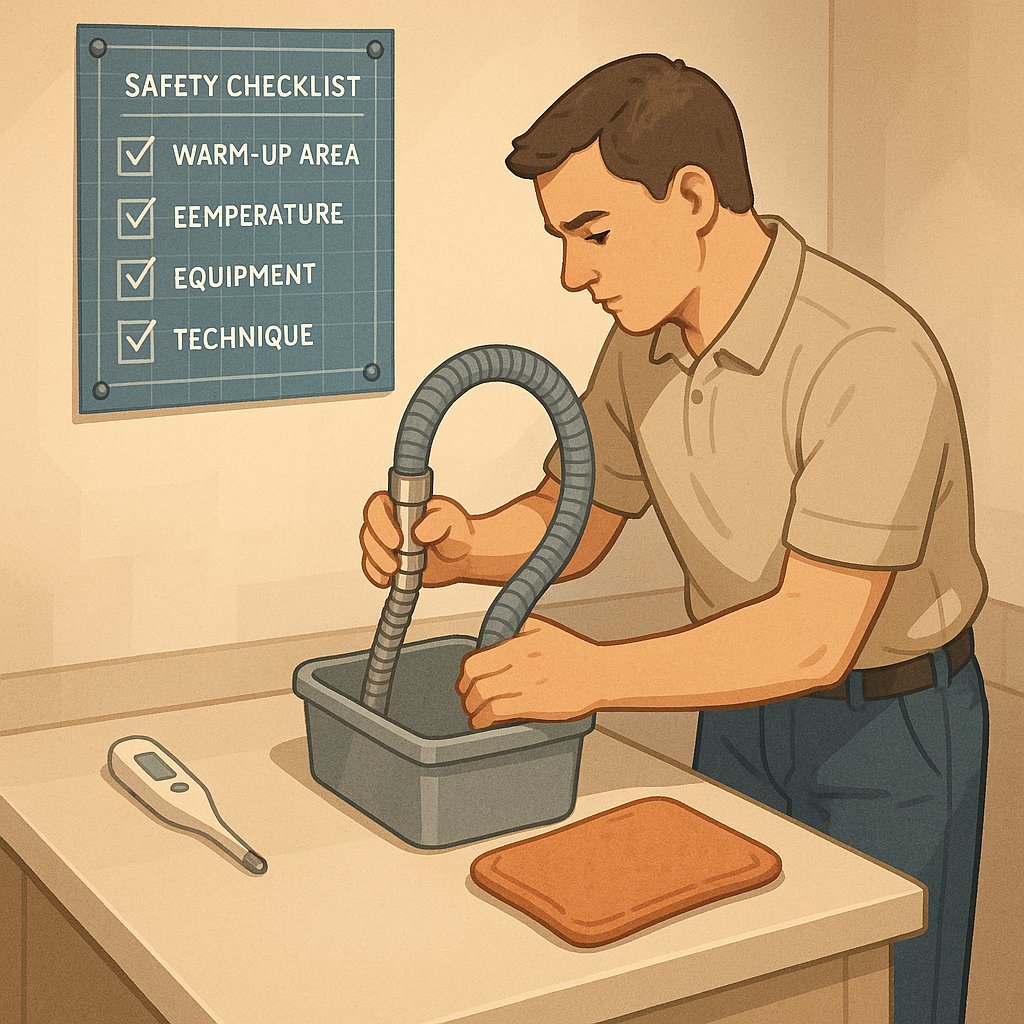
- Use a warm (not hot) washcloth wrapped around the shaft for 5–10 minutes before training.
- Gentle warmth may increase comfort and flexibility of superficial tissues, helping reduce friction-related injuries.
4. Choose appropriate lubrication
- A slick, body-safe water- or silicone-based lube is essential. Dry jelqing dramatically increases skin injury risk.
- Be skeptical of “oil for penis enlargement” claims; as Healthline notes, no topical oil has been proven to increase size. Choose lube for comfort and safety, not growth promises.
5. Define hard limits before you begin
- Maximum planned session length (for example, 10–15 minutes for intermediates, less for beginners).
- Maximum weekly frequency (for example, 2–3 sessions per week with rest days between).
- Clear stop rules: any sharp pain, sudden loss of erection, numbness, or visible injury ends the session immediately.
In-Session Safety: Erection Levels, Grip Control, and Pain Rules
Most jelq injuries come from poor form: too much pressure, wrong erection level, or ignoring discomfort. Paying close attention to technique details is the foundation of safe practice.
1. Keep erection levels moderate
- Aim for roughly 40–60% erection fullness. This is enough blood in the shaft to work against, but not the rock-hard level used for intercourse.
- Fully erect jelqing significantly raises the risk of vascular injury and should be avoided.
2. Use a controlled, not crushing, grip
- Form an “OK” grip at the base with thumb and index finger, or a gentler C-grip if you have larger hands.
- Pressure guideline: firm enough to move blood forward under the skin, but not so hard that the glans turns dark purple, feels cold, or hurts.
- Keep your wrist and forearm relaxed; gripping from the shoulder often translates into excess force.
3. Slow strokes, no snapping or jerking
- Each stroke should take about 2–3 seconds from base toward the glans.
- Stop just before the glans to avoid direct pressure on the head, where tissues are more delicate.
- Alternate hands smoothly; avoid sudden jerky motions that can strain blood vessels.
4. Strict pain rules
- “Stretch discomfort” or mild fullness can be normal. Sharp pain, burning, stinging, or electric sensations are not.
- If you feel pain, stop immediately, check for bruising, swelling, or a new bend, and end the session.
- Do nottry to “push through” pain; that is how small problems become long-term injuries.
5. Protect the skin
- Reapply lube if you feel any drag or sticking.
- Avoid tight rings or devices during jelqing that could concentrate pressure in one spot.
- If you see redness, small tears, or feel burning on the skin, stop and allow full healing before next practice.
Post-Session Recovery: How to Check for Damage and Support Healing
What you do after jelqing is just as important as what you do during. Quick self-checks and proper rest help you catch issues early and support long-term penis health.
1. Immediate post-session check
- Look for new bruises, spots, or burst capillaries (tiny red or purple dots).
- Gently palpate along the shaft for tender nodules, ridges, or sudden changes in firmness that weren’t there before.
- Light soreness or fatigue can be expected; intense pain or sudden swelling is not.
2. Short-term cool down
- If you notice mild swelling, a cool (not ice-cold) compress wrapped in cloth for 5–10 minutes can reduce inflammation.
- Avoid ice directly on skin; this can cause additional tissue stress.
3. Respect recovery windows
- Beginner: 1 session every 2–3 days to see how your body responds.
- Intermediate: up to 2–3 sessions per week with at least one rest day between.
- If you still feel soreness, reduced erectile quality, or sensitivity changes, extend your rest period.
4. Monitor function over days, not just minutes
- Watch for changes in morning erections, ability to get aroused, or quality of ejaculation.
- If you develop pain with erections, a new curve, persistent numbness, or difficulty ejaculating, stop all jelqing and contact a clinician.
5. Support overall healing
- Prioritize sleep and manage stress, both of which influence hormone levels and erectile function.
- Regular physical activity improves circulation and is linked to better confidence and sex drive, according to multiple Cleveland Clinic surveys.
- Aim for heart-healthy habits (weight, blood pressure, blood sugar) that also support penis health long-term.
Combining Jelq With a Penis Extender or Penis Stretcher Safely
Many men eventually combine manual jelq routines with devices like a penis extender or penis stretcher. This can significantly increase total mechanical load on the penis, so it requires extra caution.
1. Only add one variable at a time
- If you are new to jelqing, do notstart a device at the same time. Learn how your body responds to one method first.
- Once you have several weeks of injury-free jelqing, you can consider gradually introducing an extender on light settings.
2. Start with low tension and short durations
- Use the minimum effective traction when beginning with a penis extender.
- Limit early sessions to 30–60 minutes at low tension and build slowly based on comfort and absence of negative signs.
3. Separate high-load activities
- Avoid doing an intense jelq session immediately after a long, high-tension extender session.
- Consider alternating focus: device usage on certain days, lighter jelq practice on others, so tissues can adapt progressively.
4. Watch for cumulative fatigue
- Warning signs of overload include colder glans, reduced erection quality, dull aching at rest, and long-lasting soreness.
- If you experience these, cut back both jelq intensity and device tension/time until baseline comfort returns.
5. Use devices from reputable manufacturers
- Poorly designed stretchers can create pinch points or uneven pressure that raise injury risk.
- If you decide to add a clinically oriented traction device to your routine, consider starting with a medically engineered penis extender system from the official store at this link, and always follow the included safety instructions.
Lifestyle Habits That Make Jelqing Safer (or Riskier)
Your overall health directly affects how well your penis tissues tolerate mechanical stress and how quickly they recover. Mens sexual wellness is not just about exercises; it is tightly linked to cardiovascular, hormonal, and mental health.
1. Cardiovascular health and erection quality
- Conditions like high blood pressure, diabetes, and obesity increase the risk of erectile dysfunction and can reduce tissue resilience.
- Regular exercise is repeatedly associated with better mental health, confidence, and sex drive in Cleveland Clinic survey data.
- Even moderate activities (brisk walking, cycling, swimming) support blood vessels that also feed the penis.
2. Smoking, alcohol, and jelq risk
- Smoking damages blood vessels and can slow healing after microtrauma.
- Heavy alcohol use lowers erectile function and can lead to poor judgment, making it more likely you ignore pain or safety rules while experimenting.
3. Medications and bleeding risk
- Blood thinners, some antidepressants, and other prescriptions can increase bruise risk or alter clotting.
- Discuss plans for any intensive penile routine with your healthcare provider if you take chronic medications.
4. Mental health, body image, and motivation
- Anxiety, low self-esteem, or obsession over size can push you toward unsafe intensity or frequency.
- Consider talking with a therapist or sexual health counselor if penis size worries are dominating your thoughts or relationships.
5. Nutritional support
- A balanced diet that supports vascular and hormonal health will indirectly make jelq practice safer.
- Be skeptical of “penis enlargement pills” marketed with big promises; as Healthline notes, these supplements are not backed by clinical data for permanent size changes and may carry side effects or drug interactions.
When to Stop Jelqing and See a Professional
Knowing when to stop is a key jelq safety skill. Some symptoms are mild and temporary; others are serious enough to require medical attention.
Stop jelqing immediately if you notice:
- Sharp, sudden pain during a stroke.
- A popping sensation followed by rapid swelling or loss of erection (possible penile fracture; seek emergency care).
- Significant bruising, dark discoloration, or large hematomas.
- New or worsening curvature, especially if erections become painful.
- Persistent numbness, tingling, or cold sensations in the glans or shaft.
Contact a clinician promptly if you develop:
- Ongoing difficulty getting or maintaining erections that were previously normal.
- Changes in ejaculation, such as pain, blood, or a major shift in volume or pattern.
- Persistent burning with urination, discharge, or sores that may indicate infection.
- Emotional distress, anxiety, or depression related to sexual performance or body image.
Sources such as the Mayo Clinic emphasize that symptoms like painful erections, a severely bent penis, or bleeding during ejaculation should not be ignored. Early evaluation can prevent small injuries from becoming long-term problems in mens sexual wellness.
FAQ: Practical Jelq Safety Questions Answered
1. Is jelqing medically recommended?
Most mainstream medical organizations do not recommend jelqing. There is limited clinical evidence for lasting size increases, and real risk of tissue damage if done unsafely. If you still choose to jelq, treat it as an experiment and prioritize safety and penis health over results.
2. How hard should I squeeze when I jelq?
Use the circulation rule: you should feel blood moving under your grip, but you should not see the glans turn very dark, feel cold, or hurt. If you are unsure, err on the side of a lighter grip and shorter sessions. Increased pressure does not linearly equal better outcomes, but it does raise injury risk.
3. What erection level is safest for jelqing?
A semi-erect state of about 40–60% is commonly considered safer. Fully erect jelqing significantly increases strain on internal structures and the risk of vascular injury. If you become fully erect, pause and let the erection soften before continuing or end the session.
4. Can jelqing cause permanent erectile dysfunction?
Severe or repeated injuries from aggressive jelqing could, in theory, contribute to long-term erectile problems, especially if they cause vascular or nerve damage. Persistent changes in erection quality after jelq sessions are a sign to stop and get evaluated by a urologist or mens sexual wellness clinician.
5. Is it safer to use a penis extender instead of jelqing?
Penis extenders and stretchers also carry risks, but their traction levels and usage times can often be controlled more precisely than manual pressure. Some medical-grade traction devices are used in clinical settings for conditions like curvature. However, they still require careful adherence to instructions, gradual progression, and monitoring for pain, numbness, or discoloration.
6. How long should I rest between jelq sessions?
Beginners should allow at least 48 hours between sessions to assess how tissues respond. If you notice lingering soreness, sensitivity changes, or weaker erections, increase recovery time. More is not always better; safe adaptation happens when mechanical stress is balanced with adequate rest, just like exercise in any other part of the body.
Conclusion: A Safer Mindset for Jelqing and Penis Training
Jelqing exists in a space where online enthusiasm outruns clinical evidence. That makes safety, not speed of gains, the central principle. By understanding risks, using controlled technique, and respecting recovery, you reduce the chances of harming your erections, ejaculation, or long-term sensitivity.
Frame jelqing and any work with a penis extender or penis stretcher as one small part of a broader mens sexual wellness strategy that includes exercise, mental health care, relationship communication, and routine medical checkups. If at any point something feels off, stop, reassess, and do not hesitate to involve a qualified clinician. Protecting penis health today is always more valuable than any short-term size experiment.
Related Reading
- Jelq Safety Tips: Practical Ways to Protect Your Penis When You Experiment
- Jelq Safety Tips: Simple Rules That Keep Your Penis, Nerves, and Ejaculation Function Protected
- Jelq Safety Tips: Real‑World Risk Control, Recovery, and Smarter Backup Plans

Post Comment