Get Help: How to Choose Safe, Realistic Support for Men’s Sexual Wellness
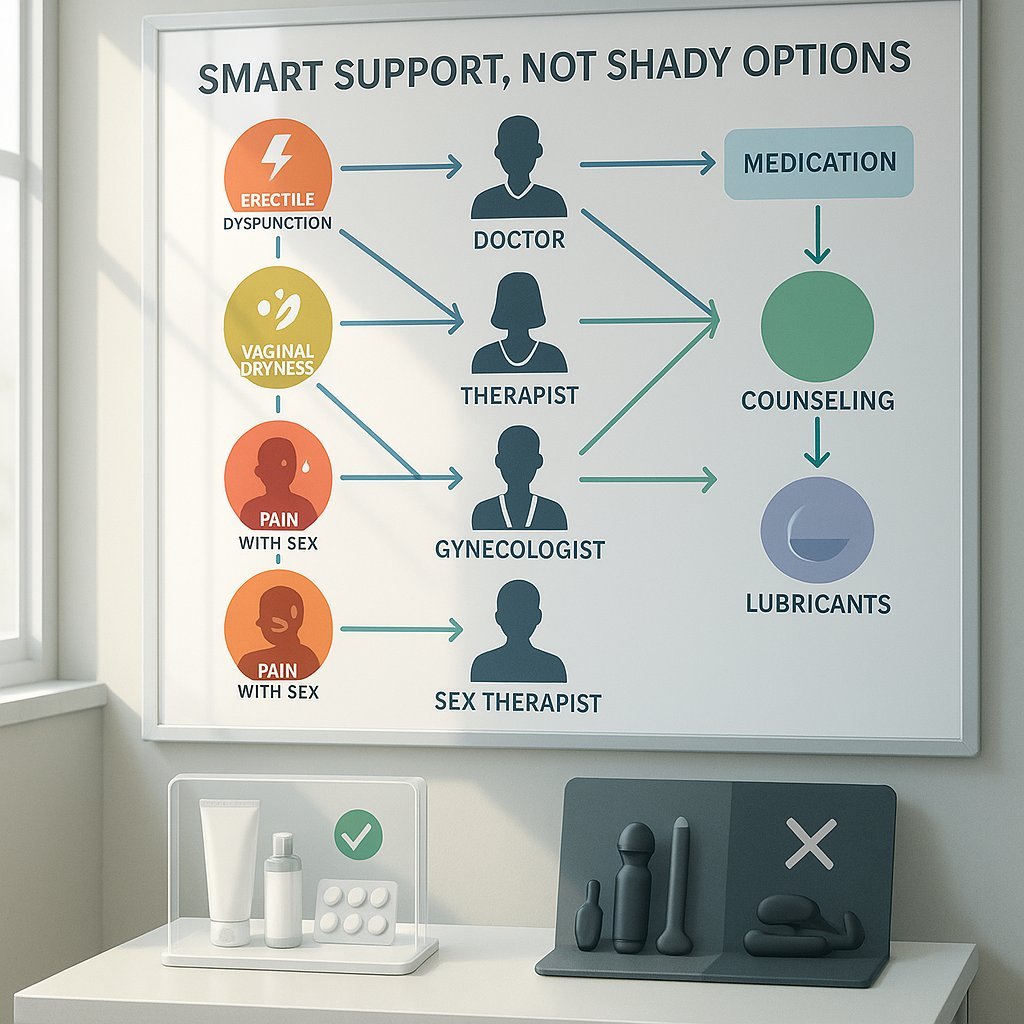
Table of Contents
- Overview: When “I’ll Handle It Myself” Stops Working
- Red‑Flag Symptoms: When You Need a Doctor, Not Another Trick
- Size Anxiety, Jelq, and Devices: Getting Help Without Getting Hurt
- Help for Erections and Ejaculation: Matching Your Issue to the Right Expert
- Choosing Safe Support and Tools: From Penile Extenders to Conversations with Partners
- Conclusion: Getting Help Is Part of Strong Men’s Sexual Wellness, Not a Failure
- FAQ
Overview: When “I’ll Handle It Myself” Stops Working
Expert Insight:
According to WebMD (https://www.webmd.com/men/jelqing), jelqing is a stretching technique intended to enlarge the penis, but most men who pursue it already have an average erect length of about 5 inches (13 cm) and are influenced by “small penis anxiety” rather than true anatomical smallness. (www.webmd.com)
Men’s sexual wellness problems are common, but many men wait years before asking for help. By then, minor issues like mild erection changes, a jelq injury, or occasional premature ejaculation can become entrenched problems that affect confidence, relationships, and overall health.

This guide focuses on one thing: how to get help in a way that is safe, realistic, and targeted to what you actually need. Instead of more vague tips or risky “hacks,” you’ll see how to:
- Spot red-flag symptoms that need medical attention.
- Decide when to stop DIY methods like jelq or a penis stretcher and call a professional.
- Choose the right kind of expert (urologist, pelvic PT, sex therapist, or coach).
- Evaluate devices such as a penis extender without falling for hype.
- Talk to partners honestly about erections, ejaculation, and performance anxiety.
If you’re worried about your penis, your erections, or how long you last, you’re not alone — and you don’t have to handle it in isolation.
Red‑Flag Symptoms: When You Need a Doctor, Not Another Trick
Some penis and ejaculation issues are frustrating but not dangerous. Others signal a medical problem that should not be ignored. Getting help early can protect both sexual function and overall health.
See a urologist or primary care doctor promptly if you notice:
- Sudden change in erection quality(you recently lost the ability to get or keep an erection firm enough for sex).
- Pain, swelling, or bruisingafter jelq, aggressive masturbation, or sex.
- Noticeable bend or lumpin the shaft, especially if erections are painful (possible Peyronie’s disease).
- Numbnessor a “dead” feeling in part of the penis.
- Newly delayed ejaculation(you can barely reach orgasm despite strong stimulation) or sudden premature ejaculation that persists.
- Bloody urine or semen, discharge, or sores on the penis.
- Urination changes(weak stream, burning, or needing to go all the time).
These can be linked to conditions like diabetes, vascular disease, hormone problems, nerve injury, Peyronie’s disease, infections, or side effects of medication. A doctor can:
- Screen for underlying health issues (blood pressure, blood sugar, hormones, cholesterol).
- Check the penis, testicles, and prostate for structural or inflammatory problems.
- Adjust or replace medications that may be affecting erections or ejaculation.
- Refer you to specialists such as a urologist, endocrinologist, or pelvic floor therapist.
Do not keep pushing through pain or injury with more jelq, more devices, or more porn-stress. Stopping early and getting evaluated is the fastest route back to normal function.
Size Anxiety, Jelq, and Devices: Getting Help Without Getting Hurt
Many men look for help because of anxiety about penis size, not because of a diagnosed medical problem. That’s where misinformation and risky techniques explode — jelq routines from forums, untested pills, and unregulated penis extenders or pumps.
What we know from medical sources:
- Most men who worry about size are in the normal range when erect.
- There is nosolid clinical evidence that jelq causes permanent length or girth gains in otherwise healthy men.
- Penis enlargement surgery can increase apparent size but has real risks: infection, scarring, loss of sensation, dissatisfaction with appearance.
- The American Urological Association generally advises enlargement only for true micropenis, and even then in a structured medical setting.
If you’re currently jelqing or using a penis stretcher:
- Stop immediately if you feel pain, see bruising, or notice changes in shape or sensitivity.
- Use only light, non-painful tension; more force does notmean better results.
- A penis extender (penile traction device) has limited evidence for small length changes over months, mainly for specific conditions, not cosmetic miracles.
- Be very cautious with hours-per-day claims; overuse increases the chance of nerve and tissue damage.
When to bring up jelq or devices with a professional:
- You have any complication from jelq: soreness that lasts, curvature, new erectile weakness, or numbness.
- You’re considering long-term traction with a penis stretcher to address curvature or size and want a medical opinion.
- You’re thinking about surgery or injections for cosmetic enlargement.
A urologist can explain realistic results, time frames, and risks of each approach and may recommend medical-grade devices instead of random online products. If you do explore traction under medical guidance, choose clinically backed devices and follow protocols exactly, not forum improvisations.
Help for Erections and Ejaculation: Matching Your Issue to the Right Expert
Not every sexual wellness problem is best solved by a urologist alone. Different aspects of erections, sex techniq, and ejaculation respond to different types of help. The key is matching your main complaint to the right expert or combination of experts.
If your main issue is erections (ED or inconsistent firmness):
- See:Primary care doctor, then urologist if needed.
- Why:ED can be an early sign of cardiovascular disease, diabetes, hormonal imbalance, or medication side effects.
- What they can do:Lab tests, prescription meds (like PDE5 inhibitors), guidance on lifestyle changes (exercise, sleep, alcohol, smoking), and, in some cases, devices such as vacuum pumps or medically supervised traction.
If your main issue is premature ejaculation:
- See:Urologist or sexual medicine specialist first; then consider a sex therapist or coach.
- Why:There can be biological factors (sensitivity, neurotransmitters, prostatitis) and psychological ones (anxiety, conditioning from porn or rushed masturbation).
- What helps:Medication options, behavioral techniques, pelvic floor training, and adjustments to sex techniq that improve control and reduce anxiety.
If your main issue is delayed ejaculation (trouble finishing):
- See:Doctor to review medications (especially antidepressants), hormones, and nerve function; then a sex therapist if needed.
- Why:Many cases are linked to drugs, nerve issues, or psychological patterns (performance pressure, specific porn or stimulation habits).
- What helps:Adjusting meds under medical supervision, sensate focus exercises, varying stimulation patterns, and addressing relationship stress.
If your main issue is technique, confidence, or communication:
- See:Sex therapist, couples therapist, or qualified men’s sexual wellness coach.
- Why:Many “performance problems” are really about anxiety, expectations, or lack of skills, not defective anatomy.
- What helps:Education on arousal pacing, improving foreplay, changing thrusting style, and managing mental distractions during sex.
You don’t have to pick only one kind of help. Many men get the best results by combining medical evaluation with skill-building and psychological support.
Choosing Safe Support and Tools: From Penile Extenders to Conversations with Partners
Getting help also means protecting yourself from scams and emotional isolation. From devices to doctors, you can use a simple filter to stay safe and effective.
Before you buy any penis extender, stretcher, pill, or supplement, ask:
- Is there clinical data or just testimonials?
- Does the product avoid promising extreme or overnight gains?
- Is the company clear about risks and proper use?
- Is your current penis health good enough to experiment safely, or do you need a doctor’s clearance first?
If you and your clinician decide a traction approach makes sense for your situation, consider a medically oriented option instead of random marketplace listings. For example, you can explore an official store like this penile traction device providerand compare their guidance and safety information with what your urologist recommends.
How to talk to a professional so you actually get useful help:
- Be blunt and specific: describe your erections, ejaculation timing, pain, or jelq/device use without softening the language.
- Bring a short symptom timeline: when it started, what changed, what you’ve already tried.
- Ask directly: “Is this safe?”, “What are realistic outcomes?”, “What would you do in my position?”
- If you feel dismissed, it’s legitimate to seek a second opinion, especially with men’s sexual wellness issues.
How to talk to a partner:
- Start with your goal: more pleasure and intimacy for both of you, not just fixing your body.
- Use language like, “I’d like us to experiment with timing, positions, and technique so I can manage my ejaculation better and we both enjoy sex more.”
- Share only what you’re comfortable with about jelq, devices, or medical visits; focus on how you’re taking responsible steps, not on past mistakes.
Real progress usually comes from a combination of better information, targeted tools, and honest conversations — not another secret trick.
Conclusion: Getting Help Is Part of Strong Men’s Sexual Wellness, Not a Failure
Men’s sexual wellness is not a test of toughness. It’s a part of overall health that responds best when you treat it like any other system in your body: notice changes early, get accurate information, and ask for expert help when needed.
If you’re using jelq or a penis extender, do it with full awareness of the limits and risks. If you’re struggling with erections or ejaculation, don’t wait for things to collapse before talking to a doctor or therapist. And if you’re overwhelmed by performance pressure or size anxiety, remember that you’re dealing with a common, solvable problem — not a personal defect.
The most powerful decision you can make is simple: stop going it alone. Get help that is grounded in evidence, honest about tradeoffs, and focused on the bigger picture of your health, relationships, and long-term sexual confidence.
FAQ
Q:
When should I stop trying to fix a sexual issue on my own and get help?
A:If pain, changes in shape, or erection problems last more than a few weeks, or if your worry is starting to affect your mood, relationships, or confidence, it’s time to get help. Ongoing jelq or device injuries, sudden bends, or trouble keeping an erection are all reasons to speak with a professional instead of pushing through alone.
Q:
What kind of doctor should I see for erection, ejaculation, or injury problems?
A:Start with a general practitioner if you’re unsure; they can run basic tests and refer you on. For penis injuries, Peyronie’s-like bends, or complex erection issues, a urologist who lists men’s sexual health or andrology as a focus is usually the best fit.
Q:
How do I know if an online sexual wellness product or program is a scam?
A:Be wary of anything promising fast, permanent size gains, ‘cures’ for all problems, or requiring large upfront payments. Look for clear explanations of how it works, realistic claims, published research, and the ability to cancel or get a refund instead of high‑pressure sales tactics.
Q:
Are penis stretchers or pumps ever safe to use?
A:Some traction devices and medical‑grade pumps have research behind them, but only when used exactly as directed and often under professional guidance. Red flags include extreme tension, long continuous sessions, pain, numbness, or bruising—signals to stop and reconsider your approach.
Q:
How can I talk to a doctor or therapist about sexual problems without feeling embarrassed?
A:Write down your main concerns, symptoms, and questions beforehand so you’re not relying on memory in the moment. You can start with neutral language like, “I’m having trouble with erections/ejaculation” or “I hurt myself doing exercises,” and remember this is routine for them, even if it feels awkward for you.
Related Reading
- Frequently Asked Questions on Sexual Wellness Therapy for Men
- Why Texan Primary Care Is a Smart Urgent Care Choice for Sexual Wellness Issues
- The Reasons Why Men’s Sexual Wellness Needs More Care
- Contact DickCanGrow: Questions About Jelq Techniques, Penis Extenders, and Men’s Sexual Wellness
- Open Conversations About Men’s Sexual Health and Wellness: How to Talk, What to Ask, and Where Growth Really Starts
- Men’s Sexual Wellness Over 40: Smarter Ways to Combine Jelq, Extenders, and Technique Tweaks for Stronger Erections

Post Comment