Crafting Your Step-by-Step Jelqing Routine for Optimal Sexual Wellness Gains
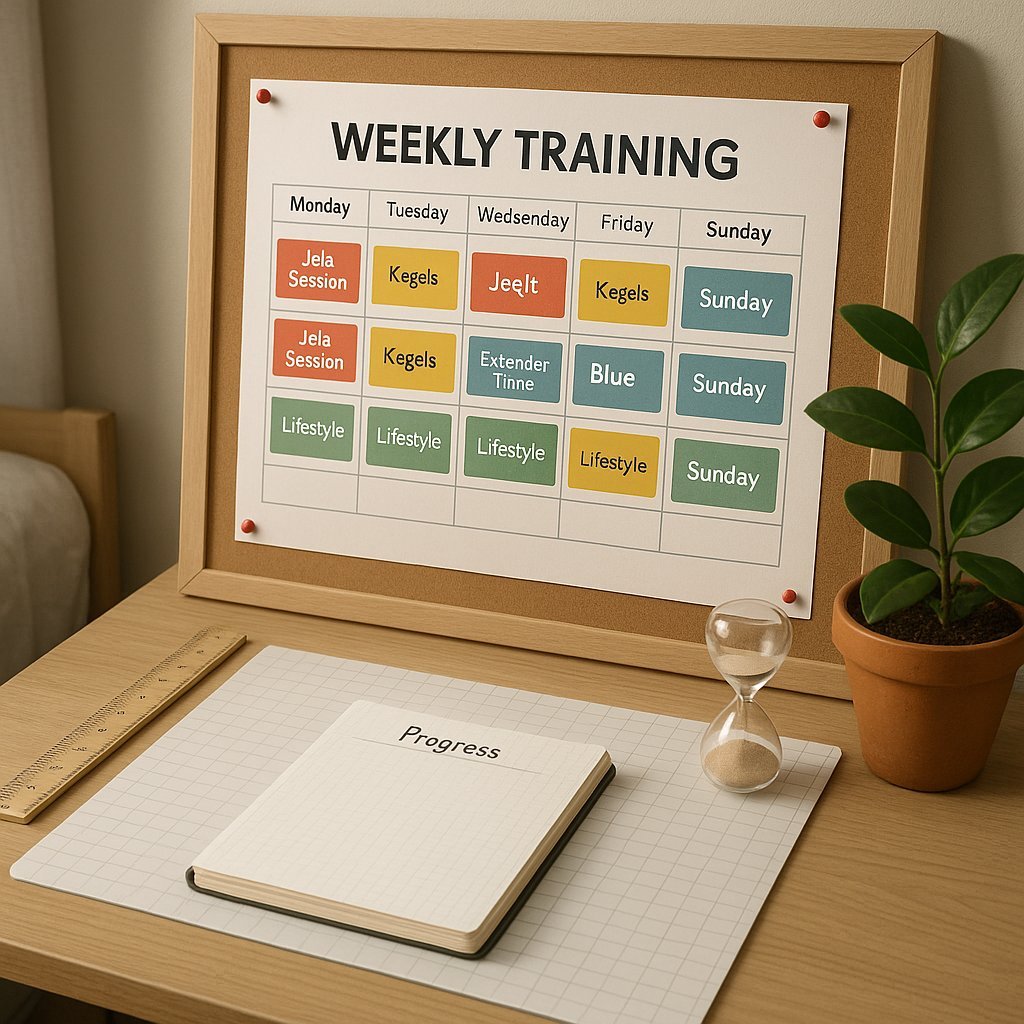
Table of Contents
- Overview: Where Jelqing Fits in Men’s Sexual Wellness
- Foundation: Safety Checks, Warm-Up, and Baseline Measures
- Core Step-by-Step Jelqing Routine for Beginners
- Building a Weekly Routine: Jelq, Kegels, Extenders, and Lifestyle
- Using Your Routine to Improve Sex Technique and Ejaculation Control
- FAQ
Overview: Where Jelqing Fits in Men’s Sexual Wellness
Expert Insight: According to my.clevelandclinic.org, common penile conditions range from erectile dysfunction and various skin diseases (such as herpes, syphilis, psoriasis and eczema) to paraphimosis, penile cancer and penile fracture, all of which can interfere with urination, sexual function and fertility (https://my.clevelandclinic.org/health/body/penis). The article emphasizes that paraphimosis, where a tight foreskin gets stuck behind the head of the penis and can cut off blood flow, is a medical emergency. (my.clevelandclinic.org)

Jelqing sits in a gray zone: it’s popular online, but it isn’t endorsed by major medical centers like the Cleveland Clinic or Mayo Clinic as a proven method for penis enlargement. Most formal evidence for penis size change still focuses on surgery, traction devices (penis extender or penis stretcher systems), and treatment of specific conditions like erectile dysfunction or Peyronie’s disease.
That doesn’t stop men from experimenting. If you choose to jelq anyway, the smartest move is to treat it like one small part of a larger mens sexual wellness plan instead of a magic bullet. That means:

- Understanding normal penis anatomy and function, so you can recognize warning signs of harm.
- Using a careful step-by-step jelq routine instead of random, aggressive strokes.
- Combining jelqing with healthier habits: pelvic floor work (Kegels), better sex techniq, and lifestyle factors that protect circulation and erection quality.
- Knowing when to stop and talk to a healthcare professional, especially if you have pain, sudden curvature, or trouble with erections or ejaculation.
The routine below is structured, progressive, and conservative on purpose. You can always do more later. You only get one penis.
Foundation: Safety Checks, Warm-Up, and Baseline Measures
Before you design any jelq routine, you need three foundations: medical reality, a proper warm-up, and baseline measurements. Skipping these steps is where many men get into trouble.
1. Screen yourself for red flags
Self-check your penis regularly, as suggested by major clinics:
- Look for new rashes, ulcers, discoloration, or discharge from the tip.
- Gently feel along the shaft and head for firm plaques, nodules, or new tenderness.
- Notice any new bend or sudden change in erection angle.
- Pay attention to symptoms like pain with erection, pain during sex, burning during urination, blood in urine or semen, or difficulty getting or staying hard.
If any of this is present, or if you suspect conditions like Peyronie’s disease, sexually transmitted infections, or trauma, stop enhancement experiments and contact a primary care clinician or urologist first. Some problems (like a trapped foreskin, severe bend with pain, or a very prolonged erection) are emergencies that require immediate care.
2. Respect medical limits on enlargement
Penis enlargement surgery and traction-based extenders have actual clinical data behind them, but even those have risks and are usually reserved for specific diagnoses or severe psychological distress. No major medical source lists jelqing as a recommended treatment. That means you are in self-experiment mode; the priority is no permanent damage, not pushing the limits.
3. Warm-up ritual (5–10 minutes)
Each jelq session should start with a gentle warm-up to increase comfort and reduce tissue stiffness:
- Heat: Apply a warm (not hot) washcloth to your penis and pubic area for 3–5 minutes. Re-wet to keep it warm if needed.
- Light massage: With a small amount of lubricant, lightly stroke the shaft in non-squeezing motions for 1–2 minutes just to increase blood flow.
- Check-in scan: During warm-up, quickly scan for any soreness, sharp pain, bruising, or numb spots left over from previous sessions. If present, skip jelqing entirely until symptoms clear.
4. Baseline measurements and logs
Track reality instead of guessing:
- Measure erect length and girth once per month, not daily. Use consistent conditions (similar arousal level, room temperature, position).
- Note your typical erection quality (hardness, ease of getting aroused) and Ejaculation control (how long you can comfortably last with stimulation or penetration).
- Keep a short log: date, duration, intensity (light/medium), any pain, and how erections feel over the next 24–48 hours.
This data helps you see whether a routine is helping your overall mens sexual wellness or slowly harming sensitivity and function.
Core Step-by-Step Jelqing Routine for Beginners
Once you’ve warmed up and screened for problems, you can move into a structured beginner jelq routine. The goals here are gentle conditioning, learning technique, and observing how your body responds.
1. Set the right erection level
Target a semi-erect state: about 40–60% hard. Too soft and you won’t feel much; too hard and you increase the risk of vascular injury or a painful hematoma.
- Avoid jelqing at full erection.
- If you become fully hard, pause, wait, or switch to non-squeezing stimulation until it softens slightly.
2. Choose lubrication and grip
Use a generous amount of lube (water or silicone-based) to avoid skin friction. Dry jelqing increases the risk of skin tears and irritation.
- Form an “OK” grip (thumb and index finger) around the base of the semi-erect penis.
- Pressure should feel like a firm massage, not a clamp. You should never feel sharp pain, pins and needles, or significant numbness.
3. Perform a basic jelq stroke
- With your “OK” grip at the base, slowly slide toward the glans in 2–4 seconds, gently pushing blood forward through the shaft.
- Stop just short of the glans (don’t squeeze over the head).
- Release at the end of the stroke.
- Switch hands, place the new grip back at the base, and repeat.
That alternating pattern (left hand, right hand) counts as two strokes.
4. Start with conservative volume
A cautious starting template for a healthy beginner might look like:
- Week 1–2: 5 minutes of jelqing, about 2–3 sessions per week.
- Week 3–4: 7–8 minutes, still 2–3 sessions per week, if there are zero negative signs.
- Beyond week 4: Only increase session length by 1–2 minutes at a time, and add rest days whenever you notice soreness or fatigue.
Always include at least one full rest day between sessions at the start (for example, Monday–Thursday–Sunday). Your penis needs recovery time just like any other body part under stress.
5. End-of-session cooldown
After jelqing:
- Rinse or wipe off lube and gently pat dry.
- Do 30–60 seconds of very light, non-squeezing massage to relax the tissue.
- Optionally apply a cool (not ice-cold) cloth for a minute if you feel warmth or mild swelling; this can reduce post-session congestion.
Over the next day, monitor for warning signs:
- Persistent pain or throbbing that doesn’t fade after a few hours.
- Visible bruising, dark purple spots, or sudden loss of normal coloration.
- Noticeable drop in erection quality or sensation.
If any of these show up, stop jelqing until everything returns fully to normal. If problems persist, contact a healthcare provider or urologist; don’t try to “push through it.”
Building a Weekly Routine: Jelq, Kegels, Extenders, and Lifestyle
A jelq routine works best when it slots into a broader plan that supports blood flow, erection control, and long-term penis health. That means combining jelqing with pelvic floor work, smarter device use, and everyday health basics.
1. Integrate Kegels for better control
Pelvic floor exercises (Kegels) strengthen the muscles you use to stop urine or prevent gas from passing. When trained correctly, these muscles can improve erection rigidity, support continence, and help you better manage arousal and ejaculation timing.
A common introductory Kegel structure is:
- Find the right muscles by briefly stopping your urine stream or tightening the muscles that lift your scrotum.
- Once identified, do sets away from the toilet in a seated or lying position.
- Squeeze for 5 seconds, relax for 5 seconds, repeated 10 times per session.
- Work up to 10-second squeezes and 10-second relax phases, 3 sessions per day, as long as you feel no pain.
Balance is key: over-clenching can create pelvic tightness and even worsen premature ejaculation in some men. If you feel pain or heavy fatigue, scale back and consider consulting a clinician or pelvic floor therapist.
2. Coordinate with a penis extender or penis stretcher
Traction devices such as a penis extender or penis stretcher have clinical research behind them for specific uses, like Peyronie’s disease or gradual length gains under medical supervision. If you choose to use one, build your schedule so you’re not overloading the tissue.
General coordination ideas:
- Avoid long extender sessions on the same days you do jelqing, especially early on; or keep jelq sessions very short and gentle if you insist on combining.
- Prioritize the protocol that has some evidence (the extender) and treat jelqing as secondary, not primary.
- Pain, sudden curvature changes, or color changes are signals to stop both jelqing and traction and seek medical input.
If you want to explore a medically oriented traction device, you can review options through the official PeniMaster store at this penis extender and stretcher affiliate link, and compare those tools with your current plan.
3. Weekly structure example
Here’s one way to blend jelqing, Kegels, and recovery for a healthy, low-risk beginner:
- Monday: Jelq 5–7 minutes + light Kegels (1–2 sets)
- Tuesday: Rest from jelqing; Kegels only
- Wednesday: Jelq 5–7 minutes + light Kegels
- Thursday: Rest; Kegels only
- Friday: Jelq 5–7 minutes + light Kegels
- Weekend: Rest from jelqing; optional gentle extender use if you’re following a traction protocol, and Kegels as tolerated.
Adjust volume based on your own feedback. If erections feel less responsive, you notice soreness, or sex/ejaculation feels off, reduce frequency or intensity until things normalize.
4. Lifestyle factors that protect your gains
Enhancement efforts work poorly if your underlying health is undermining circulation and nerve function. High alcohol intake, poorly controlled blood pressure or diabetes, smoking, and chronic stress can all impair erection quality and desire, regardless of jelqing.
- Limit alcohol, especially before sex, to protect arousal and orgasm control.
- Support cardiovascular health with regular exercise, balanced diet, and weight management.
- Address sleep, mood, and stress, which strongly influence libido and performance.
- Get evaluated for persistent erectile dysfunction, painful erections, or major changes in ejaculation; these can reflect broader health issues, not just penis-local problems.
Think of jelqing as a small “add-on” at the top of a pyramid whose base is your overall health and daily habits.
Using Your Routine to Improve Sex Technique and Ejaculation Control
A jelq routine isn’t just about size. If you pay attention, it can double as a structured way to improve body awareness, arousal control, and sex techniq that benefits both you and your partner.
1. Use jelq sessions as arousal training
During jelqing, you’re repeatedly moving between different arousal levels. Turn that into a deliberate skill:
- Notice what thoughts, images, or touch patterns quickly push you toward full erection and imminent ejaculation.
- Practice backing off when you get too close to climax: pause, breathe slowly, let intensity drop, then resume lightly.
- Pay attention to sensations along the shaft, not just the glans. That awareness can later help you modulate thrusting pressure and pace during sex.
2. Translate control into partnered sex
The same techniques that help you modulate arousal during jelqing can be used during masturbation or intercourse:
- Alternate between faster, more intense strokes and slower, gentler ones, noticing how close you are to orgasm.
- When you approach the point of no return, switch to lighter touch or pause for a few breaths before continuing.
- Combine this with pelvic floor awareness: brief, gentle pelvic floor contractions and relaxations can help you navigate high arousal without tipping into premature ejaculation.
Over time, the goal is not just to delay ejaculation, but to feel more in control of when and how you climax.
3. Protect sensitivity and pleasure
Men sometimes chase intensity in jelqing and end up reducing sensation instead of enhancing it. To keep pleasure at the center:
- Stay under a “pain threshold” where everything feels like firm but comfortable pressure.
- Respect no-go signals: numbness, tingling, or a sudden “dead” feeling in parts of the shaft.
- Use rest days if sex feels less pleasurable or erections are weaker; consider reducing or stopping jelqing if this pattern repeats.
Remember that the most meaningful gains in mens sexual wellness often come from a mix of physical training, good communication with partners, and thoughtful technique, not sheer force on the tissue.
4. Know when to involve professionals
If, at any point, you notice:
- Persistent pain with erections or ejaculation
- Sudden new curvature or pronounced bending
- Loss of erection quality that doesn’t recover after rest
- Unexplained lumps, plaques, or skin changes
pause all enhancement activity and seek help from a primary care clinician or urologist. They can also connect you with sexual health services or sex therapists if anxiety, performance worries, or relationship issues are part of the picture.
Used thoughtfully, your step-by-step jelq routine is less about chasing an unrealistic ideal and more about building awareness, circulation, and control that support better erections, more satisfying ejaculation, and a healthier long-term sexual life.
FAQ
Q: How often should I jelq each week for best results?
A: Most men start with 2–3 jelqing sessions per week on non‑consecutive days, then slowly work up to 4–5 as their tissue conditioning improves. The key is to let quality and recovery guide you—if you notice lingering soreness or fatigue, reduce frequency before increasing again.
Q: What does a safe, structured jelqing session look like?
A: A typical session starts with 5–10 minutes of warm‑up, followed by 5–15 minutes of controlled jelq strokes at a moderate erection level. You finish with a brief cool‑down and a quick self‑check for pain, bruising, or unusual sensitivity, adjusting intensity next time based on what you notice.
Q: How can I combine jelqing and Kegels without overtraining?
A: Place your Kegels on separate days or at a different time of day than jelqing so your pelvic floor and penile tissues don’t get overloaded at once. Many men do light daily Kegels for control and circulation, and keep more intensive jelqing work to just a few focused sessions per week.
Q: Can jelqing be used alongside a penis extender or traction device?
A: Yes, but it’s important to manage total time under tension. Many routines use the extender as the primary length stimulus and insert short, low‑intensity jelq sets before or after to boost blood flow, always backing off if there’s prolonged soreness or a drop in erection quality.
Q: How do I know if my jelqing routine is actually improving sexual wellness?
A: Track more than just size—monitor erection quality, morning wood frequency, stamina, and confidence in bed over several weeks. If your measurements, hardness, and control are gradually improving without pain or performance dips, your routine is likely well‑matched to your body.

Post Comment