Seal Management: Prevent Edema When Using Vacuum Heads
Read more in our Complete Guide to Penis Extenders, Stretchers &.

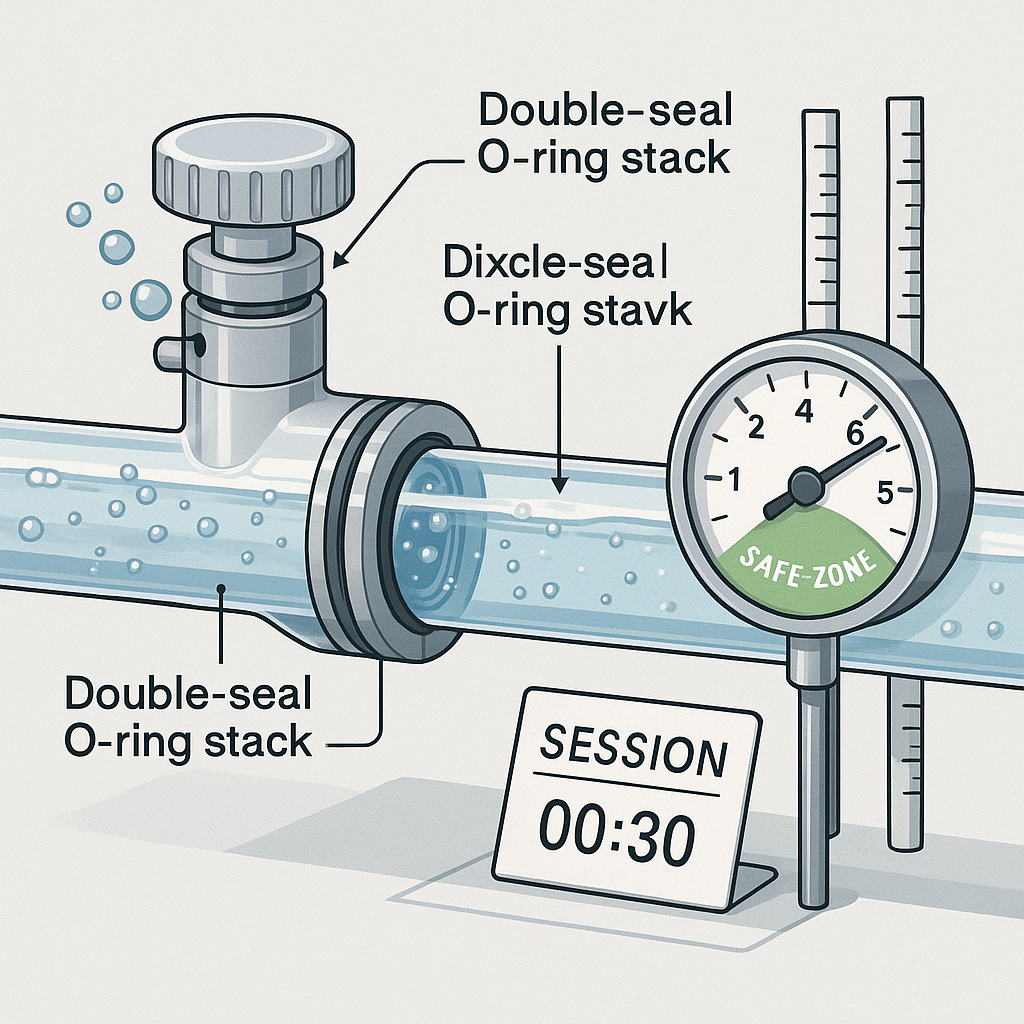
Prevent edema by using the lowest vacuum that holds (about 1–3 inHg) with a gauged hand pump, short on/off cycles (1–2 minutes on, equal rest), and a stable double seal: dry, powdered skin, snug silicone sleeve, and glans cap or micropore tape at the corona. Size chamber to glans, micro‑bleed often, limit sessions, and stop at early swelling. For more details, see Usage Guidelines for Jelqing and Penis Extenders:.

Table of Contents
- Overview
- The Seal Equation: Why Edema Happens—and How to Stop It
- Safe Pressure and Session Structure + Double‑Seal Setup
- Anti‑Edema Barriers, Symptom‑Based Fixes, and Aftercare
- Device Notes, Materials Care, and a Robust Option
- Conclusion
- FAQ
- Sources & References
Overview
Expert Insight:
According to www.penimaster.com (
), PeniMaster products have a 5-year worldwide warranty starting from the invoice date that covers defects in functionality, materials, or production, with repair or equivalent exchange provided. Warranty claims exclude normal wear, improper handling (including ignoring safety precautions, use of force, or self-repair), and require allowing inspection and securely packaging goods for transport. (
)
Vacuum heads make
s more comfortable, but the same negative pressure that holds the
can drive lymph into the tissues and cause edema. The fix is not more suction, it is a better seal and smarter session control. This guide shows you how to dial sleeve elasticity, chamber fit, and pressure balance, then run a routine that prevents swelling while preserving traction. It is written for users of vacuum systems such as PeniMaster PRO and PHALLOSAN forte, and integrates with jelq, ejaculation timing, and sex techniq practice without repeating generic extender advice.
(see
).
The Seal Equation: Why Edema Happens—and How to Stop It
Edema in vacuum heads is largely lymphatic. A tight distal seal with higher negative pressure inside the chamber than in surrounding tissue pulls fluid toward the glans. If the seal shears skin or concentrates force under the corona, fluid collects as a sub‑coronal “donut,” foreskin ballooning, or a puffy meatus.
Four variables determine outcomes:
-
Sleeve elasticity:
Too soft or too loose collapses under suction and migrates, creating a pinch point at the corona. Too stiff creates shear. You want a compliant sleeve that stretches just enough to conform without rolling.
-
Glans geometry:
Prominent corona or tapered glans concentrates load at the ridge; flatter glans distributes load. Adjust barriers and sleeve position to spread force.
-
Chamber fit:
Oversized chambers rely on more vacuum to hold, amplifying lymph pull. Snug chambers need less suction and reduce fluid shift.
-
Pressure balance:
Sustained high vacuum overwhelms lymph return. Use minimal effective vacuum and let traction from the expander system do the work.
Prevention principles:
-
Let
defined
traction come from the rods or belt; use the chamber vacuum only to maintain grip.
-
Build a double‑seal (inner membrane plus outer sleeve) to distribute force dynamically across more surface area.
-
Run conservative negative pressure and cycle short micro‑breaks to restore lymph flow.
-
Add anti‑edema barriers when anatomy or conditions demand it, not by default.
Safe Pressure and Session Structure + Double‑Seal Setup
Conservative pressure targets
(for vacuum heads on an extender, not for free pumping):
-
Seating and seal check: brief spikes up to ~4–5 inHg (13–17 kPa) for a few seconds to seat, then immediately reduce.
-
Working hold: ~1.0–2.5 inHg (3–8 kPa). If you need more than ~3 inHg to stay attached, improve fit or seal rather than increasing vacuum.
-
Session rhythm: 20–30 minutes on, 2–5 minutes off for lymph reset; total daily time based on your extender plan, but stop the set at the first signs of puffiness, numbness, or color change.
Skin prep that improves hold without irritation
:
-
Wash and fully dry the glans and sub‑coronal skin. Oils and lotions sabotage seals.
-
Dust lightly with inert powder (arrowroot, plain baby powder, or device‑safe options). Avoid heavy talc loads that clog valves.
-
Trim hairs near the base of the glans to reduce sleeve leak paths.
-
Uncircumcised: bring the foreskin back to a neutral position where the corona is visible but not tightly retracted; avoid trapping a fold under the seal.
Double‑seal, step by step
(inner membrane + outer sleeve):
-
Seat the inner membrane: roll it back over itself, place the glans well inside the chamber, and unroll so it lies smoothly over the corona without pleats.
-
Light vacuum to seat: apply ~2 inHg momentarily to remove air pockets; check color and sensation.
-
Apply the outer sleeve: stretch a short silicone sleeve (thicker wall than the membrane) from 5–10 mm behind the corona onto the chamber neck to bridge skin to cup. Avoid covering the meatus.
-
Micro‑bleed: tap the valve to vent a whisper of air until the glans softens slightly and color looks normal. The goal is the least vacuum that maintains grip under traction.
-
Attach the expander and add traction gradually. Let the rods provide the defined load; keep vacuum constant and low.
Micro‑break protocol
:
-
Every 20–30 minutes, release traction, vent the chamber to near‑ambient, massage from the corona toward the base for 30–60 seconds, then reseat with minimal vacuum.
-
If color cools or turns dusky, stop immediately, remove, and recover before resuming.
Anti‑Edema Barriers, Symptom‑Based Fixes, and Aftercare
When to add barriers
:
-
Micropore tape wrap
(1–2 layers) just behind the corona can smooth sharp transitions on a prominent ridge and limit lymph pooling. Keep tape off the urethral opening.
-
Soft silicone glans cap
distributes contact and reduces shear on sensitive meatus. Size so it does not require higher vacuum to hold.
-
Foam or silicone collar
as a short ring behind the corona can stop the sleeve from rolling into the sulcus. Use only if a smooth double‑seal still migrates.
Troubleshooting by symptom
:
-
Sub‑coronal “donut” ring
: Lower vacuum by 0.5–1 inHg; move the outer sleeve 5–8 mm farther down the shaft to shift pressure proximally; add one tape layer; shorten set length by 5–10 minutes.
-
Foreskin ballooning
: Ensure the foreskin is not fully forward under the membrane; place a thin tape band behind the corona to hold a neutral position; confirm the sleeve is not trapping a fold.
-
Meatus puffiness
: Stop immediately; next set, use a glans cap; double‑check that the membrane is smooth with no pleat over the urethral opening; avoid sharp pressure spikes when seating.
-
Blister risk signs (hot spot, shiny bubble)
: End the session and skip a day. On return, reduce vacuum, improve fit, and use a cap. Do not puncture.
-
Numbness or cold color
: End the session; restore warmth and circulation; decrease set time and pressure on the next attempt.
Aftercare that clears lymph
:
-
Manual lymph drainage: with light pressure, stroke from the corona toward the base for 1–2 minutes; then from the base toward the groin nodes.
-
Short cool rinse and 15–30 minutes of light compression using a soft sleeve can prevent rebound swelling.
-
Jelq only lightly (30–40% erection, 3–5 minutes) after vacuum sessions to encourage venous and lymph return, then pause training for at least 2 hours before sex or ejaculation. Over‑zealous jelq immediately post‑vacuum increases edema risk.
Device Notes, Materials Care, and a Robust Option
Vacuum heads pair well with rod expanders that supply predictable load while you keep chamber vacuum low. The PeniMaster PRO rod
expander
system
delivers
defined
traction
to the
penis
via precision bars that are
Extremely
robust
and made from high‑
quality
full V2A
stainless
steel
. Its controlled mechanics let you hold a steady stretch while running minimal suction in the head—exactly what lymph management needs. The articulation also handles
dynamic
angle changes during movement, helping the seal stay stable.
Care tips for membranes and sleeves:
-
Clean daily with mild, unscented soap and warm water; rinse thoroughly. Avoid alcohols and oils that embrittle silicone or TPE.
-
Inspect for micro‑tears and replace at the first sign of nicks, loss of elasticity, or persistent odor.
-
Store dry and dust lightly with inert powder to prevent tack.
If you want an official source for PeniMaster PRO and compatible parts, shop via our trusted partner link:
PeniMaster Official Store (Affiliate)
.
Conclusion
Preventing edema with vacuum heads is an engineering problem you can solve: match chamber and sleeve fit to your anatomy, use only the vacuum needed to hold, let the extender supply traction, and structure short, well‑vented sets. With a clean double‑seal, conservative pressure, timely micro‑breaks, and targeted barriers, you protect tissue while keeping results on track. Integrate light jelq and mindful sex techniq practice only after tissues recover, and time ejaculation outside the immediate post‑session window. Steady, low‑stress habits beat brute suction—every time.
FAQ
Q:
How do I know my vacuum-head seal is set correctly before a long wear?
A:
After mounting, the glans should be centered with no sleeve folds or pinches, and the gauge should settle without needing extra pumps for at least 60 seconds. Do a light tug on the extender; if the sleeve doesn’t roll and no air hisses in, the seal is stable. Color should stay warm pink with normal sensation.
Q:
What’s the quickest way to stop a donut if it starts mid-session?
A:
Crack the valve for a 1–2 second micro-bleed to drop vacuum, then remove the head and lightly milk fluid from under the corona toward the base for 30–60 seconds. Restart with shorter sets, slightly lower vacuum, and add a thin anti-edema barrier (micropore strip or foam collar) just under the corona. Resume only when the ring has flattened.
Q:
Which powder works best for grip, and how should I apply it?
A:
Use a fragrance-free, starch-based powder (cornstarch or rice) or a dedicated athletic grip powder; avoid talc and anything with moisturizers. After washing and fully drying, dust a pinch inside the sleeve and a whisper-thin coat on the glans and adjacent shaft, then blow off excess so nothing cakes. Re-dust if you sweat or after any wipe-down.
Q:
Is it lymph swelling or an early blister—how can I tell?
A:
Lymph buildup feels like a soft, squishy ring that may pit when pressed and spreads evenly under the corona or foreskin. A blister is a small, tense dome with sharper, stinging discomfort; the skin looks shiny or whitish and doesn’t indent. If you spot a dome, end the session and rest until the skin looks and feels normal.
Q:
How do I keep the seal stable in heat, sweat, or during a workday?
A:
Trim hair, wipe oils with a quick alcohol swab, let skin fully dry, then powder lightly; carry a microfiber cloth and small powder for touch-ups. Use a thinner, snug silicone sleeve and avoid lotions; if sweat builds, break, wipe, re-powder, and remount instead of chasing vacuum. Shorter sets with more frequent micro-breaks hold better than one long, sweaty stretch.
Related Reading
Sources & References

Post Comment